








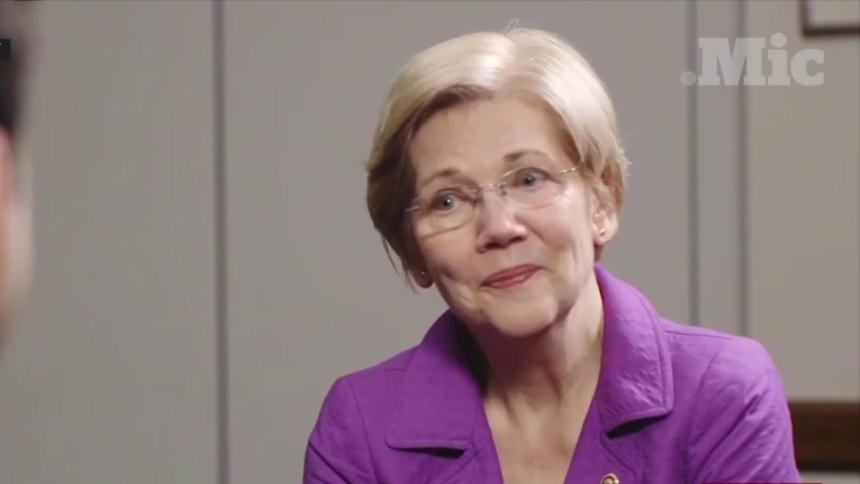
Senator Elizabeth Warren, the progressive icon who has been repeatedly named as a potential 2016 Democratic vice presidential pick, and Donald Trump, the presumptive GOP nominee, have been engaged in a war of words that has grown increasingly personal and racially charged.
After a recent barrage of criticisms from the Massachusetts lawmaker, Trump, who has taken to derisively calling Warren “goofy,” resurrected a line of attack that may only be familiar to people who closely followed her bitter 2012 U.S. Senate race against then-incumbent and current Trump supporter, Republican Scott Brown. When asked about Warren’s description of him as a “bully,” Trump told the New York Times, “You mean Pocahontas?”
“I think it’s wonderful because the Indians can now partake in the future of the country. She’s got about as much Indian blood as I have. Her whole life was based on a fraud. She got into Harvard and all that because she said she was a minority,” he added.
These remarks — which comes on the heels of several recent, mocking tweets from the Republican presidential candidate — allude to a controversy that emerged during Warren’s contentious 2012 Senate run. During that campaign it was revealed that Warren had listed herself as a minority while working as a faculty member at both the University of Pennsylvania Law School and at Harvard Law School in the late 1980s and early 1990s. Warren has long insisted that she believed she had Cherokee Indian ancestors, while critics have alleged that the Massachusetts lawmaker sought an unfair advantage by exploiting unsubstantiated ethnic roots. Both schools have denied that race was a factor in her hiring.
RELATED: Supreme Court asked to hear two cases that could sack Washington ‘Redskins’ name
“Everyone on our mother’s side — aunts, uncles, and grandparents — talked openly about their Native American ancestry,” Warren wrote in her 2014 memoir “A Fighting Chance.” “My brothers and I grew up on stories about our grandfather building one-room schoolhouses and about our grandparents’ courtship and their early lives together in Indian Territory.”
In that same book Warren acknowledged being somewhat blindsided by the personal nature of the Brown campaign’s attacks. “He attacked my dead parents,” she wrote. “I was hurt, and I was angry.”
Fairly exhaustive research on Warren’s background by several publications in 2012 determined that, at most, the woman behind the Consumer Protection Bureau was 1/32 Cherokee, which would be “sufficient for tribal citizenship” according to the New York Times, but not “eligible to become a member of any of the three federally recognized Cherokee tribes,” according to The Atlantic.
And although Warren has never backed down from her assertion that she believes she has Cherokee ancestry, investigations have yet to turn up any definitive proof that she does, which has led to her claims becoming a consistent talking point for her conservative foes, even inspiring a Wiki page to track the controversy. Some experts have suggested that, like significant portions of the African-American community, Warren simply incorrectly believed she was a descendant of Cherokee Indians, but her critics have pointed out that she identified as white for most of her life in academia and could have done proper research into her genealogy before aligning herself with native culture.
RELATED: Why Donald Trump’s racist remarks matter
However, Trump may want to tread lightly. While spreading conspiracy theories about President Barack Obama’s ancestry helped make him a popular figure in conservative circles (2012 nominee Mitt Romney aggressively sought his endorsement in the aftermath of Trump’s “birther” crusade) and questioning Sen. Ted Cruz’s heritage successfully put the Texas lawmaker on the defensive for days, Trump’s current line of attack on Warren has been tried before, and it failed to gain traction.
“We saw when Scott Brown attacked my family & his staff made tomahawk chops & war whoops. They lost big. MA voters knew better,” Warren tweeted earlier this month, referring to the culturally insensitive behavior of some Brown supporters on the campaign trial which was caught on tape and wound up backfiring.
Indeed, despite the fact that Brown repeatedly hammered Warren on her supposed lack of Native American heritage and even fundraised over the issue, a Boston Globe poll leading up to Election Day in 2012 showed that an overwhelming majority of the states voters (72 percent) said the scandal did not affect their vote. Ultimately, what ended up the most expensive Senate race in U.S. history resulted in a solid 7-point victory for the Democrat.
“It didn’t move the numbers much,” Steve Koczela, president of The MassINC Polling Group told MSNBC on Monday. “It was an uncomfortable issue throughout the campaign, but it was a lot of noise that ultimately had very little impact.”
According to Koczela, both Warren and Brown enjoyed favorable ratings from the state’s voters leading up to Election Day (Brown’s ratings were actually slightly higher, despite his eventual defeat). Koczela believes that it was where the candidates stood on economic issues that was the driving force behind Massachusetts voters’ choice that November. He said that since her victory, Warren’s ratings haven’t fluctuated and the ancestry issue has “fallen off the radar for a lot of people around here.”
Still, that doesn’t mean the issue couldn’t get more of a spotlight should Warren start to play a larger role in the 2016 race. Thus far, Warren has vowed to help keep the presumptive Republican nominee out of the White House, prompting Trump to surface Brown’s line of attack.
“Definitely Donald Trump raising it is the most attention that’s been paid to in a long time,” said Koczela, who thinks questioning her heritage might go further in a general election because she’s less well known nationally than she is in Massachusetts, and he suspects the presumptive GOP nominee’s rhetoric will likely be more “direct and inflammatory” then Brown’s ever was.
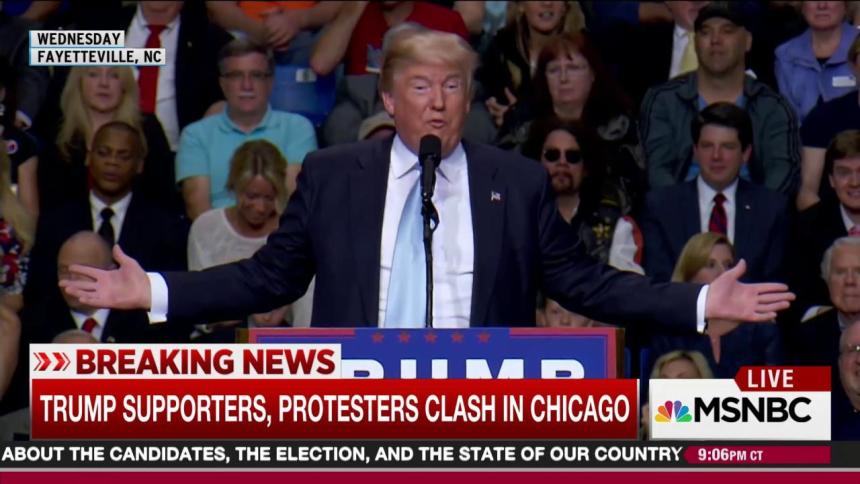
“As hot as the spotlight was in 2012, it will be 100 times hotter in the presidential election,” Koczela added.
Meanwhile, Trump has not exactly been a model of good behavior when it comes to Native Americans. Last fall, he pledged to reverse an Obama administration decision to rename Mount McKinley in Alaska after its original native name Denali, calling it a “great insult” to former President William McKinley’s home state of Ohio. He has also vehemently defended the controversial name of the Washington Redskins NFL franchise. Despite widespread calls for the team to change their name (which is considered an offensive slur by a majority of Native Americans), Trump said, “I know Indians that are extremely proud of that name.” And Trump’s rocky relationship with Native Americans extends far beyond his ongoing campaign for the White House. Trump has used controversial rhetoric in the past when competing with tribes in the casino business. In 2000, Trump offended Mohawk Indians in upstate New York by financing a series of newspaper ads suggesting that a planned Catskills casino run by members of the tribe would bring drugs and violence into the community. “Are these the kind of neighbors we want?” one of the ads asked. “The St. Regis Mohawk record of criminal activity is well-documented.” Fifteen years later, Trump insisted in a New York Times interview: “I wasn’t knocking the Mohawks; I was knocking their record.” In 1993, Trump questioned the authenticity of some of his Native American business rivals during a congressional hearing in which he tried to convince lawmakers that casinos on Native American lands were both unconstitutional and hotbeds of organized crime. “They don’t look like Indians to me,” he said of the Pequot Indians, who were running a very profitable casino in Connecticut at the time, “and they don’t look like Indians to Indians.” According to Mediaite, centuries of interracial relationships with white Americans have led to some members of the Pequot having more stereotypical Caucasian features. “Organized crime is rampant on Indian reservations,” Trump added. “People know it; people talk about it. It’s going to blow. It’s just a matter of time. And when it blows, you’re going to have some very embarrassed faces sitting right where you are now.” According to a Philadelphia Inquirer article at the time, Trump’s statements “drew gasps and puzzled looks of disbelief from lawmakers and onlookers.” A witness from the FBI later rebutted Trump’s insinuations, arguing that “the gaming industry is a relatively closed industry,” and that “the vast majority are run as legitimate legal businesses.” Trump’s testimony also inspired a strong rebuke from then Rep. George Miller (D-Calif.). “In the 19 years I have been on this committee, I have never seen such irresponsible remarks,” he told Trump. “You have cast on the Indians in this country a blanket indictment that organized crime is rampant. You don’t know this; you suspect this.” RELATED: Trump’s turn toward racially charged fiction challenges the GOP Mary Kathryn Nagle, a playwright, attorney and citizen of the Cherokee Nation of Oklahoma, believes that Trump is the last person who should be casting stones at Warren. “Trump’s inability to discern the difference between Sen. Warren and Pocahontas is no accident. Instead, his attack on her native identity reflects a dominant American culture that has made every effort to diminish native women to nothing other than a fantastical, oversexualized, Disney character,” she told MSNBC on Monday. “Today, native women are more likely to be murdered, raped, and abused than any other American population.” “Until individuals like Trump are held accountable for their trivialization of native women’s identity and bodies, we will continue to be murdered and abused at rates that originated at the time of colonization,” Nagle added. “That is not, in my view, ‘making America great.’”
Adam Howard Recommended


