








The approval of the final Volcker Rule by five regulatory agencies may not prevent a future financial meltdown like the one in 2008. But it will do more to prevent another crisis than the prosecutions of financial institutions and their executives that the public tends to prefer.
The rule, mandated by the 2010 Dodd-Frank financial reform bill, largely prohibits banks from engaging in so-called “proprietary trading” — in other words, trading on the banks’ own accounts rather than those of their customers. Certain exceptions have been made for situations in which proprietary trading is deemed beneficial to the banks’ customers, or necessary to reduce risk. The rule’s overarching goal is to reduce the type of speculation by banks that contributed to the 2008 crisis.
Whether it goes far enough is anybody’s guess, but the rule has fewer exceptions than expected. It’s a good sign that the U.S. Chamber of Commerce says the rule “may harm the ability of businesses to raise the capital needed to grow and operate.” It’s also a positive that the American Bankers Association says it will “make it too hard in too many cases for bankers to provide services that many bank customers rely upon every day.” Not as good a sign as if these organizations were to denounce the rule as the final death knell for free enteprise, perhaps, but still, pretty good.
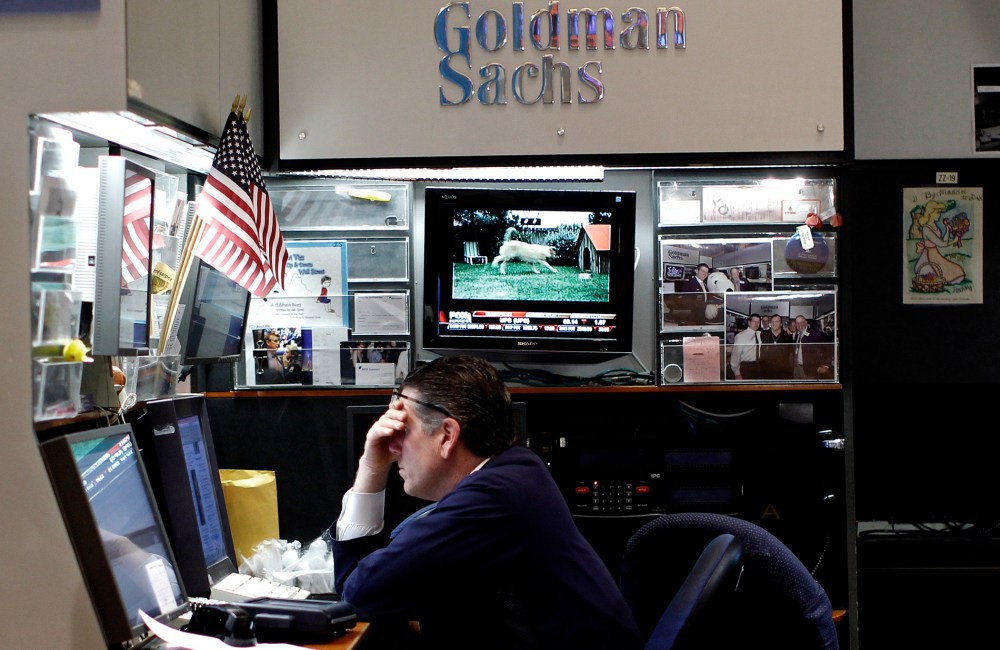
Mere anticipation that the rule was coming out has already had a modest impact on Wall Street’s casino culture. Goldman Sachs and Citigroup, for instance, both shut down trading desks in anticipation of the rule’s release. Morgan Stanley spun off its proprietary trading division. More changes are sure to follow when the rule takes effect in April.
By comparison, the 68 senior corporate officers charged with crimes by the Securities and Exchange Commission for their role in the 2008 financial crisis, and the $1.58 billion in penalties levied, have had no discernible impact.
Many would argue that’s because the penalties weren’t high enough and the prosecutions didn’t target big enough fish. Even Angelo Mozilo, chief executive of Countrywide — the lender at the center of the sub-prime debacle that was subsequently acquired by Bank of America — escaped criminal prosecution. Prosecution of investment bank big-wigs like Richard Fuld, CEO of Lehman Brothers, or Jimmy Cayne of Bear Stearns scarcely seems to have been considered, possibly because of a 2008 Justice Department directive urging greater caution pursuing white-collar cases. Attorney General Eric Holder promised stepped-up prosecutions back in August, but he has also suggested that some firms are too big to prosecute without damaging the national economy. The concept of “too big to jail” is absurd. Criminal activity should be prosecuted, no matter where it’s found. But cries for more Wall Street scalps hold little promise of changing how Wall Street does business. That’s partly because the jails aren’t big enough to hold the number of Masters of the Universe it would take to scare all the other Masters straight. But mostly it’s because the laws and regulations on the books in 2008 — and, more importantly, not on the books — were a bigger part of the problem. As former Massachusetts Democratic Rep. Barney Frank said recently: “A lot of that s— was legal.” Conservatives often talk about government regulation as if it were a weed that grows and grows over time, engulfing and eventually destroying the delicate plant that is capitalism. In fact, market forces are much more nimble and hardy than that. It is capitalism that, left unchecked, grows in all directions. One of those directions is away from existing government regulations, a process that the political scientists Jacob Hacker and Paul Pierson have called “drift.” Industries, like banking, that resist regulation sometimes use their clout to pare existing regulations back. But more often all they have to do to achieve their ends is encourage government’s natural tendency toward stalemate. Corporate America’s greatest deregulatory achievement has been to prevent tough new bills and regulations from becoming law. Drift took care of the rest. The Volcker Rule is an exception. Wall Street’s next step will be to hire legal talent — including, in all likelihood, Supreme Court Justice Antonin Scalia’s son, Eugene, of the law firm Gibson, Dunn & Crutcher — to weaken or overturn the Volcker Rule in the courts. The war to rein in Wall Street excess is never over. But at least now it’s finally being fought. The struggle to indict Wall Street criminals is, by comparison, a minor skirmish—necessary, to be sure, as a matter of justice, but irrelevant to reversing drift.
Timothy Noah Recommended


