








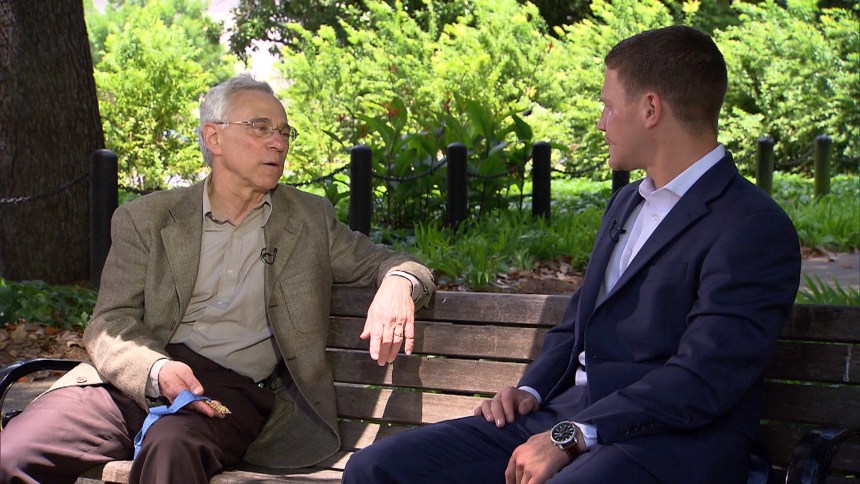
The msnbc original series ”Generation to Generation” takes a side-by-side look at the work of civil rights leaders from the 1960s and their modern-day counterparts. This week, the series features two Medal of Honor recipients — William “Kyle” Carpenter and retired Col. Jack Jacobs.
Jacobs, currently a military analyst for NBC News and msnbc, answered your questions.
In his 21 years of service, Jacobs served in two tours of Vietnam, was a faculty member at the United States Military Academy and National War College, and earned two Silver Stars, three Bronze Stars, and two Purple Hearts.
Read on for the colonel’s responses to user submitted questions and comments.
%22Treating%20our%20veteran%20friends%20as%20if%20they%20are%20victims%20and%20aberrations%20will%20not%20be%20helpful%2C%20but%20for%20veterans%20with%20whom%20we%20are%20acquainted%2C%20friendship%20is%20the%20best%20medicine.%22′
Haleh Kanani: Col. Jacobs, how do you think we should help support veterans who are struggling with non-physical injuries of war like PTSD?
Jacobs: Treating our veteran friends as if they are victims and aberrations will not be helpful, but for veterans with whom we are acquainted, friendship is the best medicine. For the larger corps of veterans with post-traumatic stress, the executive branch and the Congress both have responsibilities, and as citizens we must insist that they discharge them.
Steve Mcgowan: I’ll be attending services at Arlington on Sept. 30th for my friend and fellow Marine, Major Kurt Lee. Why wasn’t he awarded the Medal of Honor? Col. Archie Van Winkle said to me, back in 1972, that Major Lee deserved the medal but wouldn’t get it because the major was of Chinese descent. What is your opinion?
Jacobs: I am not familiar with Major Lee’s action, but any award, and particularly a valorous award, is the product of witness statements and, ultimately, a subjective evaluation by the service and the Defense Department. There are undoubtedly many acts of bravery that were performed but were not witnessed. Others were witnessed by people who didn’t survive to tell the story. And others that deserved recognition but, for a variety of subjective reasons, did not receive it. That is why all Medal of Honor recipients say the same thing: We wear the award not for ourselves, but instead for all those who can’t.
Sherry Friedrichs: Why don’t we: 1) Immediately set up an urgent care department so veterans can go in and be seen immediately. 2) Let doctors and other VA staff members who work for the VA have their student loans paid off or forgiven for so many years of work while also getting paid to take care of vets. 3) Provide easier access and quicker appointment time.
There are loads of things could be done to help the VA run more efficiently to provide veterans the best possible care, quicker access, and better quality of care.
Jacobs: All excellent ideas, but the problem until now is that the D/VA is a large, ponderous bureaucracy that is saddled with labor rules that protect VA employees but preclude the best service that we can — and should — give our veterans. Bob McDonald, who will, when he is confirmed, run the D/VA, is committed to fixing the problems in the Department, but in the end, he will make only the progress that Congress permits.
Stephanie Ruff: Privatize the VA. Why should a vet have to drive 60 miles to see a physician for a sore throat? Privatize so they can see local doctors where they live. Jacobs: Stephanie, I believe you have the answer to most of the VA ‘s problems with medical service. All veterans who are entitled to care should be able to go to any physician or group that takes Medicare, be treated, and pay nothing. Anything less means that we have broken our trust with those who have served us. Paula Lambert Quinn: Why can’t we give disabled veterans the jobs that are so desperately needed to be filled? Jacobs: Perhaps because most people, including potential employers, feel sorry for veterans, and also erroneously believe that they are damaged by their service, they believe that giving a veteran a job is an act of charity. Nothing could be further from the truth. The fact is that veterans have had responsibility and authority far out of proportion to their age. These are the best people our nation can produce, and any employer owes it to his company to hire veterans. And those who have been disabled by their selfless service should get the first crack at jobs. This Q & A has been edited for clarity. Keep up with Jacobs on Twitter, follow him @ColJackJacobs.
MS NOW staff Recommended


