








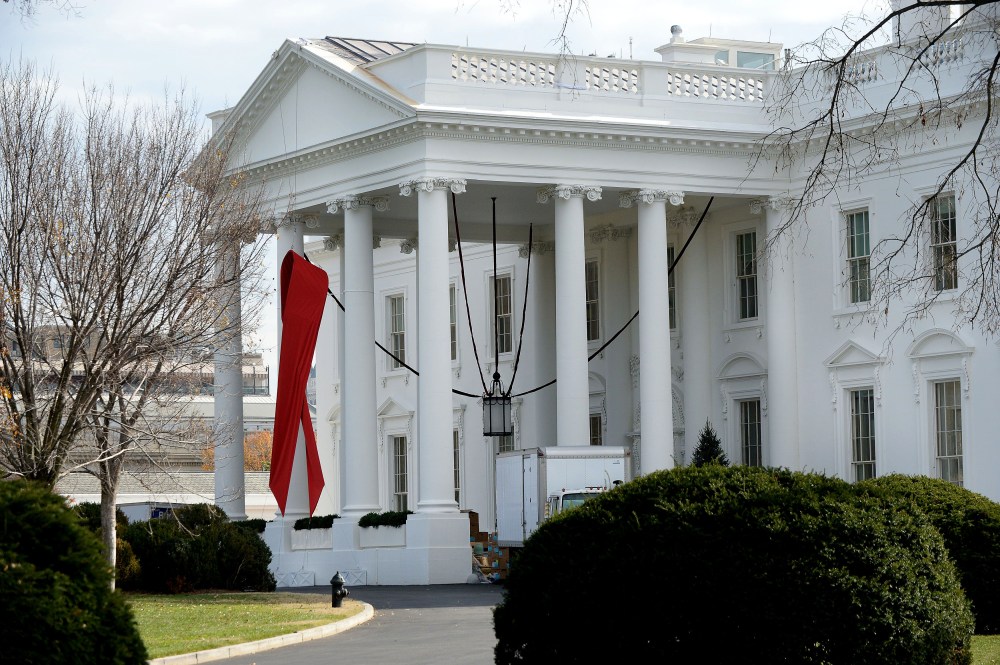
We have come a long way since the first World AIDS day in 1988. A truly global response to HIV/AIDS, a response to which governments jointly committed to take action, has helped transform what was an inevitable death sentence to where HIV can be treated as a chronic condition. We have learned a great deal over these last three decades, not only about the disease itself, but other things, too.
%22We%20have%20learned%20the%20importance%20of%20listening%20to%20those%20affected%20by%20disease%2C%20of%20including%20previously%20unheard%20voices%2C%20and%20the%20importance%20of%20putting%20people%20at%20the%20center%20of%20the%20response.%22′
We have learned important lessons about viruses and how new treatments can control their impact on the body and how commodities like condoms, clean needles, and sterile medical instruments can prevent infections. We have learned about health systems, about global health infrastructure, distribution of medicines, about how inequities of wealth, access, and social systems affect individual health, global health, and development. We have learned the importance of listening to those affected by disease, of including previously unheard voices, and the importance of putting people at the center of the response. We have learned how lessons from responding to one disease can inform the fight against another.
Michel Sidibe, Executive Director of UNAIDS, says “On this World AIDS Day, let us also reflect on the lives lost to Ebola, on the countries and people affected by the outbreak in West Africa. The Ebola outbreak reminds us of the beginning of the AIDS epidemic. People were hiding and scared. Stigma and discrimination were widespread. There were no medicines and there was little hope. But today, thanks to global solidarity, social mobilization, and civil society activism, we have been able, together, to transform tragedy into opportunity. We have been able to break the conspiracy of silence, to reduce the price of medicines, and break the trajectory of the AIDS epidemic. This has saved millions of lives.”
RELATED LINK: HIV/AIDS activists protest US Ebola response in New York City
AIDS activists in New York City stress how lessons learned in the AIDS response must inform the efforts to contain Ebola – how the world must mobilize a coordinated, urgent, and well-resourced global response with all governments committed to take action to stop Ebola. Activists call for urgent mobilization of human and financial resources – a response informed by science, stripped of fear, stigma, discrimination, and one that provides equitable access to the latest medical advances to save the lives of those infected. The same activists are stressing that to end the Ebola outbreak in West Africa the world needs to act globally to urgently mobilize resources to care for those infected in their cities and villages – that global solidarity must facilitate the local actions that must be taken to protect the global public health from the threat of Ebola becoming another global pandemic like HIV/AIDS.
PHOTOS: Treating AIDS around the world
We have also learned that we are at a tipping point in the HIV response. More people are accessing treatment than becoming newly infected for the first time. Almost 14 million people are now on life-saving treatment, and this brings prevention benefits, too. With all this, we have learned that we can end AIDS as a global health threat by 2030.
%22We%20have%20also%20learned%20that%20we%20are%20at%20a%20tipping%20point%20in%20the%20HIV%20response.%20More%20people%20are%20accessing%20treatment%20than%20becoming%20newly%20infected%20for%20the%20first%20time.%22′ If we truly want to end AIDS by 2030, we must commit to accelerating the response over a fragile five year window to fast-track the response. UNAIDS argues for an ambitious 2020 target of 90-90-90 to ensure that 90% of people living with HIV know their status, 90% of people who know their HIV positive status are on treatment, and 90% of people on treatment have suppressed viral loads. Today in Paris, UNAIDS executive director Michel Sidibé with the Mayor of Paris, UN-Habitat, and the International Association of Providers of AIDS Care held a summit – Fast Track Cities: Ending the AIDS Epidemic, which included the signing of a Paris Declaration committing to work together to achieve the 90-90-90 Targets by 2020. The leadership of New York’s HIV community helped craft and advocate for the development of a state-wide plan to end AIDS as an epidemic by 2020. Both Governor Andrew Cuomo and Mayor Bill de Blasio committed to end AIDS earlier this year. This is one of the first, most concrete, and significant examples of taking the vision of ending AIDS forward as 60% of the 35 million people around the world living with HIV live in cities. While many challenges remain, by working together, cities can take local action with global impact. Leveraging our reach, infrastructure and human capacity, cities will build a more equitable, inclusive, prosperous, and sustainable future for all of our residents, regardless of gender, age, social, and economic status or sexual orientation. Together, we can end AIDS in NY by 2020 and, with commitment, globally by 2030. Simon Bland, CBE, is the Director of the UNAIDS New York Office. He is the Former Chairman of the Board of Directors of the Global Fund to Fight AIDS, TB, and Malaria. In 2013, Mr. Bland was made a Commander of the British Empire in the Queen’s Birthday Honours list for service to Global Health.
Simon Bland Recommended


