This year’s electorate will be the most diverse in U.S. history, which makes it almost ironic that this election season has also been one of the most divisive against virtually every minority group.
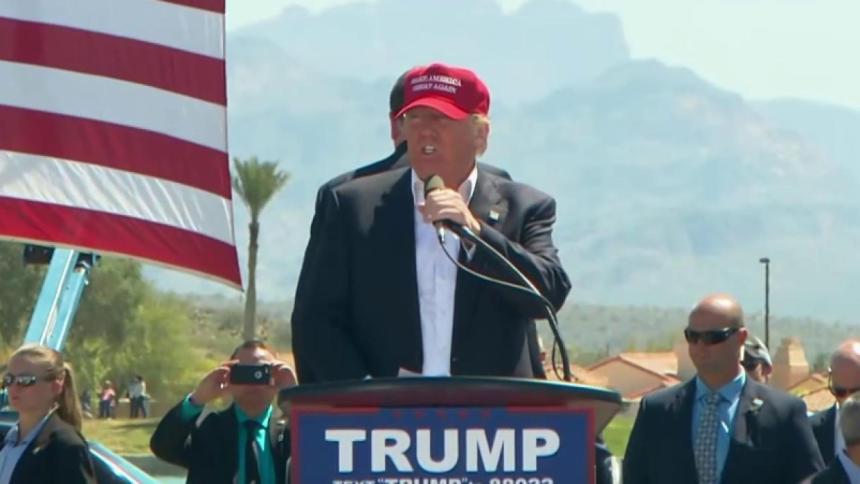
This isn’t just a problem for the Republican Party in rallying behind a demagogue as its presidential nominee, Donald Trump. It could spin into substantial losses lower down the ballot, where vulnerable Republicans are clinging to control in the Senate.
The timing couldn’t be worse for the GOP. More than half of the key competitive races in November are in states with the largest growth of eligible Hispanic voters. Latinos are expected to make up a record 12 percent of all eligible voters in 2016, almost equally rivaling the influence of blacks.
Democrats would need to pick up at least five Senate seats in order to clinch the majority. While perhaps a year ago that would have seemed like a moonshot, today it’s not so out of reach.
Florida
A massive migration wave from Puerto Rico stands to turn this perennial purple state a darker shade of blue. The rapid demographics change has Florida’s Puerto Rican population now rivaling that of Cuban Americans, who have long been a politically active Republican stronghold.
The fresh influx of eligible Hispanic voters could turn on a bright light for Democrats. They already have an edge over Republicans in voter registration of Hispanics, which accounted for 88 percent of the Democratic Party’s growth over the last decade, according to the Pew Research Center.
This should make things interesting in the race to replace Republican Sen. Marco Rubio’s open seat. Rubio exited the presidential contest badly bruised and with no intention of running for re-election. But the option is still technically open. Rubio has until late June to get his name on the ballot in what has already become a crowded candidate field.
RELATED: Donald Trump’s ugly electoral map
Nevada
The Silver State is one of the few that Republicans stand to flip. The seat is left open by outgoing Democratic Senate Minority Leader Harry Reid, in a battleground state that only recently has begun to turn purple.
The state’s diverse Latino population is widely credited for helping Reid win his past re-election campaigns, and for helping Barack Obama sweep the state in both of his presidential elections. Since then, Hispanic voter registration has surged, and Latinos now makes up more than 17 percent of eligible voters in Nevada.
Expect Democrats to use Trump’s most controversial positions on immigration as a major wedge in the race. The GOP candidate, Rep. Joe Heck, is running against a Latina with statewide name recognition, former Nevada Attorney General Catherine Cortez Mastro.
State Democrats were almost giddy when Trump was named the GOP’s presumptive nominee. In a tongue-in-cheek letter written to Trump, state party chair Roberta Lange invited him to “come back to Nevada as soon as possible” and continue giving Democrats a boost in a Latino-heavy state.
“Nevada will be a key battleground up and down the ballot in 2016,” Lange wrote. “But we’re eager to see just how big of an albatross you can be for down-ballot Republicans.”
RELATED: Facing headwinds, McCain feels uneasy about re-election
Colorado
Before Trump became the all-but-inevitable GOP nominee, Colorado was eyed as prime territory for Republicans to pick up a seat. Past Senate elections have jumped back and forth between parties, and the 2014 races provided a road map to how the GOP could make significant gains in expanding the party.
Cory Gardner became the model candidate in proving that the Hispanic vote was not a monolith or a lock for the Democratic Party. He made significant inroads with the Latino community, ousting a Democratic incumbent who strongly supported comprehensive immigration reform.
The circumstances appear to be far different than they were two years ago. Democratic Sen. Michael Bennet appears in safe territory to reclaim his seat — for now. The shifting Republican candidate field is just starting to settle. Whether immigration will be a major fault line issue in the race remains unclear.
RELATED: The path to President Trump turns GOP plan on its head
Illinois
Illinois is working its way toward the top ten of states that house the largest share of eligible Hispanic voters, making up just over 10 percent of the state’s electorate. The state has a strong history of activism in the immigrant and worker’s rights movement. It’s one of the many places across the country where Trump’s inflammatory comments against Mexicans, and threats to deport every last undocumented immigrant, have galvanized Latinos to turn out against him. The anti-Trump momentum could make a difficult run for Republican Sen. Mark Kirk this election. Advocacy groups are already tying him to the party nominee and casting him as anti-immigrant. Asked by NBC5 Chicago’s Mary Ann Ahem if he would support Trump, Kirk said, “If he’s the nominee, I certainly would.” North Carolina and Wisconsin Conservative groups are setting the groundwork for a long-game in converting Latino voters into lifetime conservatives. The Libre Initiative, a Hispanic outreach group bankrolled by the Koch brothers, is widening its footprint in states with burgeoning Latino communities in hopes to expand results two-fold — integrate in communities as they grow and mobilize voters to support conservative candidates. “We want to make sure that we’re grooming the next generation of Latino voters and educating the current generations,” Daniel Garza, executive director of the Libre Initiative, said. “While in communities like Florida and Nevada, you try to establish your brand, when it comes to North Carolina and Wisconsin, we’re going to grow with the communities.” Trump’s candidacy has caused massive headaches for groups like Libre in attempts to woo Latinos. Republican candidates up for re-election in both states, Sen. Richard Burr in North Carolina and Sen. Ron Johnson in Wisconsin, have kept purposefully vague in their support of Trump. Neither has seen the benefit of jumping enthusiastically behind a candidate that wants to deport 11 million undocumented immigrants. Arizona You know there’s a problem when the former Republican presidential nominee says he’s concerned about his prospects of reclaiming a seat he’s held since the mid-1980s. Sen. John McCain said last month that Trump would doom down-ballot candidates — even himself. “If Donald Trump is a the top of the ticket … no doubt that this may be the race of my life,” McCain admitted at a closed-door fundraiser last month, according to a recording of the event, published by Politico.
Amanda Sakuma Recommended