








Help us celebrate MSNBC’s first 25 years by joining us every day for 25 days as our anchors, hosts, and correspondents share their thoughts on where we’ve been — and where we’re going.
At his 2018 appearance at the Gridiron Club dinner — that #thistown-y black tie variety show featuring Washington’s cliquey elite — former President Donald Trump took a self-deprecating dig at then-House Minority Leader Nancy Pelosi: “I really try to tell her that you can’t be a true populist unless you’re worth at least 10 billion,” he cracked. It was a semi-self-aware acknowledgment that, despite his privileged upbringing, celebrity and apparent wealth, Trump had ridden a wave of populist support into the White House.
It was a semi-self-aware acknowledgment that, despite his privileged upbringing, celebrity and apparent wealth, Trump had ridden a wave of populist support into the White House.
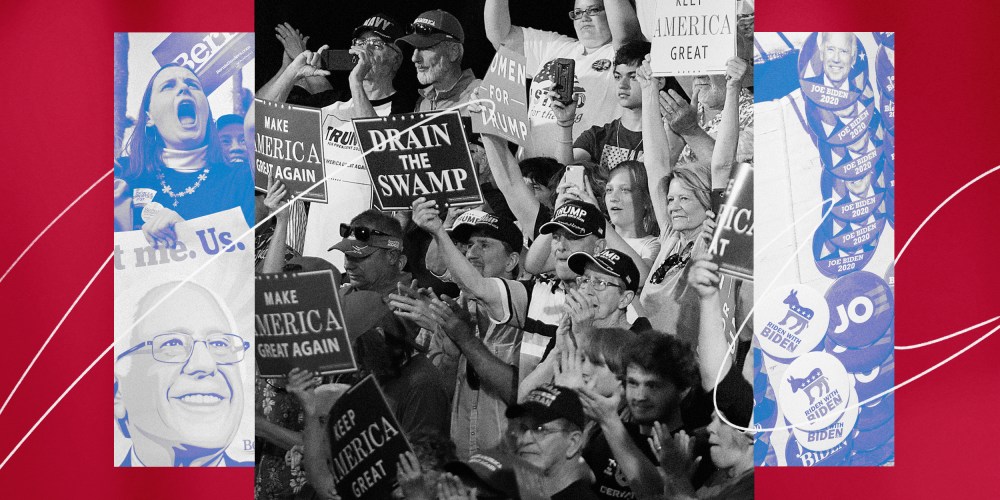
Trump’s presidency helped rebrand the perception of populism, turning it into a kind of pundit shorthand for describing white, angry, poor voters. But the perception didn’t always match reality. “At the moment in which Trumpism was supposedly taking off, there was also Bernie Sanders’s campaign — so there was this kind of general sense that, you know, working people, poor people were catching hell, and that political leads had in some ways failed them,” Eddie Glaude, author and professor at Princeton University, told me. “To think about populism as solely kind of directed towards Trumpism, or whatever that is, is to misdescribe, I think, the moment.”
Different people define populism in different ways, but it’s generally seen as an anti-establishment, anti-elitist political movement that positions a bloc of voters in opposition to the traditional leaders tasked with representing them. And Republican observers don’t see this kind of movement disappearing from the party anytime soon.

“It’s tempting to just say the battle over the soul of the [Republican] party is temporarily being won by the populists, and nothing is forever, so it’ll swing back before long,” said Republican strategist Brendan Buck, former counselor to House Speaker Paul Ryan. “But I don’t have much confidence that that’ll happen anytime soon.”
That’s partly because some conservatives are seeking to take over the populist mantle, and attempt to inject policy into a discussion that critics say has largely centered on culture war issues. “There’s no policy remedy for any of it. It’s just a complaint. It’s like a guttural grunt of grievance,” said Tim Miller, a long-time GOP operative who voted for Joe Biden in 2020. “So I do think that [Republicans] are going to try to latch on to other stuff to make it more tangible for real lives.”
One example: Sen. Josh Hawley, the Missouri Republican who perpetuated lies about the legitimacy of the 2020 election by objecting to the certification of its results, has proposed thousands of dollars in tax credits to working parents, seeking to strike a populist note as he’s urged the GOP to “be a working class party, not a Wall Street party.” Key mainstream Republican economic priorities — like opposition to cutting corporate tax rates or raising taxes on the wealthy — appear antithetical to what populism represents. But key mainstream Republican economic priorities — like opposition to cutting corporate tax rates or raising taxes on the wealthy — appear antithetical to what populism represents. Miller actually sees an opportunity here for Democrats, if they are able to seize on the relatively few populist legislative initiatives offered up by Republicans. “They can take some of these issues and cleave off some of these voters who have real legitimate grievances that need to be redressed by policy, and help them solve those problems,” he said. Democratic strategist Adrienne Elrod agrees that Democrats, under Biden, could help reclaim some of those voters: “The GOP has chipped away at some of our working class voter support through the years, in part because of populist rhetoric. But that all changed with President Biden,” Elrod said. “He is actually walking the walk — he hails from a working-class town and a working-class family, and is laser focused on driving policies that are helping to rebuild the middle class.”
Hallie Jackson
Hallie Jackson is senior Washington correspondent for NBC News. Recommended


