








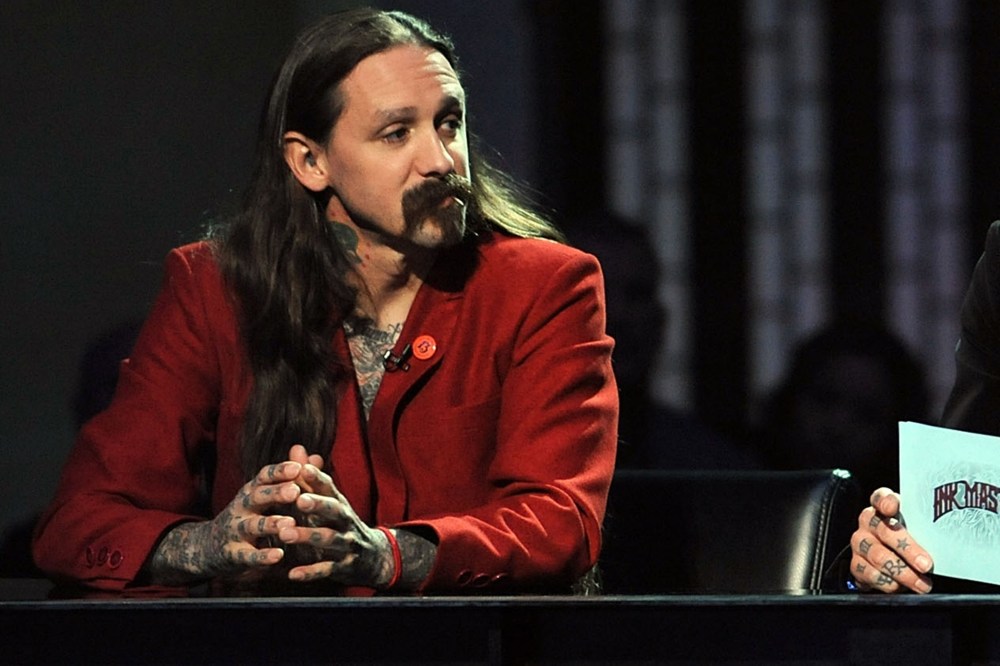
A former production assistant on the reality television show Ink Masters accuses her former employers of engaging in “severe and pervasive” sexual harassment, according to a legal complaint filed earlier this month.
The filing, which was submitted to a federal district court in New York, claims the two hosts of the Spike TV show would routinely make unwelcome sexual advances and engage in “non-consensual, unwelcome, and inappropriate touching.”
“From what we’ve been told by our client, we believe this is not an isolated incident,” said Kenneth Katz, an attorney for the plaintiff, 25-year-old Nicoletta Robinson.
Although no other plaintiffs have yet stepped forward, the complaint against Ink Masters suggests that other female employers were subject to sexual harassment as well. For example, Oliver Peck, one of the show’s hosts, is accused of physically assaulting and choking Robinson’s supervisor.
“Part of the reason that our client decided to go forward with the suit was that she felt she had to stand up, not only for her rights, but to raise awareness,” said Katz. He said Robinson would not be speaking to the press out of a desire to “keep her private life private.”
That hasn’t stopped Nicoletta Robinson’s older brother, Henry Robinson, from speaking out. Earlier this week he launched a Facebook group called “Boycott Ink Master,” calling on the show’s production company to fire both hosts and urging advertisers to drop their support for the show. Henry Robinson declined to answer specific questions about the case and his sister’s well-being, but the About page for his Facebook group enumerates several of the charges being made against “Ink Master,” its two hosts, the production company Original Media, and Spike TV. Peck and his co-host, Chris Nunez, are referred to as “proud misogynists and bigots.”
A spokesperson for Spike TV said the cable channel would not comment on pending litigation. Original Media also declined to comment.
Lowell Peterson, executive director of Writer’s Guild of America (WGA) East, said he was not intimately involved with the details of Robinson’s lawsuit and couldn’t comment directly on the veracity of her claims. But it’s clear, he said, that reality television workers are far more vulnerable to mistreatment than people employed in other sectors of the television industry.
“They have less bargaining power,” he said. “They’re more at the mercy of people higher up the chain of authority. They don’t have any union representation to call into the workplace to say, look, this has got to stop. They don’t have contracts, collective bargaining agreements, to protect them. The steep inequality of bargaining power is to blame in a lot of ways.”
Without union representation or bargaining agreements, workers can only take their grievances directly to their superiors. According to her complaint against Ink Masters, Robinson took her concerns to her immediate supervisor and was discouraged from pursuing them further. Eventually, she was let go, despite the absence of any “legitimate business reason for Robinson to be terminated,” according to the complaint.
Other forms of abuse, such as wage and hour law violations, are endemic to the reality television industry, said Peterson. Last year, a WGA survey of 315 New York-area reality television employees found that 85% never received overtime pay, despite consistently working more than 40 hours per week. Peterson also said that reality television workers consistently earn less in wages and benefits than their counterparts in scripted television. “There are no benefits in most of nonfiction,” he said. “No health benefits at most companies. I don’t think anyone gets pension benefits. The weekly pay rates are a lot lower. There are no restrictions on workload. Conditions are really hard, actually. People work a lot of hours without any additional pay.” WGA and other organizations have been working to change that. The union has successfully organized a handful of reality television production companies, and WGA West recently became embroiled in a high-profile unionization battle with Joan Rivers’ Rugby Productions. Yet they’ve barely put a dent in the industry at large. Market research group IBISWorld estimates that reality television production companies rake in about $6 billion in annual revenue, but workers see little of the profit. “There’s plenty of room in there to increase labor costs—in other words, to get people better pay and benefits while retaining profitability,” said Peterson. But reality television’s success and popularity as a business model is predicated in large part on management’s success in keeping those costs down. “Unfortunately, a lot of that has come on the backs of the people who work on these shows,” said Peterson.
Ned Resnikoff is an urban policy analyst, researcher, writer, and editor. His byline has appeared in a variety of publications, including the New York Times, San Francisco Chronicle, Dissent, and The Nation. He writes the newsletter Public Comment, which can be found at publiccomment.blog. Recommended


