








Congress has done it again. A letter this week from 47 Senate Republicans – a thinly veiled attempt to torpedo diplomacy with Iran – displayed a stunning hypocrisy that deserves rebuke. This letter confirms what has become increasingly clear — members of Congress want to micromanage peace, while putting war on autopilot.
RELATED: Lawmakers sour on Iran letter
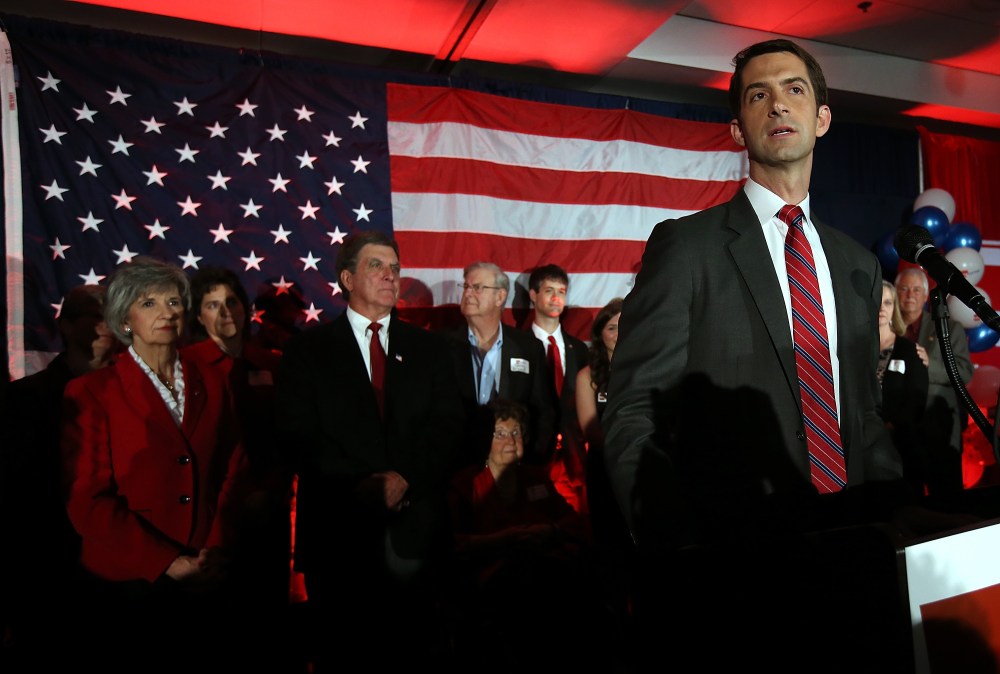
The first piece of evidence is Congress’s abject failure to debate or vote on the war against the self-described Islamic State of Iraq and Syria. For more than seven months, the United States has been waging a new war in Iraq and Syria. After more than 2,600 airstrikes and the deployment of about 3,000 troops, Congress has yet to indicate any real interest in considering the authorization of this new war. This failure to act is particularly astonishing in light of Arkansas Republican Sen. Tom Cotton’s letter, which purported to “educate” Iranian leaders on Congress’s constitutional role in foreign relations.
As various legal scholars have pointed out, the Senate’s role in these sorts of executive agreements is complex, and only a miniscule percentage of agreements between the United States and other countries have been treaties submitted to the Senate. It is exactly the opposite case when it comes to declaring war – it is crystal clear that Congress, and not the president, has the constitutional mandate to authorize force. Yet the Obama administration has been left virtually unencumbered by Congress to launch and continue a new war.
The second indication is Congress’ failure to repeal the 2001 Authorization for the Use of Military Force (AUMF). For years, Congress has directly or indirectly allowed, to its own detriment, the executive branch to absorb more and more war powers. No action has done more to weaken the constitutional separation of war powers than the passage of the AUMF, which essentially gave the president a blank check to wage war against anyone, anywhere and at any time. The normalization of this dynamic has removed from Congress the responsibility to make the tough decisions of war, and the political culpability for making the wrong decisions.
Two administrations so far have simply invoked the AUMF when they want to use force, and this will likely continue until it is taken off the books. This has achieved exactly the opposite effect than that intended by America’s founders — Congress was given the responsibility to declare war precisely because it is a decision that requires accountability and should not be left to an unchecked executive. Yet, aside from a few efforts that garnered a little traction, Congress has largely been content to step aside and hand over to the executive branch all the war powers it desires.
RELATED: Obama asks for new war powers: ISIS is ‘going to lose’
These examples are especially staggering when compared to the third piece of evidence – Congress’s frequent attempts to shipwreck a peaceful, diplomatic solution to prevent a nuclear-armed Iran. This letter is simply the latest attempt to sabotage the negotiations, an objective that lead author Sen. Cotton openly supports: “the end of these negotiations isn’t an unintended consequence of congressional action. It is very much an intended consequence.” The letter comes on the heels of the House leadership privileging Israeli Prime Minister Netanyahu with the most prestigious platform available to denounce a deal — any deal at all that Iran would conceivably agree to — out of hand. Many senators have also attempted to undermine the talks by supporting legislation, led by Tennessee Republican Sen. Bob Corker, that would mandate congressional say-so on any agreement reached with Iran. Under pressure, Senate leadership delayed a vote on this bill, but there is a great danger it could come up on the floor later this month. It is the height of hypocrisy for members of Congress to deliberately obstruct a diplomatic solution while simultaneously neglecting their war authorization responsibilities for the better part of a year. If these lawmakers truly are concerned about their constitutional responsibilities in foreign affairs, they will check the monstrously bloated presidential war powers that they have allowed to grow out of control, and then step back and allow diplomacy to succeed. Elizabeth R. Beavers is the legislative associate on militarism and civil liberties at the Friends Committee on National Legislation. Kate Gould is the legislative associate on Middle East policy at the Friends Committee on National Legislation.
Elizabeth R. Beavers
Kate Gould Recommended


