








Hubris: The Selling of the Iraq War, a documentary special hosted by Rachel Maddow will re-air Friday, May 3 at 9 p.m. ET on msnbc.
NBC News National Investigative Correspondent Michael Isikoff co-authored the best-selling book Hubris with David Corn, an msnbc contributor and the Washington Bureau Chief of Mother Jones. Their book is the basis for the new msnbc documentary, Hubris: Selling the Iraq War, which chronicles how the Bush administration marketed the 2003 Iraq war to the American people. The documentary, which includes interviews with insiders such as President Bush’s Undersecretary for Defense Douglas Feith, Gen. Anthony Zinni, the former commander in chief of U.S. Central Command, and many others, takes viewers through the key decisions that put American troops in harm’s way.
The reporting raises tough questions about the administration’s decisions, actions–and motives. It also, at a time when the movie Zero Dark Thirty has drawn attention to the issue, shows viewers the role that torture played in intelligence-gathering after 9/11. The real-life role of torture in pre-Iraq war intelligence, which is reported in Hubris, has far scarier implications than the Hollywood version.
The documentary is hosted by Rachel Maddow. It will re-air Friday, March 22, at 9 p.m. The documentary premiered earlier this month on msnbc. We spoke with Isikoff about the impact of this story as the ten-year anniversary of the invasion of Iraq approaches.
msnbc: A decade after the invasion of Iraq, do you think the public knows the full story of how America ended up at war?
ISIKOFF: The public does not know the full story–and won’t for many years, because many key documents such as the 90-page National Intelligence Estimate on Iraqi weapons of mass destruction have yet to be fully declassified. But the basic outlines are now clear and many of the details are increasingly being filled in. The documentary airing Monday night, based on the book Hubris that I co-authored with David Corn, fills in many of those details. The film includes startling moments, like the comments of Gen. Anthony Zinni, former Centcom commander, about how sketchy the intelligence was on Iraqi weapons programs.
What is the most overlooked part of this piece of history?
The story of the dissenters. In the documentary, we interview Houston Wood, the nuclear scientist who was asked to evaluate the aluminum tubes seized by the CIA which were later presented as smoking-gun evidence that the Iraqis were building centrifuges for a reconstituted nuclear weapons program. Wood, a genuine expert on the issue, thought he had debunked the assessment in 2001 and was stunned to see the Bush administration using it to justify an invasion. When he heard Colin Powell echo the discredited claim at the U.N. Security Council, he says, “I felt betrayed” as a scientist and as an American. That kind of testimony is powerful stuff and it mirrors the experience of many in the government who knew that what was being presented to the public was completely wrong.
Of all the Bush administration officials involved, was there one who pushed the Iraq war agenda more than others?
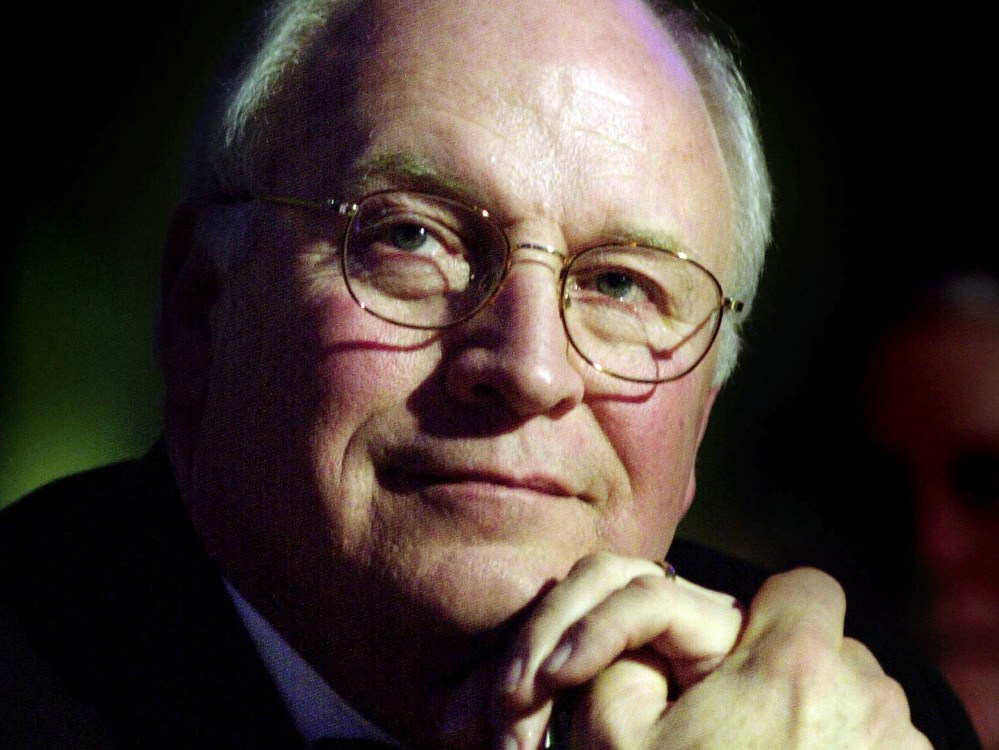
There were a handful who were equally committed to the same goal. Vice President Dick Cheney, Deputy Secretary of Defense Paul Wolfowitz, Secretary of Defense Donald Rumsfeld and several of their closest aides all drove the issue.
What was the single most shocking thing you discovered while reporting on the intelligence -gathering efforts and the lead-up to the invasion?
I still find the Ibn Shaykh al-Libi story–recounted with important new details and video in the documentary–the most shocking of all. He was the high-ranking al-Qaida figure captured in Afghanistan in late 2001. At first, he’s questioned by the FBI–then “rendered” by the CIA in early 2002 to Egypt, where he was subjected to torture: beatings, a mock burial and God knows what else. He suddenly coughed up a story–that Iraq was training al-Qaida members in chemical and biological weapons–that nobody in the U.S. intelligence community really believed. The CIA internally even wrote an assessment concluding that al-Libi was likely fabricating much of what he told the Egyptians. Yet suddenly in September 2002, the White House starts using the claim that Iraq is training al-Qaida in “poisons and gases”–a claim based entirely on al-Libi.
After the war, al-Libi is returned to U.S. custody and recants the whole thing, saying he made it up because the Egyptians were torturing him. It is a classic example of why (apart from any moral issues) torture does not work: it produces false intelligence. Anybody who saw Zero Dark Thirty and thinks it vindicates waterboarding and other “enhanced interrogation techniques” should watch Hubris.
There is a sad postscript to the story. Al-Libi is the only “high-value” detainee who was not sent to Gitmo for eventual trial before a military tribunal. Instead, he was quietly turned over to Moammar Gadhafi’s henchmen in Libya, and just days after being visited by Human Rights Watch, was found hanging from his neck inside a Libyan prison. His family believes he was murdered to cover up the true story of what happened to him. We’ll never know the answer to that, but we do know with certainty that an American president used bogus intelligence from a tortured detainee to make a false claim to the American public and to the world.
It’s been six years since your and David Corn’s book came out. What new information or insights did you find while working on the documentary version?
Quite a lot. For example, the talking points–only declassified in the last few years–of the meeting Rumsfeld had with Gen. Tommy Franks in November 2001 to plot the “decapitation” of the Iraqi government. The notes show that one topic on the agenda was “How start?”–that is, what could they do to instigate a war. It’s a breathtakingly cynical document and will be shown on television for the first time in our film. In your interviews with administration officials and intelligence professionals, is there now a consensus about what went wrong? Or is there a lot of finger-pointing? There is still a lot of finger-pointing and there always will be. In the documentary, Doug Feith blames the CIA for everything that the Bush administration got wrong about WMD and says the agency’s intel was a “disaster.” Paul Pillar, a former top CIA analyst, says everybody in the intelligence community knew which way the wind was blowing–what the White House wanted to hear–and they “bent with the wind.” They’re both right. Of course at the time they were both wrong. (Pillar helped write the crucial National Intelligence Estimate.) It was not a shining moment for anyone including the news media, which didn’t do enough to challenge administration claims and demand to see more of the evidence. Is there still a missing piece of information–something that you’d really like to know? I’d like to know what Cheney and Bush said to each other when they discovered there was no Iraqi WMD. I’d like to know what Powell said to then-CIA Director George Tenet when he learned that all the assertions he made at the Security Council were wrong. I’d like to know what Paul Wolfowitz said to Laurie Mylroie–the academic guru who convinced him that Iraqi intelligence was behind al-Qaida—when he learned that the whole idea was a figment of their imagination. Do you think Iraq is better off with Saddam gone? Sure, in many respects. Saddam was a brutal tyrant–no question about it. But more than 4,400 Americans are dead, along with 100,000 Iraqi civilians; the U.S. spent over $1 trillion, and the future of Iraq is very much in doubt. Chuck Hagel said during his confirmation hearing that “history will make a judgment” on the Iraq war. But history has already rendered its verdict on how the war was sold to the American public–and that’s the subject of Hubris. Have you seen a shift in the way the intelligence community and administrations cooperate? Is there more caution? There is indeed more caution. But every administration makes it own mistakes. It is striking to me that the Obama White House justifies its drone policy based on the soundness of secret intelligence. If we’ve learned anything from the story of the selling of the Iraq war, it’s that we should always–always–be skeptical and ask tough questions about what any administration says about secret intelligence.
MS NOW staff Recommended


