








Cheap gas could be a big boon for ordinary Americans — and the economy as a whole — putting extra money in their pockets they wouldn’t have otherwise. But consumers aren’t rushing out to spend it all just yet.
Retail sales in December were far weaker than expected, plummeting by 0.9% instead of the 0.1% decline that analysts had anticipated. Some were quick to blame lower gas sales for the drop, but even excluding auto and gas purchases, sales still fell 0.3% last month.
RELATED: Obama announces plan for high-speed broadband access
“The sizable decline in control retail sales in December still stands out as one of the weakest figures reported in the expansion to date, especially considering that consumer spending should be picking up in response to the recent drop in gasoline prices,” according to JPMorgan’s research division.
But many economists believe, if oil prices remain low, it’s a just a matter of time before consumers spend the extra money they’re saving from cheap gas.
“I think it is a blip,” said Mark Zandi, chief economist for Moody’s Analytics, referring to December’s disappointing retail sales. “Consumer spending will strengthen substantially this year.”
%22I%20can%E2%80%99t%20imagine%20a%20scenario%20where%20lower%20oil%20prices%20would%20hurt%20the%20economy%20on%20net.%22′
Zandi estimates that, for every penny that the average cost of gasoline goes down, consumers save $1.25 billion during the course of a year. Overall, consumers could receive the equivalent of a $125 billion to $150 billion tax cut due to falling oil prices, and they’re expected to spend much of that windfall, boosting the GDP growth by 0.5%, according to an analysis from Goldman Sachs’ research division.
The average U.S. household will spend about $550 less on gas in 2015 than in 2014, according to the U.S. Energy Information Administration. Since lower-income consumers spend a higher proportion of their income on gasoline, they stand to benefit the most. Cheap oil is also expected to reduce heating costs for consumers, adding another boost to the economy.
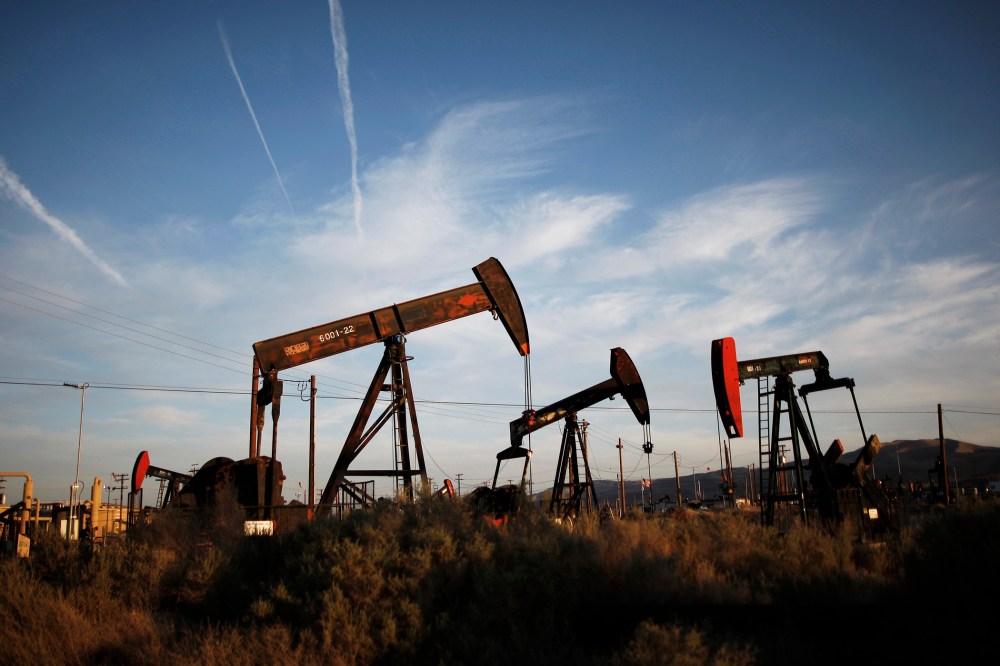
There’s a downside for the U.S. as well: Oil-producing states are already feeling the pinch from falling prices, particularly as shale oil costs more to produce. Goldman Sachs expects the energy sector to lose 30,000 jobs during the next year.
However, states like Texas have also worked to move beyond the oil industry to insulate themselves better from price shocks. “Experts and elected officials say an extended downturn in oil prices seems unlikely to create the economic disasters that accompanied the 1980s oil bust, because energy-producing states that were left reeling for years have diversified their economies,” the Council on Foreign Relations explained in 2013. “The effects on the states are nothing like the crises facing big oil-exporting nations like Russia, Iran and Venezuela.”
Analysts still expect the net effect for the U.S. economy to be more positive than negative, given that the U.S. is a net consumer of oil. “I can’t imagine a scenario where lower oil prices would hurt the economy on net,” Zandi said. “Clearly the energy industry and energy-producing regions will be hurt the lower oil prices go, but this will be offset by the benefit to manufacturers, transportation companies, retailers and other industries.” RELATED: Democrats’ latest plan to close the income gap Despite Russia’s problems, Europe is also likely to see a net gain from cheap oil, said Michael Feroli, chief U.S. economist for JPMorgan. “If anything, Europe should benefit the most or more from falling energy prices, because there’s even less production there, and they’re a net importer,” he said. “Same with Japan.” Why, then, are we hearing more about the downside than the upside? It’s partly because oil prices have become far more volatile. Few expected the price of oil to fall this fast, and there’s a complex host of reasons why it did. But the price of oil is also likely to rebound faster than during the infamous oil bust of the mid-1980s as the nature of production has changed. The stock market is also an imperfect barometer for the impact of oil on the U.S. as a whole: It’s more likely to react to falling oil prices negatively because energy producers have an outsize impact on the market, compared to the impact on the entire economy. By contrast, economic benefits of higher consumer spending due to lower oil prices are more diffuse and not as immediately reflected in the market. “The upshot is that oil producers are overrepresented in publicly traded markets, and oil consumers are underrepresented,” according to Goldman Sachs’s analysis. And ordinary Americans still stand to benefit from cheaper oil.
Suzy Khimm Recommended


Average regular-grade gasoline prices in the U.S.
*Values for 2015 and 2016 are projections
Source: U.S. Energy Information Administration
