








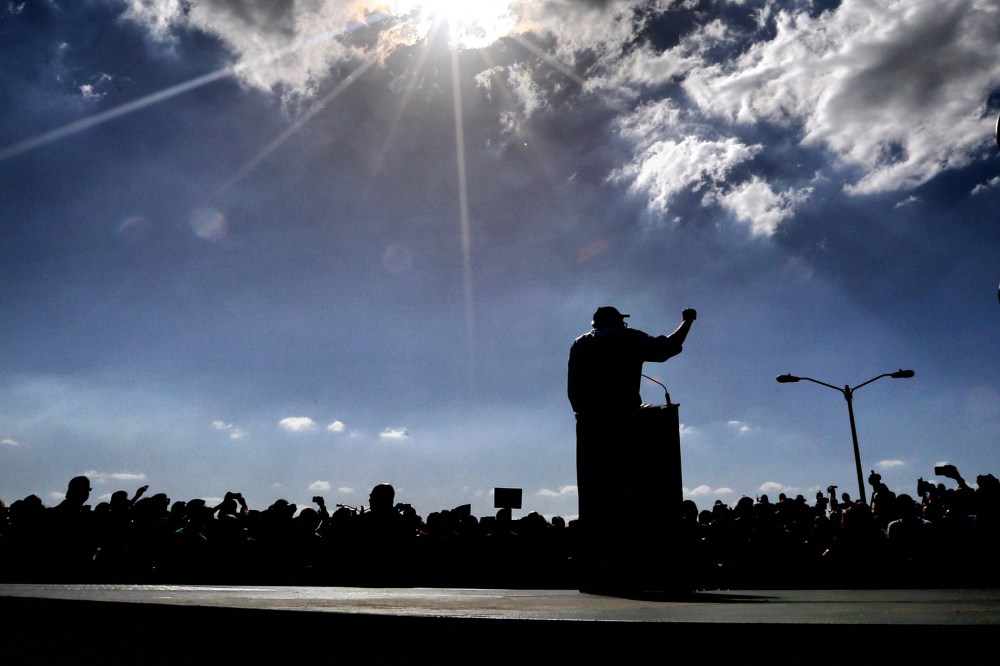
If the Bernie Sanders movement is trying to take down the Democratic political establishment, there’s probably no better place to start than Debbie Wasserman Schultz, chairwoman of the Democratic National Committee.
Even before Wasserman Schultz was accused of trying to rig the primary process for Hillary Clinton, her perch atop the party apparatus and failure to meet some liberal purity tests made her a target of some on the left.
RELATED: Warren and Wasserman Schultz clash over payday lenders
Now, Wasserman Schultz is facing her first real primary fight since she was elected to Congress from Florida in 2004. Her challenger is Tim Canova, a progressive law professor fueled by the Sanders movement. It’s a longshot, but Canova has some key actors from the Sanders coalition behind him.
Sanders has long called for a “political revolution” that would sweep ideological allies into office up and down the ballot, and Canova is one of handful of congressional candidates who support the presidential candidate and are running on a similar platform.
“We are part of the same movement,” Canova said of Sanders.
The Vermont senator’s former Florida campaign director, Zack Exley, left the presidential race the day after the state’s primary last month to work on Canova’s campaign, which kicked off with a Q&A on a pro-Sanders Reddit channel. In 2011, Sanders appointed Canova to a Senate advisory panel on the Federal Reserve.
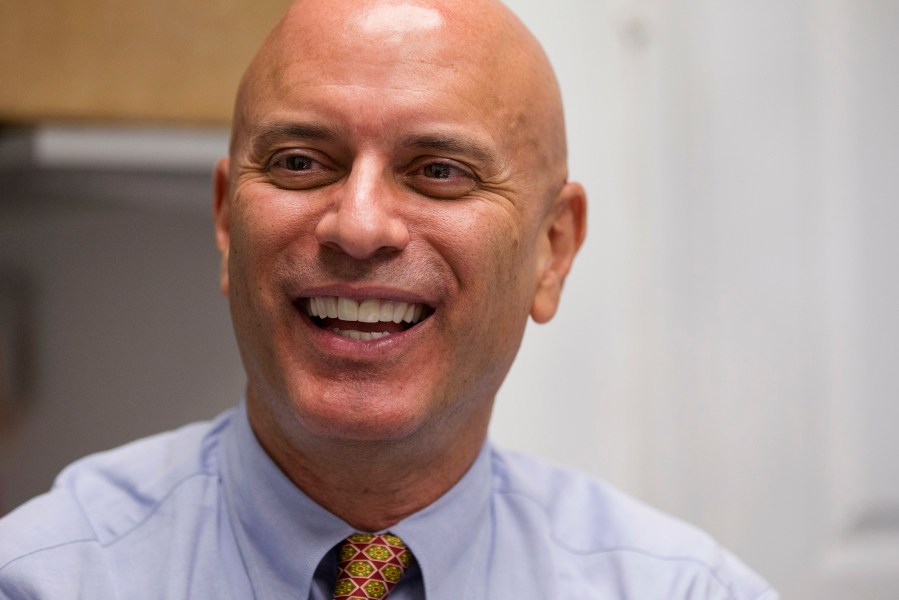
A political neophyte, Canova has raised more than $657,000 so far this year — an astronomical sum for a non-incumbent. Almost all of it came from small online donations, thanks to help from the same digital consulting firm behind Sanders’ money machine, Revolution Messaging.
Wasserman Schultz managed to outraise her challenger by about $60,000 in the first quarter, but Canova supporters note he received more individual contributions.
“I’ve probably never worked a congressional race with this much interest,” said Revolution Messaging strategist Mike Nellis, who is working with the Canova campaign.
The dynamic has led many to view the race in Florida’s 23rd congressional district as a proxy fight between Sanders and the DNC, which his campaign sued in federal court and openly accuses of trying to derail his candidacy.
Both congressional candidates have received most of their money from out of state, and both are drawing on nationalized — but very different — support bases. And Sanders supporters from across the country have donated or offered to volunteer for Canova.
Canova doesn’t back away from the support, but says his campaign is about a lot more than presidential politics or picking a bone with Wasserman Schultz. “People are unhappy with her leadership of the DNC and they express that in many ways. They sign petitions, they protest, and they also donate to her challenger,” Canova said, adding his main issue is with the representative’s record.
RELATED: The fight for congressional control takes an unexpected turn
Sanders has so far made few steps to expand his political revolution beyond the top of the ticket.
On Wednesday, his campaign deployed their powerful email fundraising list for the first time to support three candidates who have endorsed the Vermont senator, New York’s Zephyr Teachout, Washington’s Pramila Jayapal and Nevada’s Lucy Flores. While aides would not comment on whether he will help Canova, the Sanders campaign is expected ramp up its help for candidates down-ballot.
Howie Klein, a longtime critic of Democratic congressional leaders who runs the Blue America PAC, said supporting candidates like Canova is the next organic phase of the Sanders movement.
“Bernie has made it real clear that the revolution isn’t about getting him in the White House,” he said. “It’s about galvanizing and inspiring a whole generation of people, and many generations of people, to be a part of a mass movement to make real changes to the status quo.”
Blue America has a project called “Bernie Congress” aimed at bolstering campaigns from candidates who back Sanders and meet a high ideological threshold.
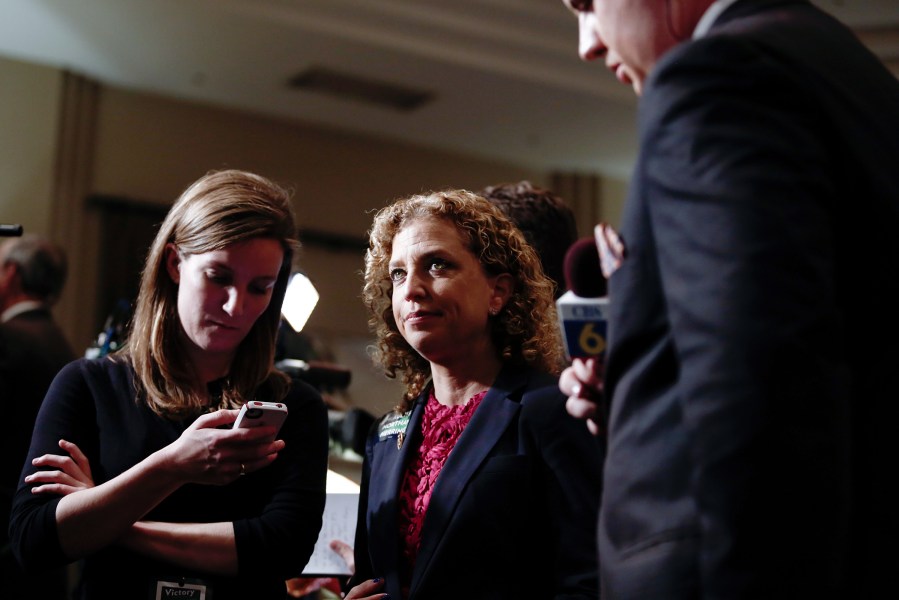
Wasserman Schultz has found herself on the wrong side the left on a range of fronts, from her alleged softness on the payday lending industry, to her opposition of medical marijuana, to her perceived reluctance to back President Obama’s Iran deal, to her support for so-called fast-track trade authority opposed by critics of the Trans Pacific Partnership trade deal.
Comments she made in January on abortion led a large progressive organization to call for Wasserman Schultz’ resignation.
Many Democratic members of Congress have held similar positions, but none are also the chairwoman of the DNC, so there’s an interest in making an example out of Wasserman Schultz. Before hardly anyone knew Canova’s name, the group Allied Progress began running digital and TV ads in Wasserman Schultz’ district attacking her connections to Florida’s powerful payday lending industry, which financial reform advocates say preys on the poor. The group placed a billboard on the route the congresswoman would likely take to-and-from the airport, and a second that anyone going to her district office would likely pass. “This is not going to end anytime soon,” said Karl Frisch, the executive director of Allied Progress, which is not taking sides in the primary. “These lenders are vultures. Why any member of Congress would be cozying up to these people is beyond me.” RELATED: Debbie Wasserman Schultz on why superdelegates exist Actor Mark Ruffalo, a top Sanders surrogate, has criticized the congresswoman on payday lending. But despite the national attention, Wasserman Schultz is very popular in her district and Canova faces an uphill battle, to say the least. Clinton routed Sanders 68 percent to 31 percent in Wasserman Schultz’ district in the March 15 Florida primary. The congresswoman has represented the area since she was 26, both in Tallahassee and then in Washington, winning reelection numerous times by wide margins and scaring away any primary challenges until now. “He’s running a Bernie Sanders campaign,” Jim Kane, a Florida pollster and adjunct political science professor at the University of Florida. “But the district’s just not right for it.” Sanders’ strength is with young voters, but the 23rd District skews older. Just over half the voting age population is older than 45, Kane noted. “I don’t see her having a weakness,” Kane said. RELATED: DNC chair calls for solidarity with Muslims The Miami New Times, a local alt-weekly, made this point in a blunt headline: “Dear Bernie Bros: Trying to Defeat Debbie Wasserman Schultz Is Just Plain Stupid.” The paper notes that Wasserman Schultz for years was criticized for being too liberal, arguing Canova’s claims ring hollow. Even among some Democrats sympathetic to Canova ideologically, doubts linger about the political neophyte’s ability to run an effective campaign, let alone down the titular head of the Democratic Party. Now that Canova has raised a fortune, his first real test will come in how he spends it. Canova says he has no interest in running a protest campaign. “From day one, I have not been running to make a statement, he said. “I have been running to win the race.” Correction: Wasserman Schultz was elected to Congress in 2004, not 1992 as previously stated (she was elected to the Florida House in 1992).
Alex Seitz-Wald Recommended


