








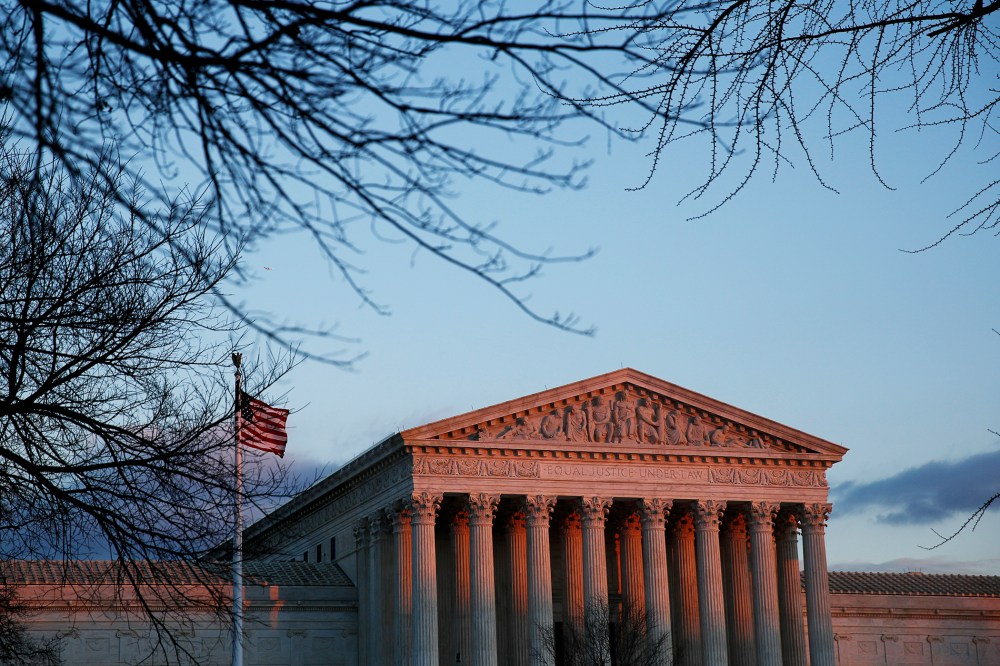
The highest-stakes abortion case in a generation is getting closer to the Supreme Court, as the court announced a date to hear the case, and the Texas clinics challenging a law there filed their 62-page brief. At stake is whether Texas can close down three quarters of its abortion clinics, with other red states poised to follow suit.
Whole Woman’s Health v. Cole will be heard on March 2. It is the only case scheduled for argument that day, suggesting it could last longer than the standard one hour allotted for the court to hear from the parties. That morning, attorneys representing Texas will defend its requirements that abortions only be provided in ambulatory surgical centers by doctors who have admitting privileges at hospitals within 30 miles of the clinic, by saying they protect women’s health.
RELATED: The year’s biggest battles over abortion rights
Not so, says a group of abortion providers from across Texas in their brief, filed Tuesday. “Those requirements will instead make it harder for women to end a pregnancy safely by reducing their access to legal abortion,” they write in their brief. “Together, the requirements would close more than 75% of Texas abortion facilities and deter new ones from opening. Indeed, more than half of these facilities are currently closed because the admitting privileges requirement is largely in effect. The impact of these closures has been dire, delaying many women—and preventing others—from obtaining a legal abortion. This, in turn, has led to an increase in abortions later in pregnancy and in illegal abortions.”
The governing standard for how far a state can restrict abortion is the 1992 case Planned Parenthood v. Casey, which held that states could try to talk women out of having abortions, but that they couldn’t pass a regulation if it inflicted an “undue burden,” meaning “if its purpose or effect is to place substantial obstacles in the path of a woman seeking an abortion before the fetus attains viability.” According to the clinics, “The burdens imposed by these laws are so grossly disproportionate to any possible health benefit that they are plainly ‘undue.’”
The clinics argue that the 5th Circuit of Appeals didn’t properly take into account the fact that major medical experts, including the American Medical Association and the American College of Obstetricians and Gynecologists, say the law is medically unnecessary. They are also, in practice, nearly impossible for many clinics to comply with. According to the brief, “as a result of the larger building footprint and increased staffing, the annual cost of operating an abortion facility that meets ASC standards is roughly $600,000 to $1 million greater than the annual cost of operating an abortion facility that met the prior standards.” Meanwhile, abortion providers who apply for admitting privileges at local hospitals face the challenge that because the abortion complication rate is so low, they rarely admit patients to any hospital — usually a prerequisite for obtaining the status — and the fact that many such hospitals oppose abortion outright.
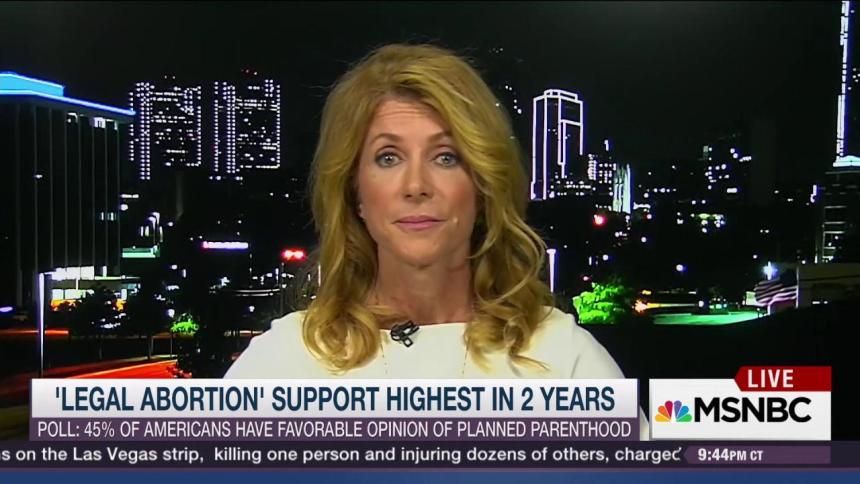
The clinics also say that abortion in Texas is already extremely safe. “A woman in Texas is currently 100 times more likely to die from carrying a pregnancy to term than from having an abortion in a licensed abortion facility” in Texas before the law’s effects, they write, citing state statistics. The law in question was passed in the summer of 2013 over the 11-hour filibuster of then-Sen. Wendy Davis and signed by then-Gov. Rick Perry. It has been locked in successive rounds of litigation ever since, but since the Supreme Court effectively allowed the admitting privileges requirement to be enforced, about half of Texas’s abortion clinics have already closed. Only 10 abortion clinics can currently fully comply with the law if it is allowed to go into effect, in a state with 5.4 million women of reproductive age. Already, a study has shown wait times for appointments increasing, making the procedure more expensive and increasing its risks. “Remaining clinics have encountered a significant increase in the number of women seeking assistance after attempting self-abortion,” the brief notes, adding that several women in other states have been or are being prosecuted for ending their own pregnancies. Many of Texas’s neighboring states, including Mississippi, Louisiana, and Alabama, have passed similar laws that are also being challenged, and whose outcome depends on how the Supreme Court rules.
Irin Carmon Recommended


