








In the short term, the House GOP’s failure to pass an emergency immigration bill on Thursday over tea party opposition was another embarrassing moment for Speaker Boehner in a growing list. But the political damage may be limited: Americans tend to pay little attention to process stories in Congress, and the 2014 elections haven’t been particularly focused on immigration.
Something Americans do pay attention to, however, are presidential elections. Here’s where this week’s border skirmish starts to look more significant.
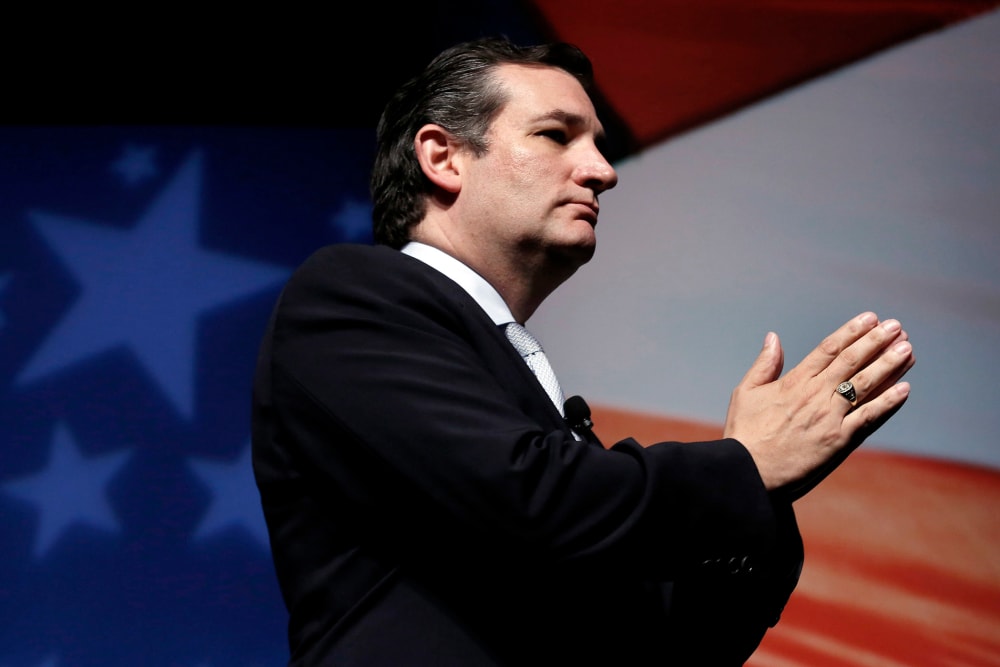
The key player in this drama is Sen. Ted Cruz of Texas, who has been working to corner the market on grassroots conservative support ahead of a likely White House bid next year.
Cruz was never on board with immigration reform, but in recent months he’s gone from throwing the occasional potshot to embracing a starring role in the anti-amnesty wing of the party. While he’s downplayed his role in this week’s affair, House conservatives credited him with helping kill Boehner’s initial bill and revving up demands to undo the White House’s Deferred Action for Childhood Arrivals (DACA) program, which protects DREAMers from deportation.
“The only way to stop the border crisis is to stop Obama’s amnesty,” Cruz told Politico ahead of the vote. “It is disappointing the border security legislation unveiled today does not include language to end Obama’s amnesty.”
The worry for Republicans now is that Cruz will apply this standard to presidential candidates in debates, ads, and campaign speeches in 2016 to help stand out in the crowded field. By demanding an end to DACA as a prerequisite for even the most minor immigration legislation, he’s creating a new litmus test for conservatives: Either you’re for deporting as many people as possible, or you’re for amnesty. This position is as toxic as it gets with Latino voters, according to the Republican National Committee’s own research.
“He’s not waiting. He’s agitating,” Ali Noorani, executive director of the pro-reform National Immigration Forum, told msnbc. “He is very good at creating these windows and pouncing.”
Republicans already squandered their best chance to make inroads with Latino voters by abandoning reform efforts. But the faint silver lining to reform’s death was that the party’s presidential hopefuls could plausibly distance themselves from the House’s hard-line position.
Florida Republican Sen. Marco Rubio, for example, co-authored the bipartisan bill that passed the Senate last June. Kentucky Republican Sen. Rand Paul voted against it, but made clear during the debate that he supported a path to legal status and possibly citizenship. Wisconsin Republican Rep. Paul Ryan endorsed a path to citizenship and by all accounts worked hard to shepherd reform legislation through the House. Former Florida governor Jeb Bush wrote an entire book advocating immigration reform. New Jersey Republican Gov. Chris Christie signed a bill granting in-state tuition to young undocumented immigrants. Both Christie and Wisconsin Gov. Scott Walker — also a Republican — have taken care not to commit to any particular position on broader reform, leaving them free to chart their own course in 2016. %22The%20only%20way%20to%20stop%20the%20border%20crisis%20is%20to%20stop%20Obama%E2%80%99s%20amnesty.%22′ Until the recent border crisis, immigration mostly took a backseat to a long list of conservative grievances from Obamacare to IRS investigations for Republicans. In this setting, it was possible to imagine GOP presidential candidates falling into a mutually beneficial dynamic in which the true heavyweights largely avoided the issue with vague promises to craft a solution if elected. But that scenario goes out the window if Cruz takes up the “self-deportation” mantle in 2016 as a cudgel to separate himself from the field. It only takes one candidate to drag the others into an ugly and counterproductive debate over immigration and Cruz’s loyal national following makes him uniquely dangerous in this role. The more the issue stays in the spotlight, the more Republicans are likely to produce inflammatory sound bites and policy ideas (Remember Herman Cain’s deadly border fence?) for Democrats to replay in the general election. Rubio, who was touted as a party savior after 2012, could be particularly vulnerable to this kind of pressure. While he supported the House’s immigration bill on Thursday, he’s pledged to vote against any Senate emergency bill that doesn’t end DACA. Lately, he’s adopted the old Republican talking point that immigration reform will only happen after a new crackdown on enforcement. It’s the same position on-again, off-again reformer John McCain took throughout the 2008 primaries before briefly tacking to the center in the general election. McCain won 31% of the Latino vote. That looks like an optimistic scenario at this point.
Benjy Sarlin Recommended


