The bipartisan budget agreement that sailed through the House last week is now poised to pass in the Senate, overcoming the threat of a GOP filibuster in a key procedural vote on Tuesday.
The bill passed 67-33, with 12 Republicans joining the entire Senate Democratic caucus to clear the bill for final passage. Democrats needed a mininum of 60 votes for the bill to move forward, and the strong showing of bipartisan support will likely push the measure across the finish line later this week.
In an unusual reversal, the spending bill had elicited more opposition in the Senate than in the typically more conservative House, which hoped to avoid a replay of October’s politically disastrous government shutdown.
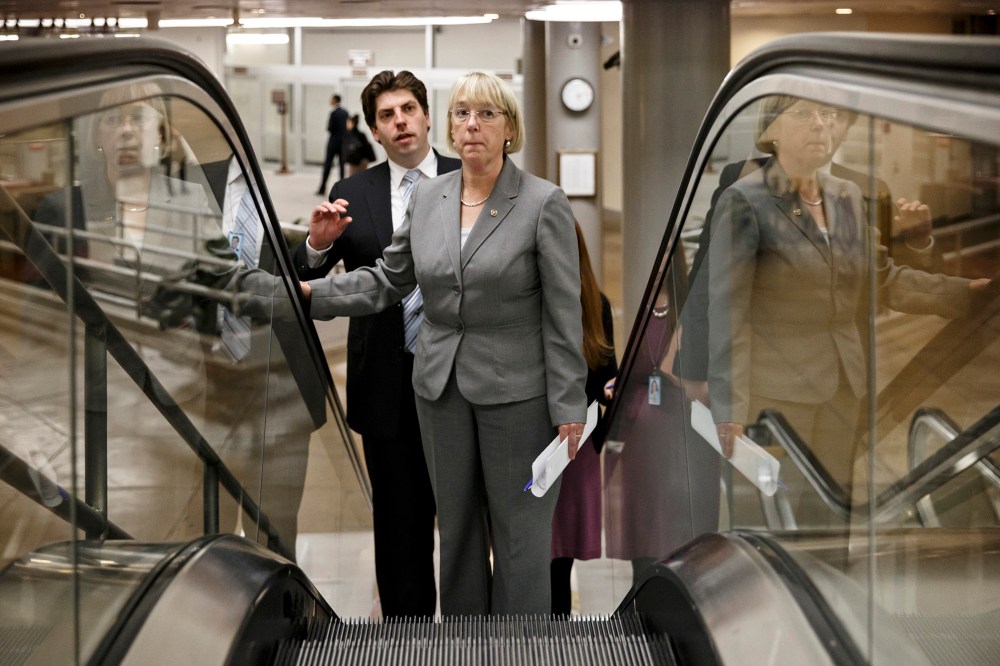
Senate Minority Leader Mitch McConnell voted to block the bill, which was co-authored by Washington Democratic Sen. Patty Murray and Wisconsin Republican Rep. Paul Ryan. So did members of the more moderate wing of the Senate GOP caucus, including Sens. Lindsey Graham and Kelly Ayotte, who both said they opposed the bill for cutting military pensions. Graham and McConnell are up for re-election in 2014 and are currently facing primary challengers.
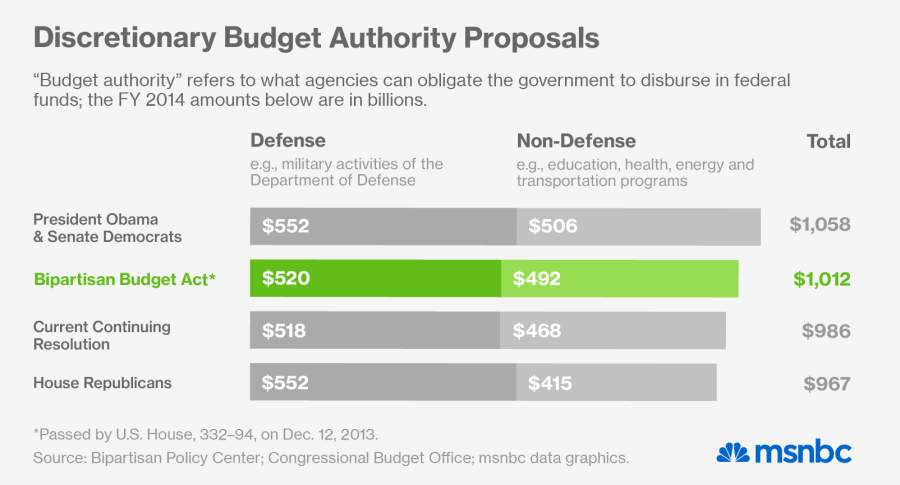
The budget agreement sets overall spending levels for the next two years, replacing one-third of sequestration with other cuts and revenue generators. But to keep the government open, Congress still needs to decide how the money will be spent by passing a separate appropriations bill before Jan. 15.
That’s now likely to happen, given the likely passage of the Ryan-Murray agreement. But it might not be the end of Congress’ fiscal showdowns, as the budget agreement doesn’t raise the debt ceiling or extend unemployment benefits. The government is expected to hit the debt ceiling again in February, and Ryan vowed earlier this week that Republicans would not raise the borrowing limit. “We don’t want ‘nothing’ out of the debt limit. We’re going to decide what it is we can accomplish out of this debt limit fight,” he told Fox News Sunday. Democrats reiterated their position that raising the borrowing limit is non-negotiable. When Congress reconvenes in 2014, Democrats have also vowed to fight on federal unemployment benefits, which expire for 1.3 million Americans at the end of December.
Suzy Khimm Recommended