SELMA, Alabama— It has been 50 years since that terrible day when state troopers savagely attacked hundreds of African-Americans who were attempting to march across the Edmund Pettus Bridge in the name of equal voting rights.
The troopers and a cadre of possemen, some on horseback, beat protesters with whips and batons, cracking skulls and bones as some white residents cheered from the sidelines. Images of the attack were beamed across the country on nightly television news reports, and horrified Americans from all walks of life watched gape-mouthed as fellow citizens were brutalized.
That day, March 7, 1965, came to be known as “Bloody Sunday,” and the sheer will of the people who marched that day — and later, those who successfully marched from Selma to the state capitol to demand equal voting rights — forced the White House’s hand and led to the signing of the 1965 Voting Rights Act.
This weekend, the eyes of the nation will once again be on Selma, as thousands from across the country will descend on the city and that hallowed bridge to commemorate the 50th anniversary of Bloody Sunday and the voting rights movement’s greatest victory. On Saturday, President Barack Obama, accompanied by the first family, will deliver a speech at the foot of the Pettus Bridge. More than 100 members of Congress, including Rep. John Lewis— who led the original march and was nearly killed that day— and other dignitaries are expected to attend as well, including former President George W. Bush, Laura Bush, and a number of original Selma foot solders. Sunday — the traditional day of march remembrance celebrations — will be marked this year by the Jubilee committee with a commemoration march and concert in downtown Selma by the bridge.
RELATED: Few Republicans head to Selma for anniversary
But far beyond the pomp of one of the civil rights era’s seminal anniversaries, those who were part of the movement then, and a new crop of protesters and politicians, recall the fierce sense of urgency, and the determination of those whose work changed the face of America. “I decided that I was not going to allow anything to keep me from leading others to pursue their rights, the rights for all people regardless of the color of their skin,” Rev. Frederick Reese, who organized some of the earliest voting rights marches in Selma, told msnbc. “That great march from Selma to Montgomery allowed people who had wanted to stand up for what was right … and those persons who at one time fought with me, many of them are gone on now.”
Those he marched alongside include Dr. Martin Luther King Jr., who by 1965 had emerged as a powerful, charismatic leader of the civil rights movement.

Reese was a school teacher and organizer with the Dallas County Voters League back then. He organized some of the first marches for voting rights in Selma. He was also the person who first asked Dr. King and his Southern Christian Leadership Conference to come to Selma to join their fight. King later obliged and joined other field organizers and citizens, many of them now iconic figures like Lewis, Andrew Young and perhaps equally as important but lesser known folks like Reese and Benny Tucker, another foot soldier.
Lynda Blackmon-Lowery said she joined the movement for rights when she was 13 and turned 15 on the march from Selma to Montgomery, the third and finally successful march after protesters were beaten on the bridge. By that point, she’d been jailed nine times for protesting, she said.
Lowery — considered the youngest marcher to complete the entire journey — described coming of age on that long, dangerous stretch of road out of Selma headed toward the capitol. “Just the fact of segregation and how it affected me and my family. And then the coming of age in a system of change to change that segregation. That makes me happy,” she said. “Makes me feel like I did something. And for years I did not think it was anything special. It was just part of the journey of life that we were supposed to have.”
WATCH: ‘Selma’ director: ‘It was just meant to be’
Relatively young people like Dr. King, then 36, and Lewis, who was all of 25, led the movement. But its ranks were filled with many who were even younger, many still in high school and those too young to vote, let alone leave the house without permission.
Sheyann Webb-Christburg was one. Known as “Selma’s smallest Freedom Fighter” Webb-Christburg was just 8 years old on March 7, 1965 when she joined the ill-fated march on the Pettus Bridge. “It wasn’t normal for adults to be involved in that movement,” she said. “And even in spite of me being disobedient of my parents, and many of the adults who were marching on that day, I had made up my own mind that I wasn’t gonna let nobody turn me around.”
On a recent afternoon at the civil rights museum at the Southern Poverty Law Center, Webb-Christburg said the violence of that day still haunts her. “I saw hundreds of policemen with tear gas masks, state troopers on horses. I saw dogs, policemen with billy clubs,” she recalled with tears welling in her eyes. “That was one of the most traumatic experiences of my life, which I’ll never forget.”
A half-century later, there has been much progress in America. Most of the most blatant forms of state sanctioned segregation have fallen. Americans of all colors have the right to vote. Yet, still, there are struggles. “I do submit today that we have progressed socially. We have progress economically, politically. But we still have a long way today, to go,” Webb-Christburg said. “Racism is still at an all-time high. One of the things that I am proud of is that I have begun to see a greater interest in young people from across the country, who’ve taken interest in the history that happened, particularly in Selma, Alabama.”
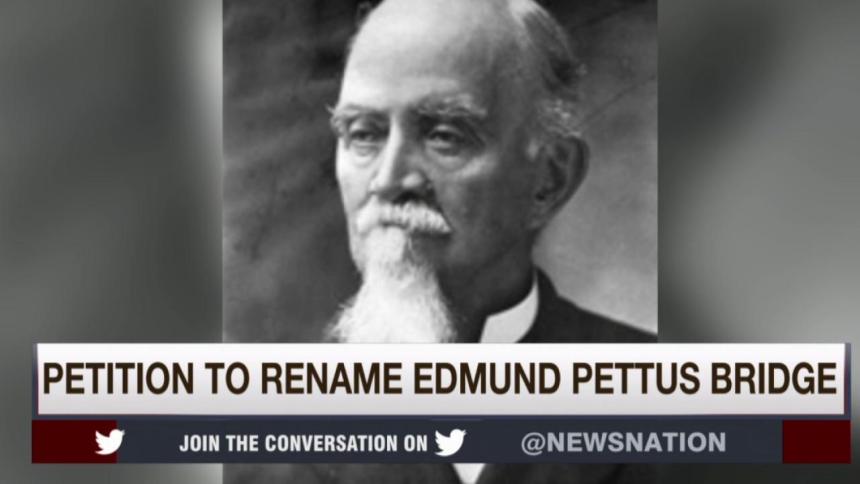
RELATED: Why North Carolina is the new Selma After last year’s killing of several unarmed black men by police — including Michael Brown in Ferguson, Missouri — the spirit of past protests has been resurrected. Black Lives Matter protests have spilled from city to city, including Selma, where the killing of an elderly black man by police recently stoked tension between the police department and the largely black community. While much of the city’s political leadership and the head of the police department and most of its officers are black, their remains a gap in trust. Despite playing such a pivotal role in American history, Selma today struggles with high unemployment, drugs and crime. The city’s infrastructure is crumbling and political infighting consumes city government. “Even though the color may have changed or the officer may have changed, there’s still that lingering memory of what they remember,” said William Riley, Selma’s police chief. “And, you know sometimes hard for people to forget when something traumatic has happened to them.” “We’ve come a long ways. But we still have a long way to go,” he said. Even the Pettus Bridge, perhaps the most iconic symbol of the violent struggle for equal rights, remains controversial. “The name on the bridge is still named after a KKK grand dragon … there’s still a memorial in our cemetery that memorializes and commemorates a man that killed 200 African-Americans during the Civil War. If that stuff is still here, then that means someone in this town still thinks that that’s okay. And that’s a problem,” said Kylie Jones, a member of Students Unite, a multi-racial youth organizing group. “The ones that came before us definitely laid some groundwork,” said Brandi Hatton, another member of the group. “But it’s not done yet, and so if we stop talking about it, then we’re thinking that it’s over, but it’s not.” RELATED: 5 things you might not know about the Selma marches Many see the young protesters as carrying a torch that’s been passed time and again over the last 50 years. “I like to tell young people that they’re gonna see things that need changing. They might become fearful. But change comes with fear,” said Lowery. “You need take that fear, embrace it, and move forward. You know now what you need better than we do. We thought we did, and we got what was needed at that time.” During a town hall meeting at St. Benedict College in Columbia, South Carolina on Friday, President Obama said the commemoration of the Selma marches is not just about commemorating the past, but honoring those who are changing the country today. “Selma is now. Selma is about the courage of ordinary people doing extraordinary things because they believe they can change the country, that they can shape our nation’s destiny,” Obama said. “Selma is about each of us asking ourselves what we can do to make America better.” Obama applauded the young people who years ago “stubbornly insisted on justice” and said “we all know we still have work to do.” “We’ve got to ensure not just the absence of formal, legal, oppression, but the presence of an active, dynamic opportunity,” he said.
Trymaine Lee
Trymaine Lee is an NBC News correspondent. Recommended