








One of the darkest chapters in the government’s immediate response to the 9/11 attacks was the mass, suspicion-less roundup and subsequent detention of Arab and Muslim immigrants in and around New York City. Now, nearly 14 years later, the victims of these abuses may finally have their day in court.
Although the government disputes that these detentions were based upon racial or religious profiling, the Justice Department’s own accounting concedes that 762 individuals were held in appalling conditions—some for as long as eight months—on what, in most cases, were trumped-up immigration charges. And even though the government knew that many of these detainees had no connection to terrorism, they still subjected some of them to especially harsh—and allegedly unlawful—conditions of confinement during their detention.
%22Although%20the%20government%20now%20concedes%20that%20any%20number%20of%20actions%20taken%20as%20part%20of%20its%20post-9%2F11%20counterterrorism%20efforts%20were%20unlawful%2C%20it%20has%20been%20virtually%20impossible%20for%20the%20victims%20of%20those%20abuses%20to%20obtain%20relief%20from%20the%20federal%20courts.%22′
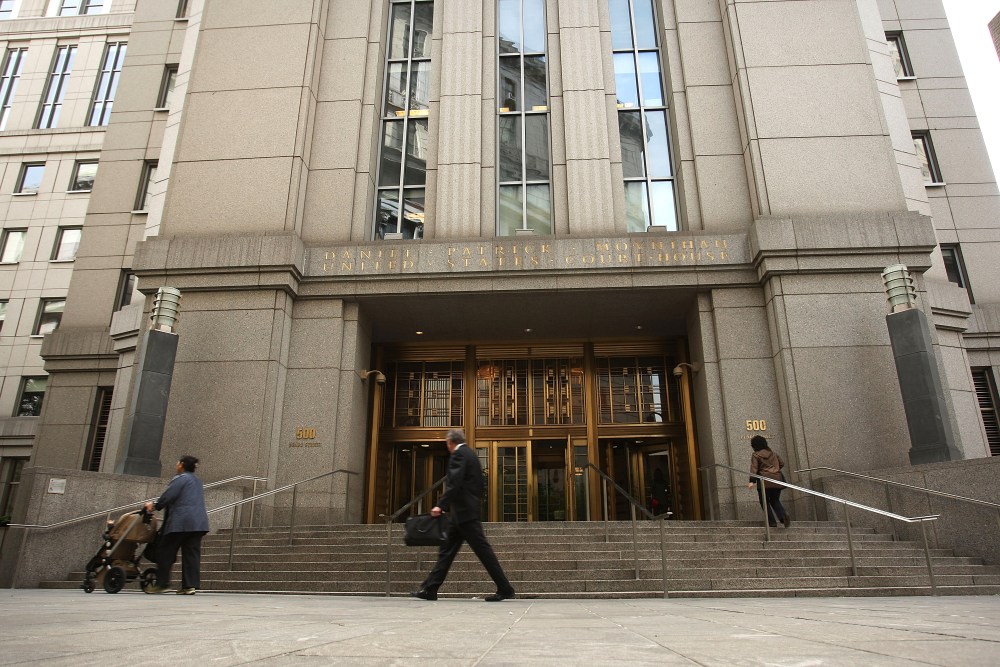
Those victims can now be heard, thanks to a landmark ruling handed down by the federal appeals court in New York last week. As Judges Rosemary Pooler and Ronald Wesley explained in their comprehensive, 109-page opinion in Turkmen v. Hasty, former detainees who brought suit against six former government officials, including Attorney General John Ashcroft, FBI Director Bob Mueller and INS Commissioner Jim Ziglar, should be allowed to proceed with their claims. Moreover, the court concluded, if the plaintiffs can prove their allegations at trial, then the defendants should not be entitled to immunity, since the illegality of their conduct would have been “clearly established” even in the tense and traumatic moments after 9/11.
What’s so remarkable about last Wednesday’s decision is its novelty. As Judge Reena Raggi lamented in her 91-page dissent, the decision is the first appellate ruling in the 14 years since 9/11 to allow a suit to go forward “against the nation’s two highest ranking law enforcement officials … for policies propounded to safeguard the nation in the immediate aftermath of the infamous al-Qaeda terrorist attacks.” Indeed, although the government now concedes that any number of actions taken as part of its post-9/11 counterterrorism efforts were unlawful, it has been virtually impossible for the victims of those abuses to obtain relief from the federal courts.
Whether the suit has challenged drone strikes overseas, warrantless surveillance at home or anything in between, efforts to use the federal courts to hold the government accountable have failed. With one isolated and equivocal exception, no plaintiffs who have sought damages arising out of illegal post-9/11 U.S. government “counterterrorism” operations have obtained a judgment in their favor.
RELATED: Who really wins from NSA reform?
These suits have failed not because courts have routinely held that the underlying government conduct was legal, but because they’ve relied upon a series of procedural obstacles and legal technicalities to justify dismissal even of cases in which the plaintiff’s rights were clearly violated. Time and again, these rulings have been based upon an implicit (and, at times, explicit) view that courts shouldn’t interfere with the political branches when national security policies are at stake—whether or not the underlying claims were legitimate. From the plaintiffs’ perspectives, such decisions have the effect, if not the intent, of appearing to validate the government’s conduct, even in cases in which all now agree that the government acted wrongly. Still worse, the absence of relief may lead to a form of functional impunity—not just for the offending government officers, but for those who follow in their footsteps, for whom no precedent has been set specifically disclaiming he government’s ability to engage in the same kinds of policies in the future. Not only are there few (if any) remedies available to the victims of these un-reviewed abuses, but the perpetrators and their successors face no actual liability, and thus no meaningful deterrent from carrying out similar policies in the future. In addition, the failure to set legal precedents also creates uncertainty on the part of the government, which can’t know for sure whether the lack of a judicial decision on the merits has actually validated the challenged policy, or has merely left the issue unresolved. As former CIA General Counsel Tony Lapham put it in an analogous context, this uncertainty leads to the “worst of both worlds,” wherein citizens are “as unsure of their liabilities as I am unsure of their obligations.” That’s why last week’s ruling by the 2nd Circuit Court of Appeals is such an important step forward. As Judges Pooler and Wesley concluded, “If there is one guiding principle to our nation it is the rule of law. It protects the unpopular view, it restrains fear‐based responses in times of trouble, and it sanctifies individual liberty regardless of wealth, faith, or color.” Too often since 9/11, the federal courts have forgotten this fundamental tenet. Others in the federal judiciary should follow the Court of Appeals’ lead in taking this reminder to heart. Stephen I. Vladeck is a professor of law at American University Washington College of Law and co-editor-in-chief of the Just Security blog.
Stephen Vladeck Recommended


