See update below
Democrats and Republicans have battled in recent years over almost every major aspect of voting rules. But they have found one rare area of agreement: allowing people to register to vote online—an innovation that a growing number of states are adopting.
Now though, key officials in some big Republican-led states are getting cold feet about the idea. In Florida, Gov. Rick Scott’s administration has used some outlandish claims in opposing an online registration measure. In Texas, GOP lawmakers voted down a similar bill citing concerns about fraud. And in Ohio, an online voter registration bill being pushed by the Republican secretary of state is stalled in the GOP-controlled legislature.
The emerging intra-party split on the issue underscores a stark reality: Despite record low turnout last November, there are now essentially no policies for significantly expanding access to the polls—save perhaps uncontroversial proposals to help service-members vote—that the GOP wholeheartedly supports.
Related: The voting rights battle for 2016 has begun
To be sure, online voter registration is growing in popularity nationwide. A report released Wednesday by the Pew Charitable Trusts found that 22 states plus the District of Columbia, representing more than half of all eligible voters, will offer the chance to register online for the 2016 election. Four more states—Massachusetts, Hawaii, West Virginia, and Nebraska—are expected to pass bills by the end of the session this year, which would bring the total number of states to 26. That’s up from just two, Arizona and Washington, when President Obama took office.
Much of the recent progress has come in states that are fully or partly controlled by Republicans, including Georgia, South Carolina, Virginia, Missouri, Kansas, and Utah.
That reflects what until lately has been general support for the idea within the GOP, perhaps based on the belief that the kind of voters with the access and know-how to register online don’t necessarily skew overwhelmingly Democratic. When a bipartisan presidential commission on voting last year released recommendations on how to improve the election process, online voter registration was the only major expansive policy to be embraced by the Republican National Lawyers Association (RNLA), a group of GOP election lawyers that helps informally set the party’s voting policies. (The RNLA rejected expanding early voting, another key recommendation of the commission, because it “puts convenience over thoughtful deliberation.”)
But not all Republicans are OK with letting voters register online. In Florida, a bipartisan bill that has broad support from the state’s county election supervisors has been sitting on Scott’s desk, but it’s opposed by Secretary of State Ken Detzner, a Scott appointee.
Detzner argues that the state isn’t prepared to implement the system by 2017—a claim that legislators of both parties have rejected. He’s even raised the threat of cyber-attacks by “forces of evil,” adding: “The people that would like to affect and disrupt elections are out there.” So unconvincing have Detzner’s objections been that while he was testifying before lawmakers on the issue last month, one Republican supporter of online voter registration was caught on an open mike calling Detzner’s claims “bulls***.”
Scott, who has backed a number of restrictive voting policies in the past and is thought to be eyeing a run for the U.S. Senate in 2018, has stayed silent despite several requests for him to comment on the bill. His office didn’t respond to a request for comment from msnbc.
Related: Condemned voter ID law could get new life
Meanwhile in Texas, a Democratic proposal to let voters register online was scuttled in committee after Republican county officials in the Houston area rallied opposition to it, claiming, despite the state’s strict voter ID law, that it could allow for fraud.
“Our state is not ready,” Harris County voter registrar Mike Sullivan testified.
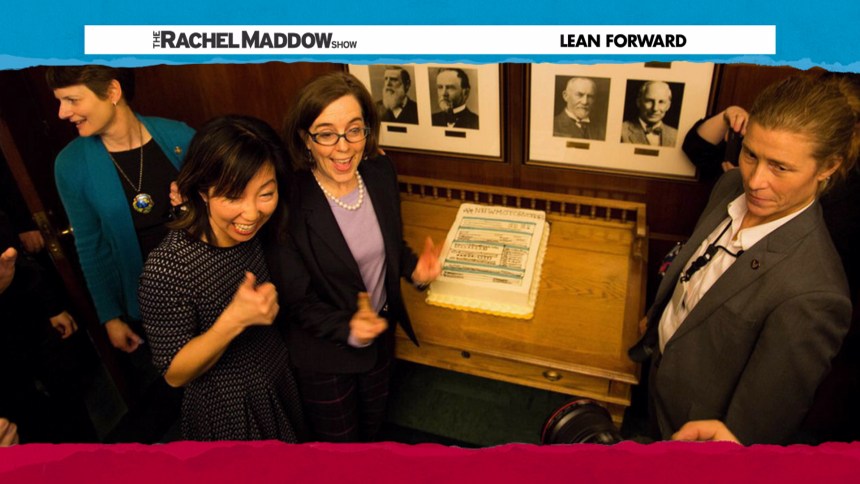
One official with the county GOP said the jobs of “three young Republican” lawmakers could be at risk if they voted for the measure. In fact, Pew, a staunchly non-partisan organization, has said that online voter registration reduces the threat of fraud and error associated with paper systems. In Ohio, Secretary of State Jon Husted, a Republican, has made three efforts since 2011 to pass online voter registration, including one bill introduced this session. But each time, the Republican legislature has pointedly failed to act. House Speaker Bill Batchelder said last year he was concerned that some Ohioans, including seniors, might not have access to the technology, without explaining why that should stop others from being able to take advantage of it. But the Republican skepticism about online voter registration in Florida, Texas and Ohio perhaps shouldn’t be surprising. All three states have taken other steps in recent years to make registering to vote more difficult. Florida and Texas have imposed tight restrictions on voter registration drives by outside groups. In the ten months after Florida’s law went into effect in 2011, the state saw a decline of over 80,000 new registrations compared to the previous presidential election cycle. Texas has even barred people from registering voters who live in a different county, and barred non-Texans from registering anyone at all. Between them, Texas and Florida are likely home to around 9 million unregistered but eligible voters, disproportionately racial minorities. And Ohio lawmakers last year eliminated their state’s “Golden Week,” when voters could register and vote all in one day, triggering a Voting Rights Act lawsuit. The suit was settled last month, without restoring same-day registration. A new legal challenge to that move and other restrictive voting policies was filed Friday. Update, 5/15 10:54 am: Gov. Scott signed the online voter registration bill Friday morning, “with some hesitation.”
Zachary Roth Recommended