








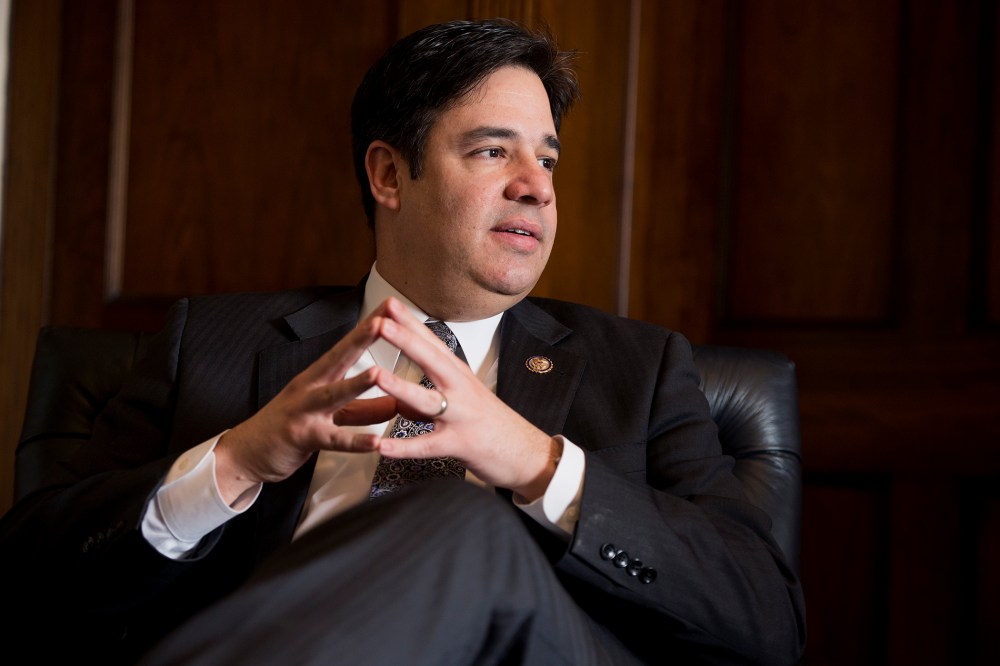
The tea party candidate to replace Eric Cantor as majority leader has an even more complicated relationship with immigration than Cantor, who alienated reform advocates and his anti-“amnesty” primary opponent alike with his vague positions.
Rep. Raul Labrador (R-ID), who worked as an immigration attorney before entering politics, began the current session of Congress as one of the single most important players on the pro-reform side.
After President Obama’s dominant performance with Latino voters in 2012, Labrador worked with a bipartisan group of eight House members on a comprehensive immigration bill. Their efforts were essentially the House version of the Senate’s bipartisan “Gang of Eight”, which produced a sweeping immigration bill that passed last year.
Labrador’s popularity with the tea party lent irreplaceable credibility to the House’s immigration reform efforts in early 2013. He criticized Mitt Romney’s “self-deportation” policy and urged the party to take an active role in crafting a centrist alternative.
“It’s one of the stumbling blocks that I see for some Republicans. They’re moderate on every other issue, and they think this is the one issue where they have to become conservatives,” he told the Washington Post in February of last year. “I feel the reverse.”
Labrador favored some path to limited legal status for undocumented immigrants — a position most of his colleagues were reluctant to adopt — and said he was uncomfortable barring people from attaining citizenship through existing channels once they settled down.
“We shouldn’t create a second class group that could never become citizens, but we should also not give them a special pathway that nobody can follow,” Labrador said in March 2013 in a panel discussion with several similarly conservative lawmakers.
At one point, Labrador’s suggestion of legal status with no explicit ban on applying for green cards and eventual naturalization looked like a promising compromise. Immigration reform groups and the White House publicly demanded a clear step-by-step procedure in which undocumented immigrants earned citizenship, but advocates and House Democrats hinted that something resembling Labrador’s approach could earn their support if it brought House Republicans along.
But Labrador didn’t stick around to fight for his suggested policy. Instead, he dropped out of the bipartisan group– which was already withering thanks to a lack of support from House leaders – in June, citing a dispute over whether newly legal immigrants could access health care benefits. At the time Labrador pledged to work with the House Judiciary Committee on a Republican immigration plan. But as conservatives grew wary of reform, Labrador decided to drop the issue rather than risk dividing the base ahead of the midterm elections. By October 2013, he had taken to urging House Republicans not to pass any immigration legislation, period, because House leaders might use it as a vehicle to negotiate a bipartisan deal similar to the Senate bill. “Anything that you pass to the Senate piecemeal they’re going to try to conference it with their Senate bill,” Labrador told the Huffington Post at the time. “It’s not worth doing it.” Labrador’s chief opponent in the leadership race, California Rep. Kevin McCarthy (R-CA), is one of the few House Republicans who have embraced a path to legal status for undocumented immigrants. So after an election in which, accurately or not, anti-immigration groups claimed victory by deposing Cantor, the House GOP leadership’s position moving forward looks even more uncertain in the long term.
Benjy Sarlin Recommended


