








There were no floor debates, no committee votes, no congressional hearings, no public events, and no press conferences.
But behind closed doors, top lawmakers agreed to roll back regulations for everyone from big Wall Street banks and rich campaign donors to the trucking industry, attaching major policy reforms to a must-pass spending bill released on Tuesday. The last-minute changes reflected the ascendant Republican majority, with a few concessions thrown to Democrats along the way. And in a Congress that’s resigned to governing by crisis, both parties are expected to roll over and pass the bill to avert a government shutdown.
Related: Congress reaches deal to avert shutdown
“It’s a terrible way to legislate, and if the leadership — both houses and both parties — had any balls they would say no,” says Stan Collender, a former Democratic budget aide. “But they need the votes, and this is the equivalent of earmarks because they buy support for the underlying legislation.”
Gridlock on Capitol Hill has meant that little gets done other than the bare minimum to keep the lights on — and the few bills that do get passed are loaded with concessions and giveaways that get slipped in at the last minute, with the blessing of the leaders at the negotiating table.
That’s how the $1.1 trillion bill to fund the government in 2015 got loaded up with major policy changes that congressional appropriations chairs — GOP Rep. Hal Rogers and Democratic Sen. Barbara Mikulski — only revealed late Tuesday night, when the text of the bill was released.
Leaders agreed to gut a new regulation of complex derivatives known as swaps — one of the biggest changes to the Dodd-Frank financial reform law to date. They rolled back a new safety requirement for truck drivers to sleep for two consecutive nights in between work weeks, and raised the maximum work week from 70 to more than 82 hours per week.
Perhaps most importantly, lawmakers agreed to sweep away restrictions on donations to political parties, raising the maximum contribution tenfold from $32,400 to $324,000 — and possibly more.
While such changes may come as a surprise to outside observers, they’re the product of weeks, months, and years of industry lobbying behind the scenes. That pressure helped some of these individual measures move forward through their own bills in the House and Senate. But having them catch a ride in this spending bill means they’re far less likely to be subject to intense scrutiny, and lawmakers will be far more inclined to give them a bye.
%22It%27s%20a%20terrible%20way%20to%20legislate%2C%20and%20if%20the%20leadership%20–%20both%20houses%20and%20both%20parties%20–%20had%20any%20balls%20they%20would%20say%20no.%22′
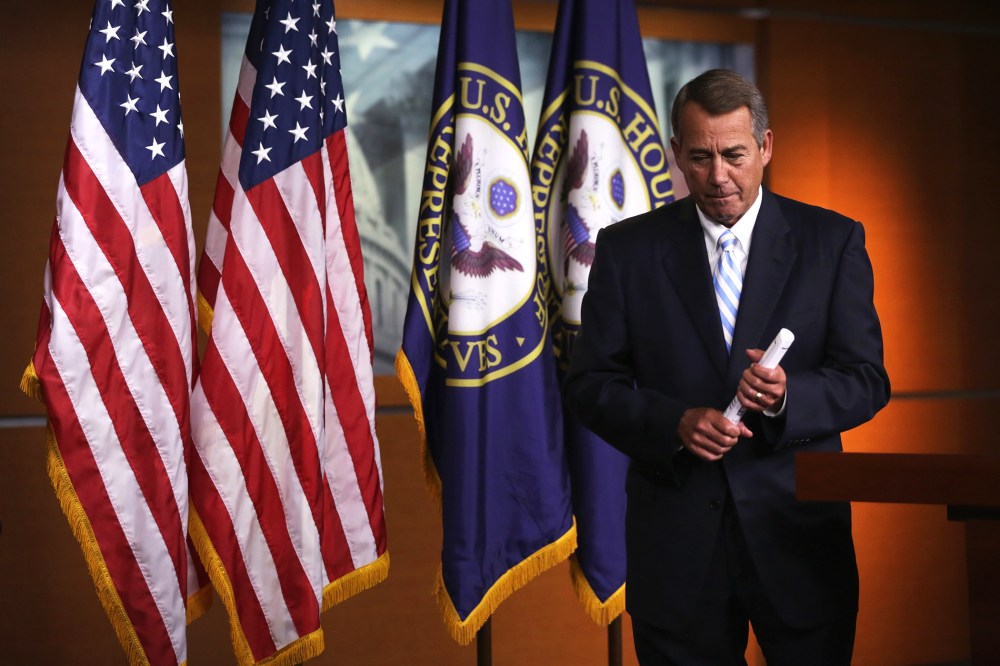
Rodgers and Mikulski insist that the bill was a product of thoughtful bipartisan compromise and urged both houses to pass it. “While not everyone got everything they wanted, such compromises must be made in a divided government,” they said in a joint statement. House Speaker John Boehner echoed their sentiments on Wednesday. “All these provisions in this bill have been worked out in a bipartisan, bicameral fashion, or they wouldn’t be in the bill,” he said.
But while some of the policy riders have attracted Democratic support in the past, most of the last-minute changes fall in line with business interests and prevailing Republican priorities, reflecting the rising power of a party poised to take the majority in both houses come January. Democrats were mostly on the defense, fending off more dramatic changes to environmental regulations and securing some more funding for financial regulators in 2015. While wheeling and dealing have always been part of budget deals, such negotiations have become even more common as political dysfunction has stymied Congress and lawmakers govern by crisis, prompting deals to be worked out by top party brass instead of committees. Sens. Richard Blumenthal and Cory Booker, who oppose the changes to truck driver rules, spoke out against the process earlier this week. “We are extremely disappointed that despite our grave concerns, this matter is moving forward through the appropriations process, rather than with extensive study and debate,” Blumenthal and Booker wrote in a letter to Senate Majority Leader Harry Reid. “This issue is far too important to have been altered outside of the committee of jurisdiction and without debate by the Senate.” %22These%20provisions%20are%20destructive%20to%20middle%20class%20families%20and%20to%20the%20practice%20of%20our%20democracy%22′ Democratic leaders in the House also vocally opposed the provisions: Rep. Chris Van Hollen opposes the bill for doing “the bidding of the biggest banks” and “catering to wealthy, powerful special interests.” House Leader Nancy Pelosi similarly lashed out against the Dodd-Frank and campaign finance riders. “These provisions are destructive to middle class families and to the practice of our democracy. We must get them out of the omnibus package,” she said. But given the urgent need to pass the spending bill this week — or else risk a government shutdown — the backlash to the policy riders might not be enough to strip them out of the legislation. The riders could help Boehner rally more conservatives to his side, so he might not have to rely on House Democrats to pass a bill. And with less than two days before government funding expires, rank-and-file lawmakers will be under intense pressure to accept the spending bill that’s been rushed into their hands — and a whole slew of policy deregulation will be hitching a ride.
Suzy Khimm Recommended


