








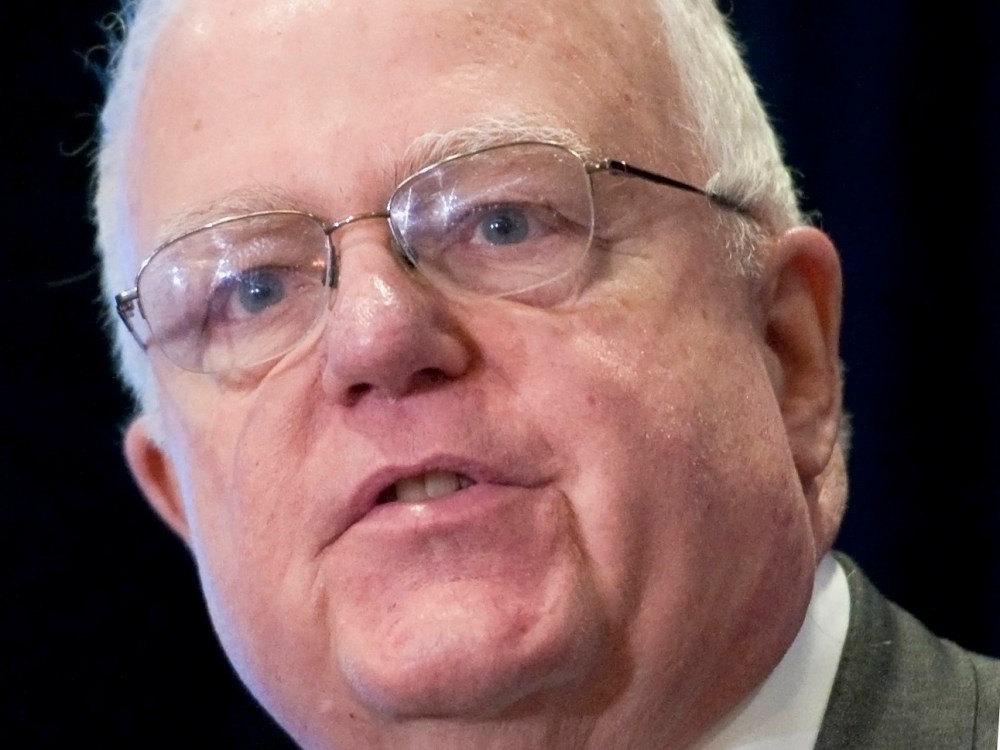
The self-identified “author of the Patriot Act” has had a swift change of heart on surveillance.
In a letter to Attorney-General Eric Holder last week, Republican Rep. Jim Sensenbrenner of Wisconsin asked: “How could the phone records of so many innocent Americans be relevant to an authorized investigation as required by the Act?” In a separate newspaper column, Sensenbrenner went further, claiming the administration was abusing the law.
Maybe Sensenbrenner wouldn’t have been as surprised, had he attended classified briefings on the National Security Agency’s program over the last three years.
Two letters from the leadership of Senate intelligence committee in 2010 and 2011 obtained by msnbc show that a series of closed-door briefings and reports on the Patriot Act were made available to lawmakers from both houses. A senior Obama administration official sent msnbc a list showing at least six classified briefings or meetings on the Patriot Act between 2009 and 2011. And a former Justice department official who participated in the briefings said they offered specifics on the exact issues that Sensenbrenner claims were withheld.
Asked whether his boss had attended any of those sessions during that period, Sensenbrenner spokesperson Ben Miller said the congressman “does not want to be limited by the restraints of confidentiality. Therefore, he believes in an open dialogue by which legislative solutions can be constructed and passed into law before the public.” Miller said Sensenbrenner had “attended confidential briefings in the past,” but didn’t say how many, which ones, or whether any dealt directly with the “sensitive” application of section 215.
Miller cited a comment from Peter Hoekstra, the former Republican chairman of the House intelligence committee, who said lawmakers who attend the briefings learn “a little more than what has been reported in the news.”
Since details of the NSA surveillance program came to light in newspaper articles in The Guardian and The Washington Post, a number of members of Congress have complained that they were not briefed. Some, it turns out, left briefings early or never showed up.
Sensenbrenner, who has been among the most insistent and aggressive in his claims that he was not informed, didn’t attend at all. Yet his complaints carry particular weight because he is a longtime presence on the House judiciary committee and shepherded the Patriot Act into law in 2001 as chair of the committee.
In the last week, Sensenbrenner has said he was so troubled with the way section 215 of the Patriot Act has been used by the Obama administration that he has threatened not to renew that section when it expires in 2015.
Section 215 is at the heart of one of the documents that has come to light. That document is a highly classified order from the Foreign Intelligence Surveillance court approving a request from the FBI, on behalf of the NSA, for communications records of millions of Verizon customers.
The order cited section 215 of the Patriot Act, which gives the government the authority to request records that are “relevant to a terrorism investigation.” Sensenbrenner claims he never imagined it would be used so broadly, and that the Obama administration misled Congress about how it was being used.
“While some members of Congress were briefed, particularly those on the intelligence committees, most, including myself, were not,” Sensenbrenner wrote in a column for The Guardian newspaper. Sensenbrenner did not disclose, as his spokesperson did for this story, that he chooses not to attend the briefings.
In his letter to Holder, Sensenbrenner was more specific, accusing Todd Hinnen, the former justice department official who led several briefings and also testified on section 215 in 2011, of misleading the committee. In his letter, Sensenbrenner quoted Hinnen’s testimony like this:
“Section 215 has been used to obtain driver’s license records, hotel records, car rental records, apartment leasing records, credit card records, and the like. It has never been used against a library to obtain circulation records. . . On average, we seek and obtain Section 215 orders less than 40 times per year.”
Then, Sensenbrenner wrote, “The Department’s testimony left the committee with the impression that the administration was using the business records provision sparingly and for specific materials. The recently released FISA order, however, could not have been drafted more broadly.”Marcy Wheeler, who writes at EmptyWheel.net, first noticed that the ellipsis omitted a key sentence from Hinnen’s testimony, which was that “Some orders have also been used to support important and highly sensitive intelligence collection operations, on which this committee and others have been separately briefed.”
Until now, it was difficult to know what information was shared with lawmakers or staff during those briefings. “There are laws on the books that define what is the standard for notifying Congress on matters of national security,” says Vicki Divoll, a former general counsel for the Senate intelligence committee and former assistant general counsel for the CIA. “There’s a lot of wiggle room in those standards, and depending on the issue and depending on the administration, how they wiggle that room can vary tremendously.” But in an interview, Hinnen said he personally briefed lawmakers on the issue. He specifically recalled informing them on the use of section 215 to collect customer records in the manner described in the leaked FISA court order. “The Department of Justice and the intelligence community briefed Congress extensively on the sensitive use of the business records authority beginning in early 2009,” says Hinnen. “We also made available to all members of Congress on several occasions documents for review and briefers to answer questions regarding the sensitive use of the business records provision.” During a press conference last week, Senate intelligence committee chair Dianne Feinstein said that the use of section 215 for bulk collection of communications data went back at least “seven years.” That would date back to just after Sensenbrenner helped renew parts of the Patriot Act—including section 215—in 2006. Asked why Sensenbrenner’s letter omitted Hinnen’s reference to classified briefings, Miller said, “There was no intent to hide the fact that the department briefed the committee,” adding that “in 2011, Congress was given the impression that Section 215 was being used sparingly. The omission of that content does not alter that perception.” Civil liberties groups have agreed with the critique that simply stating the volume of requests obscured just how much information the administration was collecting. But other legislators, including Democratic Senators Ron Wyden of Oregon and Mark Udall of Colorado gave specific warnings about the Patriot Act that foreshadowed the recent disclosures, suggesting that if Sensenbrenner had attended the briefings he would have known what was happening. Democratic Senator Jeff Merkley of Oregon, who is not on the intelligence or judiciary committees, pushed legislation last year to declassify secret court opinions that interpret the scope of the government’s surveillance powers—which would likely include section 215. Earlier this week, word leaked to Politico and Buzzfeed that Merkley, a prominent critic of the Obama administration on civil liberties, had skipped a classified briefing on PRISM, a tool the NSA uses to monitor the communications records of users of online services like Facebook, in order to make a television appearance. Recently, Merkley had reintroduced his legislation seeking to compel further disclosure on how broadly secret court opinions have interpreted the Patriot Act. “The only question is how to move forward and rein in this program, and rein it in immediately,” says Michelle Richardson of the ACLU. “Congress can’t allow this to continue for the next two years before the next scheduled sunset.” Miller said Sensenbrenner believes “legislation may be needed to amend section 215 before it comes up for reauthorization in 2015.” If Sensenbrenner does introduce legislation to curb section 215, he’ll be following his own advice. “Good oversight is done by congressional leadership, not by sunsets,” Sensenbrenner said in 2005 as the Patriot Act was reauthorized for the first time. Just imagine if he had attended the briefings in the first place.
Adam Serwer Recommended


