








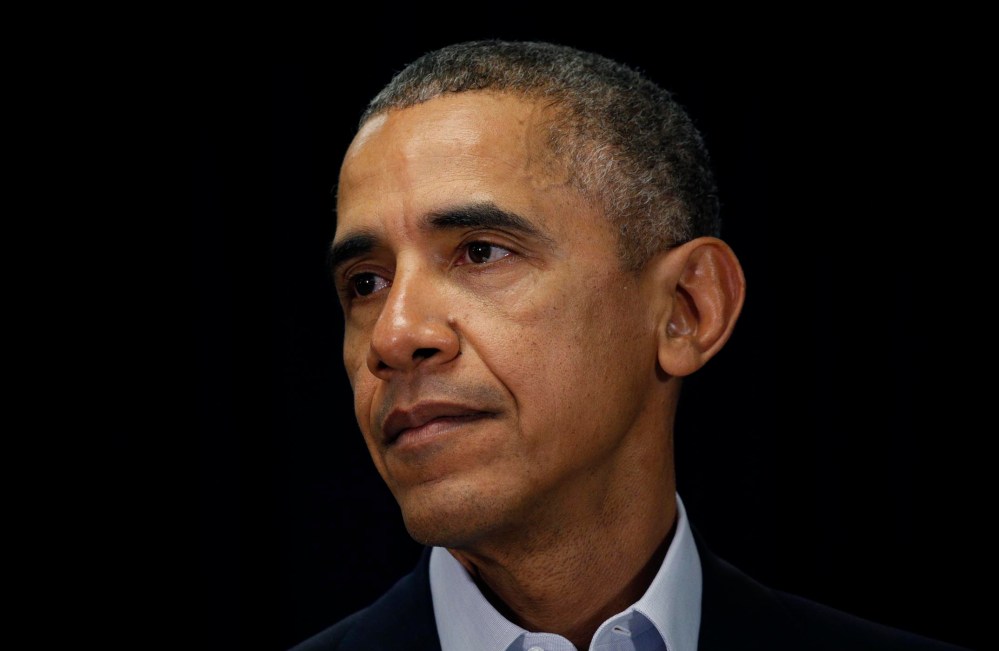
One of President Obama’s biggest accomplishments with respect to the Asian Pacific American community is his appointment of a record number of APA federal judges. Now, as he considers Supreme Court candidates, the president has an opportunity to truly cement this legacy.
In January 2009, there were only eight Asian Pacific Americans in lifetime, federal judgeships throughout the country — out of 870 potential positions. What’s more, there had not been an APA judge on a U.S. Court of Appeals — the level just below the Supreme Court — in almost five years.
Today, there are 25 Asian Pacific American federal judges, including four at the Court of Appeals level. In fact, President Obama has appointed more APA federal judges than all presidents in history combined, and the nine APA women he has appointed is even more remarkable considering there were only two prior to 2009.
How did he do it?
As the lawyer in charge of the day-to-day selection, vetting, and confirmation of President Obama’s judicial nominees for more than four years, I can tell you that it actually was quite simple: the president made a commitment to a judiciary that resembles the nation it serves.
Asians are projected to become the largest immigrant group in the U.S. by 2065 https://t.co/Qfz3YBQgCc pic.twitter.com/czLzAADG7S
— NBC Asian America (@NBCAsianAmerica) January 13, 2016
Of course, each of the president’s appointed judges has the necessary experience, intellect, and integrity. But through his efforts, federal judges are now beginning to reflect the diversity of our nation — racial, gender, and sexual orientation — and today, at the Court of Appeals level, a majority of judges are women and minorities. The president also has sought a judiciary that encompasses the range of experience in the legal profession, including more judges who had represented the poor in their criminal defense and legal services.
While judges will not necessarily consider a case differently because of their background — they are sworn to uphold the law and precedent — when the men and women who deliver justice look more like the communities they serve, there is greater confidence in our justice system overall.
Also, as judges break barriers throughout the country, they serve as role models for generations to come.
I’ve seen this first hand. In 2009, I had the honor of working on Justice Sonia Sotomayor’s confirmation, as she became the first Hispanic Supreme Court Justice. A year later, I assisted on Justice Elena Kagan’s confirmation. For the first time, three women (along with Justice Ruth Bader Ginsburg) sit on the Supreme Court at the same time. Throughout those processes and beyond, these remarkable women have had an indelible impact on our nation — not just in their rulings and their commitment to equal justice under the law, but also in inspiring countless Americans that the doors to opportunity are opening to all.
While Justices Sotomayor, Kagan, Ginsburg, and retired Justice Sandra Day O’Connor certainly are role models for my four year-old daughter, I also want her to have a role model who is Asian Pacific American.
Growing up, I was bullied for my “slanted eyes,” my parents’ accent, and the food we ate. I was constantly asked if I knew karate and complimented for “speaking English good.” Even now, I have resigned myself to a lifetime of being asked, “Where are you really from?” I know that an Asian Pacific American Supreme Court Justice won’t prevent my daughter from experiencing all of this, but it would go immeasurably far in chipping away at the stereotype that she is a “perpetual foreigner” — that we are something other than simply American. And it would give her another example of success at the highest level to emulate in whatever she decides to do. In 2010, it was past time for the Supreme Court to have more than two female Justices. Today, especially as nearly half our nation’s children are from communities of color, it is time for the Supreme Court to have more than two Justices of color. And, more specifically, it is time for the first Asian Pacific American Justice. Asian Pacific Americans are the fastest growing racial group in the nation. There were almost twice as many Asian American voters in 2012 as there were in 2000, and by 2040, the number of Asian American registered voters will double yet again. We deserve — and demand — a government that is reflective of our nation’s changing demographics. The good news is that President Obama understands the importance of a judiciary that resembles the nation it serves, and his commitment has tripled the number of APA federal judges in just seven years. However, 25 APA federal judges out of 870 is only the beginning of real change. To leave a truly historic legacy on behalf of Asian Pacific Americans, we must urge the president to take the next step by nominating an Asian Pacific American to the Supreme Court. Christopher Kang is the National Director of the National Council of Asian Pacific Americans (NCAPA) and former Deputy Assistant and Deputy Counsel to President Barack Obama in the Office of the White House Counsel, where he was in charge of the selection, vetting, and confirmation of the president’s judicial nominees. This article first appeared on NBCNews.com.
Christopher Kang Recommended


