








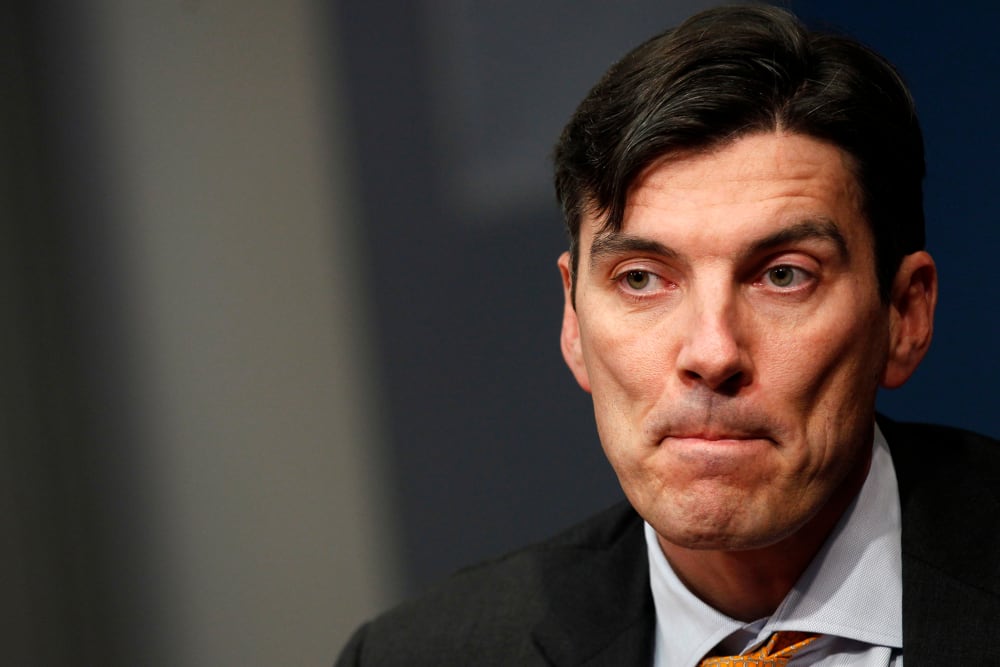
AOL employees scored a modest victory last weekend, when embattled CEO Tim Armstrong publicly cut short his plans to reduce company-wide 401(k) retirement benefits. The announcement came after three days of bad press for the company, including negative coverage from The Huffington Post, an AOL property.
Armstrong made himself into an unusually easy punching bag when he tried to blame the benefit cuts on Obamacare and employees who had given birth to “distressed babies.” But while his public defense of the proposed cuts was unusually pungent, the plan itself was nothing unusual. The private retirement safety net in the United States has been growing steadily weaker for decades.
The U.S. retirement system”never worked really well, and it’s only gotten worse,” said Monique Morrissey, an economist at the left-leaning Economic Policy Institute. “In the immediate postwar decades, when it seemed to be working, I would say it was never really as secure for marginalized workers. And since then, the vast majority of workers have become part of a marginalized workforce.”
While AOL workers may have been spared from 401(k) cuts for now, the very fact that they rely on 401(k) benefits is evidence of a historical shift in employer-provided retirement benefits. Thanks in large part to the inroads made by organized labor in the aftermath of World War II, a plurality of private employers offered actual pensions — “defined benefit” plans under which the employer was required pay out a pre-determined amount to each employee after retirement.
“A bunch of these big unions in the private sector in the late 40s and early 50s were winning these pension plans from the leading U.S. corporations,” said Joshua Freeman, a historian at the City University of New York. Such plans eventually “spread to companies that were never unionized at all, who wanted to be attractive and build loyalty among workers.”
In the 1970s and 80s, workers’ fortunes began to change on a whole host of issues—retirement security among them. Around the same time that corporate America successfully halted wage growth, began exporting jobs overseas, and reversed the growth of organized labor, they also introduced a new form of retirement benefit: the “defined contribution” plan, often a 401(k).
Traditional pensions “carry a ton of risk for the sponsor … because the benefits are fixed while the investment returns can vary a lot,” said Andrew Biggs, a resident scholar at the Washington-based conservative think tank the American Enterprise Institute, over email. Under defined contribution plans, there’s little risk for the employer, because it invests the same amount into its workers’ retirement accounts no matter what happens.
When employers began to offer defined contribution plans such as 401(k) benefits, they usually came as a “supplement” to defined benefit plans, said Morrissey.
“And then employers started to use (the defined contribution plan) as a substitute instead of a supplement,” she said.
In 1970, 42% of all private employers offered defined benefit plans, according to data collected by EPI. By the year 2000, only 22% of private employers had defined benefit plans in place, while defined contribution plans came in at 42%. While the 401(k) plan has continued to take hold in many companies, the defined benefit plans have stagnated around 22%.
“The shift to 401(k) plans allowed employers to shift both the majority of the costs and all of the risks onto workers,” said Morrissey. Employers can put less than an employee’s contribution into their retirement accounts, and they’re not on the hook to make up the difference if a retiree can’t cover his or her living expenses. The shift from defined benefit to defined contribution has helped lead to a historic decline in retirement security for America’s aging workforce. Retired baby boomers will be the first generation in the modern era “who are likely going to see a sharper drop in income in retirement than their parents did,” according to Morrissey. Though the AEI’s Biggs told msnbc that AOL’s response to the rise in health care costs “doesn’t seem right,” he also argued that the private sector as a whole had been forced to scale back wages and benefits in an attempt to deal with the rising price of health coverage. “AOL made this change (ostensibly) in response to higher health care costs, and that trade-off between rising health care costs and salaries and other benefits has been happening for a long time and across most firms,” he said. “If you want to know why wages have stagnated, it’s because employer health costs have risen so much. Total compensation has continued to grow, but employers are paying more for health coverage and less for everything else.” Other large employers have succeeded in cutting their 401(k) contributions with considerably less fanfare than AOL received. IBM, Deutsche Bank, Charles Schwab and Advocate Health Care have all implemented similar changes to their retirement benefits but with little public outcry.
Ned Resnikoff is an urban policy analyst, researcher, writer, and editor. His byline has appeared in a variety of publications, including the New York Times, San Francisco Chronicle, Dissent, and The Nation. He writes the newsletter Public Comment, which can be found at publiccomment.blog. Recommended


