








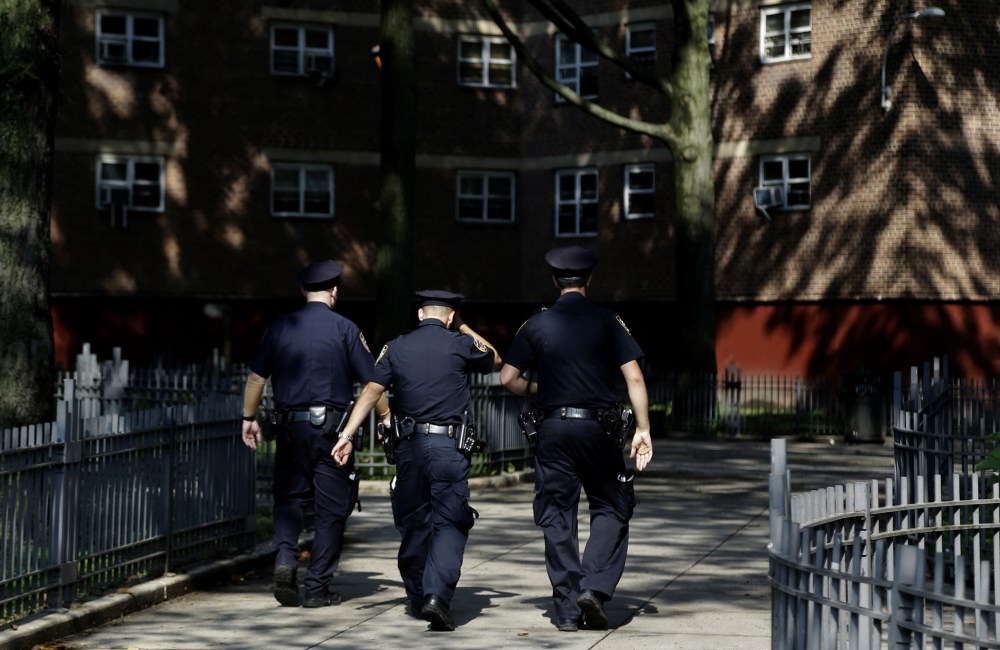
Now that the federal courts have spoken on “stop-and-frisk,” many people think teens in our community have less to fear from the criminal justice system. Unfortunately, it is not that simple. Far worse can happen to a child after being stopped.
In his State of the State address Wednesday, New York Gov. Andrew Cuomo said what needed to be said: New York’s juvenile justice laws are outdated.
Every year, almost 50,000 16- and 17-year-olds are prosecuted as adults in New York State, and more than three-quarters of these charges are for misdemeanors like shoplifting and marijuana possession. Some 70% of the children arrested are black or Latino, as well as 80% of those incarcerated.
As Cuomo reminded us, now is the time for a change. The New York State Legislature needs to Raise the Age of criminal responsibility, and they need to do it this year.
Teens are far from perfect, and they certainly are not always innocent. That’s part of growing up. A teen’s brain develops well into his or her 20s, and as cognitive skills improve, so does impulse control. As a result, teens are often unable to focus on the consequences of their behavior.
But there are benefits, too. As their character and personalities change, teens are highly receptive to influence and intervention. Far more than adults, they can unlearn delinquent behavior, respond to interventions, and learn to make responsible choices. Study after study affirms this.
So what happens when a child makes a mistake – a serious one, like shoplifting? What happens when a minor is stopped and frisked and found in possession of marijuana?
One woman, who is affiliated with the group Families Together, recounted at a press conference how her 16-year-old grandson was charged with second degree robbery, a felony charge, for allegedly stealing Chinese food from a delivery car. He was sentenced to 18 months in adult prison where he was sexually assaulted by an older inmate. Though his record is sealed, he is currently being treated for trauma and schizophrenia and may never return to a normal life.
Tired of such tragedies, legislators in statehouses across the country have worked to reverse ineffective, destructive and expensive “tough on crime” laws that treat children as adults.
Yet despite significant recent reforms in New York’s youth criminal justice system, New York is one of only two remaining states (the other is North Carolina) whose laws define the age of criminal responsibility as 16.
Elsewhere, everyone from “Right on Crime” conservatives to children’s advocates to criminal justice experts agrees that youth who go through the juvenile justice system are less likely to commit crimes when they get out than youth who go through the adult system.
From arrest to cell, the experience of being prosecuted as an adult does violence to the life of a child. Parents are not notified of court proceedings—or even of the arrest itself. Children can be questioned without parental consent or presence. They are held in adult correctional facilities where they share rooms with real adults, the kind who put them at high risk for both sexual abuse and violence. Perhaps because of this, corrections officers often place children in solitary confinement, trading one kind of violence for another: the documented emotional damage that comes from prolonged isolation. Is it any surprise that compared to their counterparts in juvenile facilities, these children are 36 times more likely to take their own lives? Even after a child is released, the nightmare continues. A child who spent time in the adult system may lose their right to vote. They are often stuck with unsealed criminal records which prevent them from getting work or student loans, prevent them from living in public housing, or prevent their families from housing subsidies. It’s not hard to imagine how this has the potential to drive families apart. In the end, what do we have to show for this “tough on crime” approach? Children held in adult facilities are 34% more likely to be arrested again for committing more crimes. This only serves to make our communities – particularly Black and Latino communities – less safe. Children are different from adults as the Supreme Court has concluded three times since 2005. We can no longer sentence children to death. Neither can we throw away the key on teens by imposing life-without-parole sentences for non-homicide offenses. Nor can we forgo judicial discretion and impose mandatory life-without-parole sentences on child offenders. We should not be allowed to sentence children as adults, either. New York is shamefully out of step with the national consensus on this issue. We look forward to seeing the results of Cuomo’s forthcoming commission on juvenile justice, which will hopefully include individuals who were incarcerated as youth. The state legislature should follow his lead and pass a bill to Raise the Age this year. We hope they do so before even more lives are ruined. Benjamin Todd Jealous is the former President and CEO of the NAACP. Rosario Dawson is an American actress and the Co-Founder and Chairwoman of Voto Latino.
Benjamin Jealous
Rosario Dawson Recommended


