








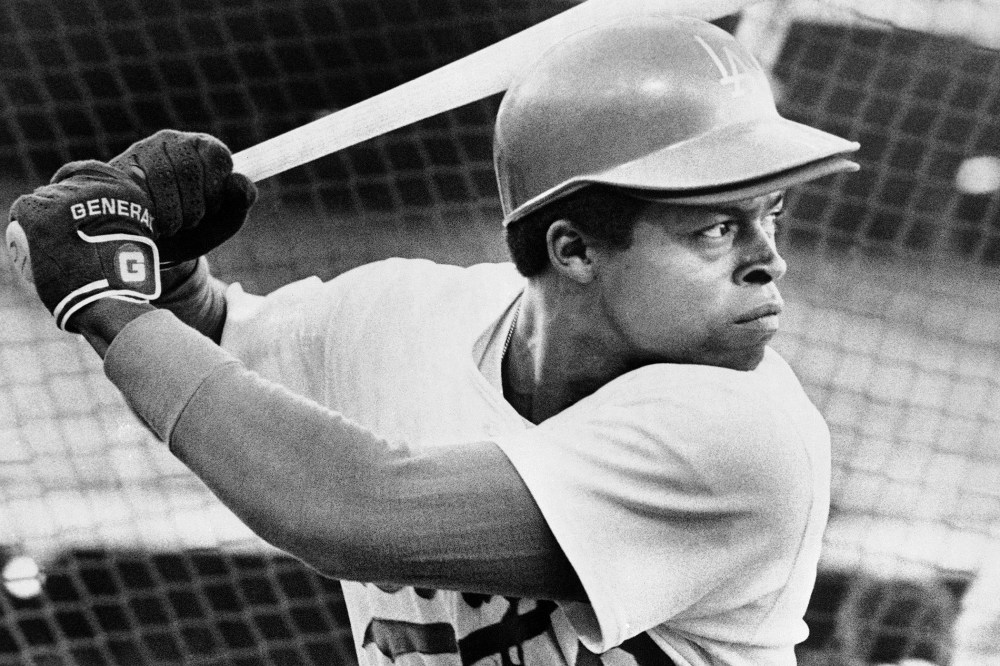
Three decades after coming out, and two since succumbing to AIDS, baseball player Glenn Burke is transforming the league that never embraced him while he was alive.
In 1980, after playing four seasons with the Los Angeles Dodgers and the Oakland Athletics, 27-year-old Burke walked away from Major League Baseball. Two years later, he publicly came out, telling Inside Sports magazine it was “harder to be gay in sports than anywhere else,” with the exception, he supposed, of the Oval Office. “Baseball,” said Burke, was “probably the hardest sport of all.”
At last, the league is taking steps toward addressing that problem. On Tuesday, ahead of the 85th All-Star Game in Minneapolis, Minnesota, MLB Commissioner Bud Selig announced a series of actions designed to make baseball more inclusive. Standing beside him were two people carrying on Burke’s legacy: Billy Bean, who played six seasons in the majors before publicly coming out in 1999, and Lutha Burke, one of his surviving siblings.
“Your brother was a pioneer,” Selig told Lutha Burke. “We remember him to this day, and we want to tell his story.”
Selig announced that Bean would be working with MLB again, this time as the first ever ambassador of inclusion. In an exclusive interview with People magazine earlier this year, Bean said he regretted quitting baseball out of fear of telling his teammates that he was gay.
“I was trying to play with a very difficult secret, and I was living a life of deception and secrecy from my family, my friends, people who loved me, people who I love the most, and my teammates,” said Bean at Tuesday’s press conference. “At the time, I thought the best decision was to quit and walk away than to reach out for guidance.”
In his new role, said Bean, he’ll keep athletes from making “that same mistake.”
Outside of bringing Bean on board, Major League Baseball will also be forming a strategic alliance with Athlete Ally, a not-for-profit group dedicated to ending homophobia and transphobia in the sports world. As part of that partnership, Athlete Ally will provide training to players and personnel on inclusive practices within the workplace. MLB will also be developing an LGBT internship program.
It’s a far cry from when Burke had to juggle a double life split between the baseball stadiums and Castro Street. Several Dodgers teammates believed Burke was traded to the A’s in 1978 solely because he was gay. Once there, the A’s manager, Billy Martin, reportedly introduced him to teammates using a homophobic slur.
“People say I should still be playing,” said Burke in the 1982 Inside Sports article. “But I didn’t want to make other people uncomfortable, so I faded away.”
After his baseball career ended, Burke fell into a life of crime and drugs. In 1995, he passed away at age 42 from complications related to AIDS. Tuesday’s press conference marked the MLB’s first official recognition of Burke’s contribution to baseball.
“It’s just now that we’re starting to realize how very important pioneers like Glenn Burke and Dave Kopay [a former 49er and Redskin running back] and other LGBT athletes in the ‘70s and ‘80s were,” said Cyd Zeigler, co-founder of Outsports.com, in an interview with msnbc. “They were actually starting something that has today become a transformational movement, and I think it’s just in the last couple years that we all started to understand how important their role in the story of sports was.”
Though many knew Burke was gay while playing, he never publicly said so until after he stopped. In fact, unlike the National Football League or the National Basketball Association — which have Michael Sam and Jason Collins, respectively — professional baseball is still waiting for its first active, openly gay player. Zeigler sees a couple of reasons for the delay, the main one rooted in religion, which he called “the biggest stumbling block to ending homophobia.” “In baseball, there’s such an influx of players from deeply Catholic countries, in addition to religious players from the U.S.,” he said. “It creates a bigger barrier.” But as Tuesday’s announcements show, when the next gay rights pioneer does come along, MLB will be ready. “All of the six big, pro sports leagues are in a race to outdo one another on this issue,” said Zeigler. “All want to be acknowledged as the most inclusive for LGBT athletes, which is a shocking reversal from just a few years ago.” In the period after leaving baseball and running into trouble with the law, Burke became an active member in the gay community, taking on an early, unofficial version of the role Bean has now. He played in gay leagues, won medals at the Gay Olympics, and participated in Black and White Men Together (BWMT), a group fighting racial discrimination within the gay community. “I feel like a representative of the community,” he told Inside Sports. “If I can make friends honestly, it may be a step toward gays and straight people understanding each other. Maybe they’ll say, ‘He’s all right, there’s got to be a few more all right.’ Maybe it will begin to make it easier for other young gays to go into sports.” Three decades later, Burke is still making it easier.
Emma Margolin
Emma Margolin is a reporter at MSNBC.com. Recommended


