On July 24, 2009, the federal minimum wage rose to $7.25 an hour, the last bump of a three-step increase enacted in 2007 with bipartisan support.
Five years later — despite cost increases of 11% and record income inequality, and despite an unprecedented, nationwide push for higher wages in the streets, at the ballot box, in statehouses and at businesses small and large — it remains hopelessly stuck there due to congressional indifference.
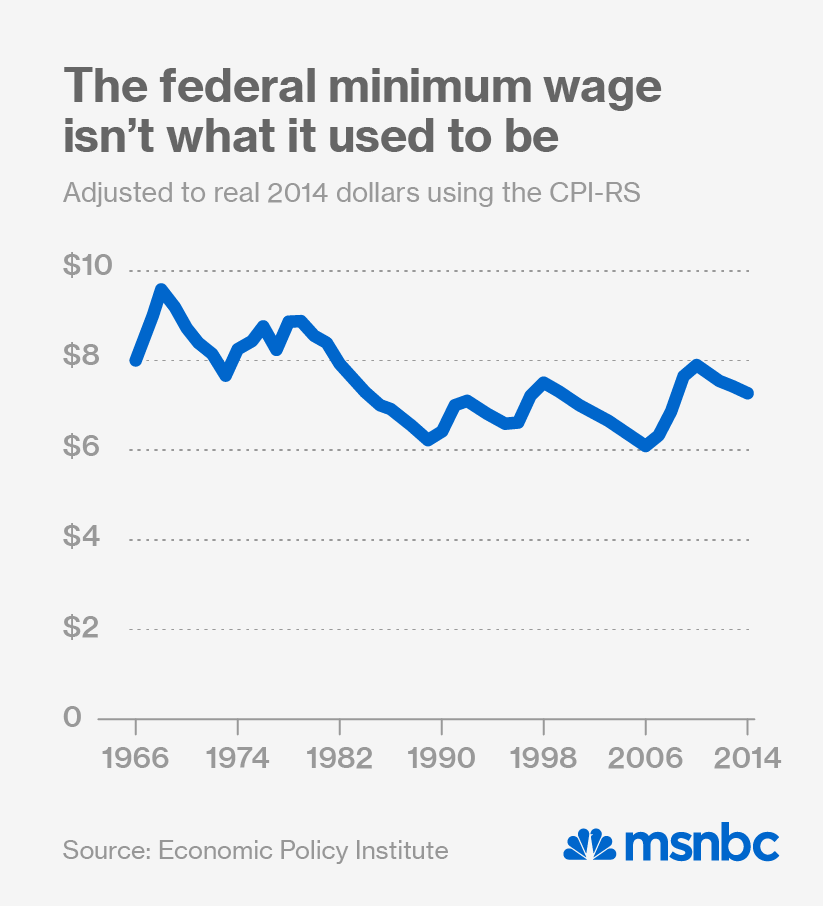
Congress is an easy target these days, and casual observers typically blame both major parties for its daily pettiness and dysfunction. But let us be clear: The failure to raise the federal minimum wage — a failure that has cost workers nearly $6 billion and counting in lost wages and threatens our economic recovery — lies at the feet of one group only: congressional Republicans.
Given an opportunity to raise the minimum wage to a modest $10.10 an hour — still barely enough for most families to get by — Senate Republicans mounted a filibuster to block even a debate on the bill. Just one Republican joined the 54 Democrats voting unsuccessfully to advance the legislation.
Given an opportunity to petition Speaker John Boehner — who would rather “commit suicide” than schedule a vote on a clean minimum wage increase — to bring the same bill to the floor of the House, not one Republican mustered the courage to join the 195 Democrats who have signed.
Congressional Republicans’ unflinching commitment to their radical corporate agenda is certainly impressive. When it comes to safeguarding the right of companies to pay workers as little as possible, congressional Republicans, to invoke a civil rights anthem, will not be moved.
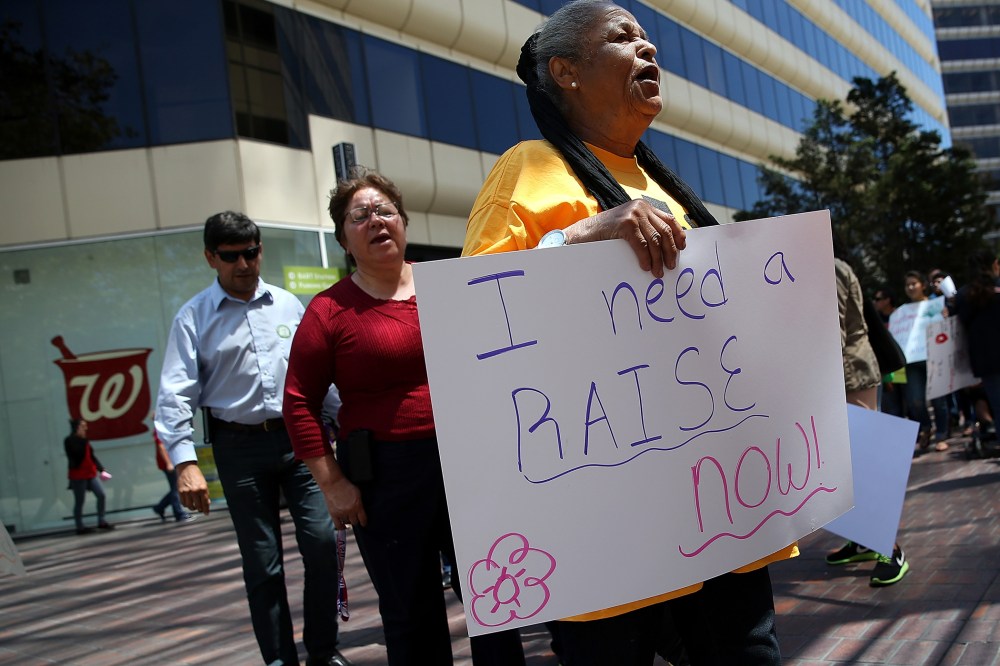
Not by the courageous fast food and retail workers who have struck for higher pay and galvanized a national movement to lift wages.
Not by the opinion of an overwhelming majority of Americans and 61% of small business owners — including nearly half of Republican small businesses — who favor raising the minimum wage as a matter of basic fairness and sound economic policy.
Not by corporate leaders like Ikea, the Gap, and Costco, and small businesses like Lamey-Wellehan Shoes in Auburn, Maine and Vintage Vinyl in St. Louis that have already committed to pay their employees more — not only because it’s the right thing to do, but because it’s good for business.
Not by over 600 economists, including seven Nobel Prize winners, who believe a higher minimum wage will generate billions of dollars in new economic activity, nor Wall Street analysts worried that low wages are holding back growth.
Not by the dozen states and nine cities and counties that have passed minimum wage increases in the past year alone — most over $10 and some as high as $15.
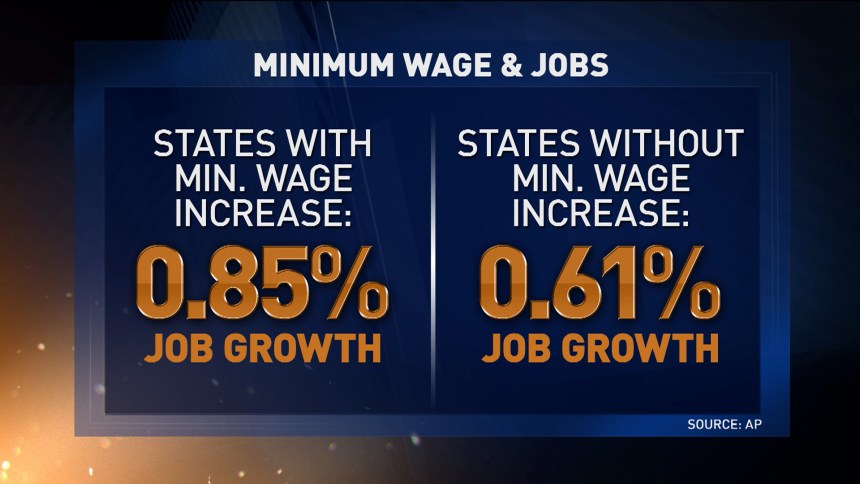
Not by the fact that the 13 states that saw their minimum wage increase on January 1st have added jobs at a faster rate than those that did not.
Not by the promise of saving money for taxpayers — $4.6 billion a year on food stamps alone — by requiring companies to pay decent wages instead of subsidizing a poverty-wage business model that forces low paid workers to rely on public assistance. Not by appeals from fellow conservatives like Bill O’Reilly (who says a $10 minimum wage is “OK by me”), Rick Santorum (who told fellow Republicans it “makes no sense” to “make the case that we’re for the blue collar guy, but we’re against any minimum wage increase ever”) and Mitt Romney (who thinks Republicans should raise the minimum wage because “our party is all about more jobs and better pay”). Not even by a recent analysis of Census data showing that on average nearly 20% of Republicans’ own constituents — the people they are paid to represent — would benefit from a $10.10 minimum wage. In a recent letter to his “fellow zillionaires”, Seattle entrepreneur Nick Hanauer emphatically endorses raising the minimum wage to as much as $15 an hour as “an indispensable tool smart capitalists use to make capitalism stable and sustainable.” The alternative, he says, is to do nothing and “wait for the pitchforks.” In a sense, the revolution has already arrived — not in the form of an angry mob but rather in the growing realization among people of all walks of life, from captains of industry to working stiffs, that America and American businesses cannot thrive when millions of its families are permanently relegated to a low-wage underclass. If congressional Republicans cannot be moved, America will simply move on without them. It is only a matter of time. Christine Owens is the executive director and Arun Ivatury is a senior campaign strategist for the NELP Action Fund, a project of the Advocacy Fund.
Christine Owens
Arun Ivatury Recommended