








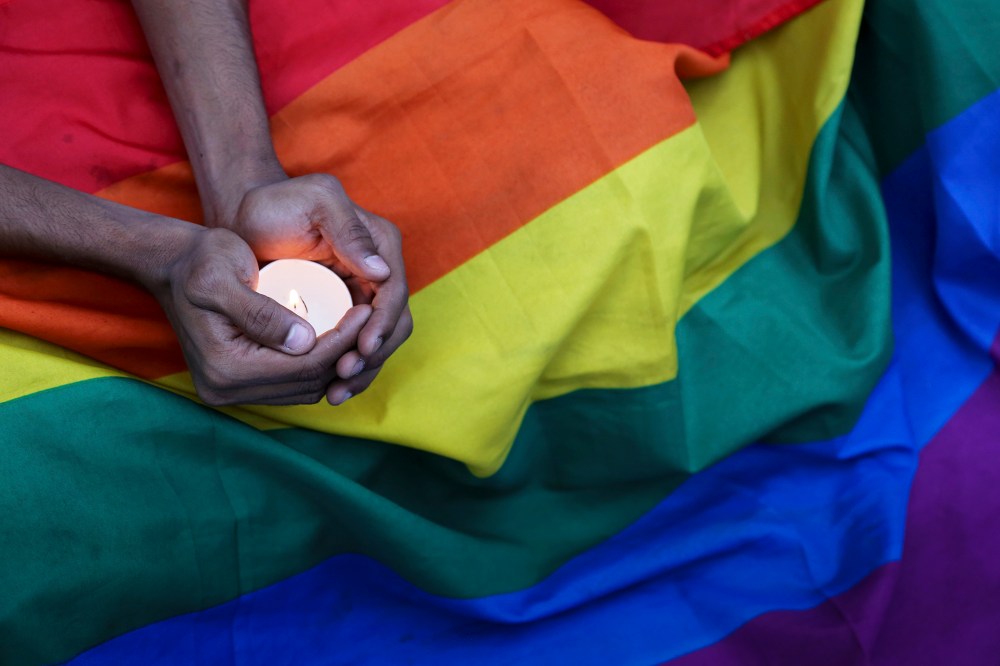
As the utter shock from the horrific mass murder at Pulse nightclub turns to recognition of the tragic consequences of the crime, we have already found ourselves in a national conversation that tries to comprehend what took place in Orlando, Florida. Was this an act of domestic terrorism or a hate crime, and why does it matter what we call it?
It matters deeply how we describe this crime because of the expressive quality of the criminal law. When we label something as illegal, we set the bounds of what is legal. And when we describe the harm done by a crime, and why some crimes are worse than others, we articulate our hierarchy of values. Assault is punished more severely than theft because we value bodily integrity more than physical objects. Murder is the most serious crime of all precisely because of the value we place on human life.
The Orlando massacre appears to have been an act of domestic terrorism. Omar Mateen, an American citizen, pledged allegiance to ISIS, a terrorist entity dedicated to the destruction of the United States, and thus his crime was perceived by all of us as an attack on each of us. On Sunday morning, all Americans felt threatened. Terrorism is a broad-based attack aimed at the entire nation.
But the Orlando massacre was certainly a hate crime, a bias-motivated attack aimed directly at the LGBTQ community for whom Pulse was a safe home and place of celebration. On Sunday morning, the LGBTQ community felt not only threatened but directly targeted. This devastating psychological impact on a minority group is the particularly dangerous and pernicious effect of bias motivated crimes.
RELATED: How ‘vigorous civility’ can protect free speech amid heated debate
Hate crimes are a criminal manifestation of bigotry that tear at the fabric of society. They tear particularly deeply because bias criminals seek to widen preexisting societal fissure lines. Despite remarkable progress in recognizing rights of gay, lesbian and transgender members of society, the LGBTQ community remains an embattled minority. The uniqueness of a hate crime is in its particular impact. Not only does a hate crime have an overwhelming personal effect on an individual victim, it inflicts an intended harm on other members of the target community who experience psychological trauma vicariously.
We belong to society and understand ourselves as Americans on each of three levels: As individuals, as members of groups with which we identify, and as members of the broader society. Bias crime laws serve the purpose of validating the middle level, group-based nature of our identities. Crimes that are aimed at victims because of their group-identity cause a special additional harm that similar crimes without bias motivation do not.
This additional harm has been demonstrated all too often, and we saw it again these past days: Members of the LGBTQ community felt not only empathy nor even just sympathy for direct victims, but also felt that they themselves were victims of this crime. By Sunday morning, they felt less safe than they had Saturday night, whether in Orlando or across the country.
An example from another context may be helpful. If, in 1938, we described Kristallnacht as a large-scale act of state-sponsored arson and vandalism, we would have thoroughly mischaracterized the nature of the crime. Kristallnacht was an act of large scale state sponsored anti-Semitic violence — it was a profound hate crime. And to fail to label it so and understand its impact on the target community would be to mischaracterize the crime. Failing to label and understand bias-motivated crimes as a thing apart fails to validate the specific and deep harm caused to the target minority community. It renders the harm legally invisible, thus invalidating the pain of the community. It thereby inflicts a fresh wound on the victim community, this time coming from their fellow citizens. It is precisely because of crimes such as the one that occurred at Pulse that hate crime legislation was ultimately adopted in most states over the past three decades or so, and on the federal level by Congress when it passed the Matthew Shepard Hate Crimes Prevention Act of 2009. In the coming days, much will be said about domestic terrorism and the need for greater regulation of firearms. We must focus as well on the bias motivation that is at the heart of what happened in Orlando. We must see this as a moment to knit the fabric of our society more closely together and to commit ourselves to that which connects us, rather than that which divides us. Not all acts of terrorism are hate crimes. The mass murder at Pulse was both. Frederick M. Lawrence is a senior research scholar at Yale Law School and the secretary and CEO-elect of the Phi Beta Kappa Society. He is the author of “Punishing Hate: Bias Crimes Under American Law,” and testified in support of the Matthew Shepard Hate Crimes Prevention Act of 2009
Frederick M. Lawrence Recommended


