








Monday, Dec. 1 is World AIDS Day, a time when the global community pauses to pay tribute to the 39 million men and women who have lost their lives to AIDS-related illnesses. An additional 78 million people have become infected with HIV since the onset of the epidemic, according to UNAIDS. World AIDS day is also an opportunity to pause and look forward to the future. Over the next week, msnbc.com will profile leading voices in the HIV/AIDS movement whose work is helping realize a world with of zero new HIV infections, zero discrimination and zero AIDS-related deaths.
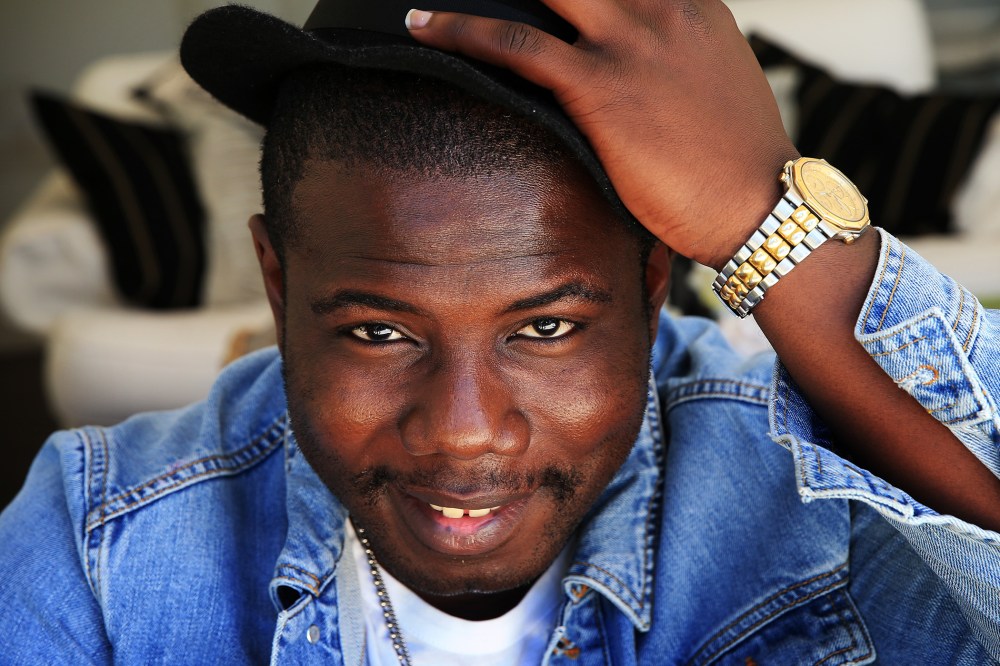
Name: Kweku Mandela
Location: Cape Town, South Africa
Occupation: Activist and Filmmaker
About: Kweku Mandela is the grandson of legendary South African President Nelson Mandela. He is president of Out of Africa Entertainment, a leading film production company in Africa. In 2009, Kweku co-founded Africa Rising, which strives to ignite a “New African Generation” that will empower itself to be at the forefront of Africa’s development, with his cousin Ndaba.
%22Where%20there%20is%20HIV%2FAIDS%20still%20living%20and%20infecting%2C%20then%20there%20is%20still%20work%20to%20be%20done.%20And%20myself%20and%20my%20generation%20need%20to%20be%20at%20the%20forefront%20of%20this.%22′
South Africa has the highest HIV transmission rate in the world. What is it like living in that social imaginary?
It’s a powerful reminder that the epidemic is still very much alive. It is also a strong reminder of what is possible when the world stands up and recognizes that all life is precious. My grandfather believed that humanity had a responsibility to fight HIV/AIDS and give people living with it a chance at the same dignity we would afford anyone in our society who was suffering from diseases like cancer or the common flu. South Africa does have the highest infection and transmission rate in the world, but we also have one of the world’s best responses to that. We set a precedent in 2001 by successfully defending the rights of South Africans living with HIV/AIDS against pharmaceutical companies who wanted to stop the government from producing cheaper, locally-made, generic anti-retroviral drugs for the people who needed them. This is but one of many growing successes the country can say it contributed to.
RELATED: Jean Carlomusto: The woman who documented the HIV/AIDS movement
What inspired you to become involved in movement to end HIV/AIDS?
I think the personal motivation came from the loss of my Uncle Makagtho and Aunt Zondi to HIV/AIDS in the same year. But as a citizen of South Africa and the world, my motivation was a simple one. Where there is HIV/AIDS still living and infecting, then there is still work to be done. And myself and my generation need to be at the forefront of this.
What are your favorite memories of your uncle Makgatho? What does his life symbolize for you?
I used to go sleep over at his house, and he would make me breakfast and let me watch WWE – something my mother wasn’t fond of and didn’t let me watch. He was flawed as any human is, but his heart was as pure as gold. And he always had this swagger about him, even though he was a mild man who rarely lost his temper or raised his voice. He would walk into the room and bring joy with him. He was also the first face I associated with South Africa. When I was 3 years old and returned to South Africa briefly to visit my grandmother with my mother, he picked us up at the airport in Transkei. His life means everything to me, but perhaps it represents the importance of not having to be a giant to be a giant. One’s heart and soul can outweigh their size or stature.
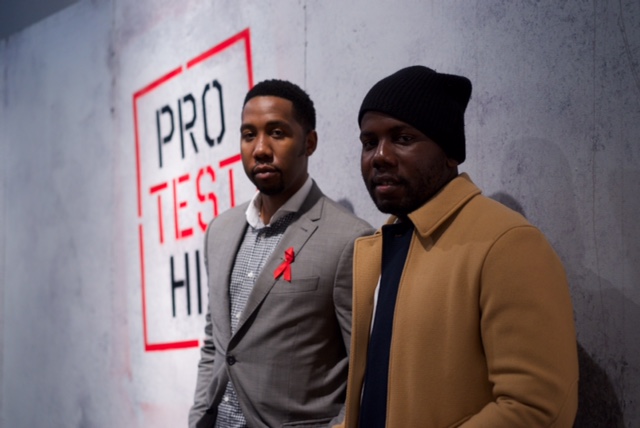
He realized very early on that HIV/AIDS was a global issue – not just a South African one – and that the international community had a role to play in helping South Africa fight this epidemic. And at the same time, he knew that South Africa could take a leading role in coming up with solutions and fighting the stigma surrounding the disease.
He wanted to use his influence and voice to make sure this was done, heard, and seen by the world and governments that had the resources and the power to change the tide on senseless and avoidable deaths we saw across the globe. He’d seen the work of organizations like the AIDS Coalition to Unleash Power (ACT UP), amfAR, and Elton John Foundation, so he knew what was possible when a community and collective came together to galvanize around this issue. He strongly felt that it was important an African voice and community did as well, so he took the lead from a South African context.
%22%5BMadiba%5D%20realized%20very%20early%20on%20that%20HIV%2FAIDS%20was%20a%20global%20issue%20%E2%80%93%20not%20just%20a%20South%20African%20one%20%E2%80%93%20and%20that%20the%20international%20community%20had%20a%20role%20to%20play%20in%20helping%20South%20Africa%20fight%20this%20epidemic.%22′
What does Africa Rising do to spread awareness about HIV/AIDS in South Africa?
We did a campaign called “Born Healthy” in 2010, where we distributed pamphlets in all 11 official languages to communities, and in particular to new born mothers, teaching them how to care for their newborns during their first six months, which is most vulnerable period for children. This wasn’t specific to HIV/AIDS only; it had a larger focus on child mortality. But it did focus on the need for mothers to get tested and to learn about anti-retroviral treatment if they were HIV-positive. What is the key to stopping the spread of HIV in South Africa? Awareness, support, and commitment. Access to drugs to more people at affordable prices – or for free if they can’t afford it. Last but not least, belief, belief, belief – that we can have an AIDS free generation in our lifetime. Why are you hopeful for a world without HIV/AIDS in your lifetime? I’ve seen young people around the world rise to the challenge and be advocates in their own communities. Every time I meet people who take this issue to the world with the full force of the power and impact they have, I believe it a bit more. What most excites me is the work of people in my generation. From the voices and actions of people like Jerry Sherry and Michele Sidibe at UNAIDS, to Sharon Stone and Kenneth Cole at Amfar, or Bono with [RED] and ONE, to Mary Fisher, Regan Hoffman, and Peter Twyman who lead us through their activism, their example is a guide for us all. Jake Glaser at Modern Advocate is just killing it. Charlize Theron and Alicia Keys respectively with Charlize Theron Africa Outreach Project (CTAOP) and Keep a Child Alive have been doing some of the most effective grassroots work with communities and youth. Phindile Sithole-Spong , Christopher Barnhill, Ashley Rose Murphy, Hannah Alper, and Hannelore Williams are all young activist fighting to make a world where there is no HIV/AIDS. So I’ll finish on this. I’m more than hopeful … The above figures made me determined to bring about an AIDS free generation. Follow Kweku on Twitter at @kwekumandela. Learn more about Kweku’s films at www.outofafrica.info. For more HIV/AIDS activist stories, head to speakout.msnbc.com.
Joseph Neese Recommended


