URBANDALE, Iowa — Thirty-five years after his father won the first-in-the-nation presidential caucuses, Jeb Bush is back in Iowa — this time thinking of campaigning for himself.
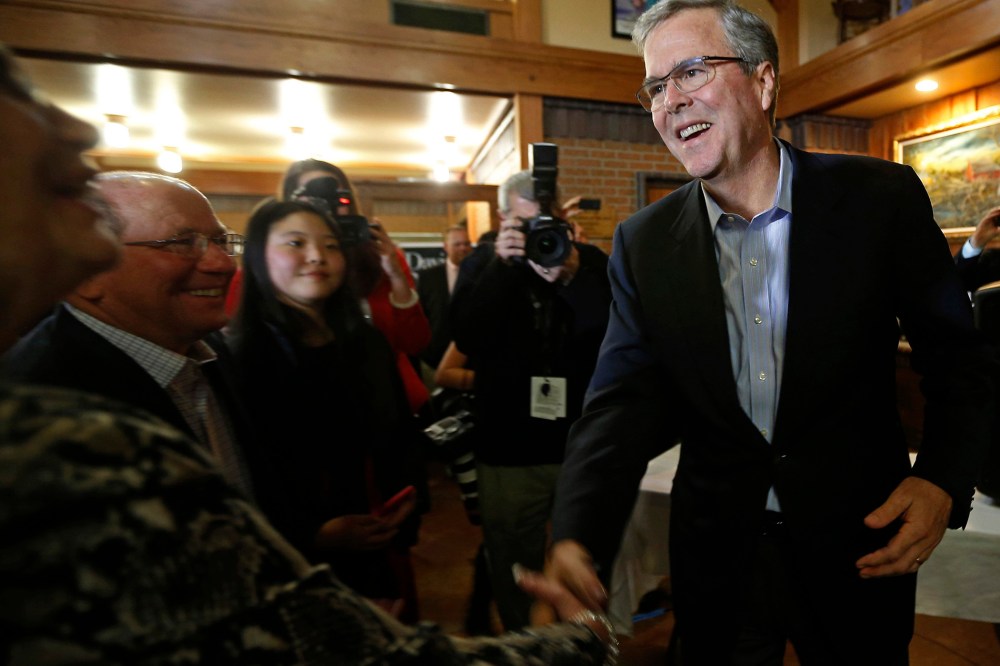
It’s been three years since Jeb Bush’s last visit to this state. But on Friday night, he recalled returning from Venezuela to help his father campaign for president over three decades ago. “I’ve been to Iowa when my dad won and when he lost,” Jeb Bush told the crowd of 80 or so people who gathered at the Living History Museum in Urbandale. “I like the winning part better.”
In 1980, George H.W. Bush beat Ronald Reagan to win the Iowa caucuses, but he lost the nomination and ended up on the ticket. In 1988, as vice president, the eldest Bush lost the caucuses. Jeb Bush also, of course, campaigned for his brother, George W. Bush, when he ran for president in 2000, winning the caucuses, nomination and presidency.
RELATED: Jeb Bush: ‘Baffling’ Clinton e-mail account posed security risk
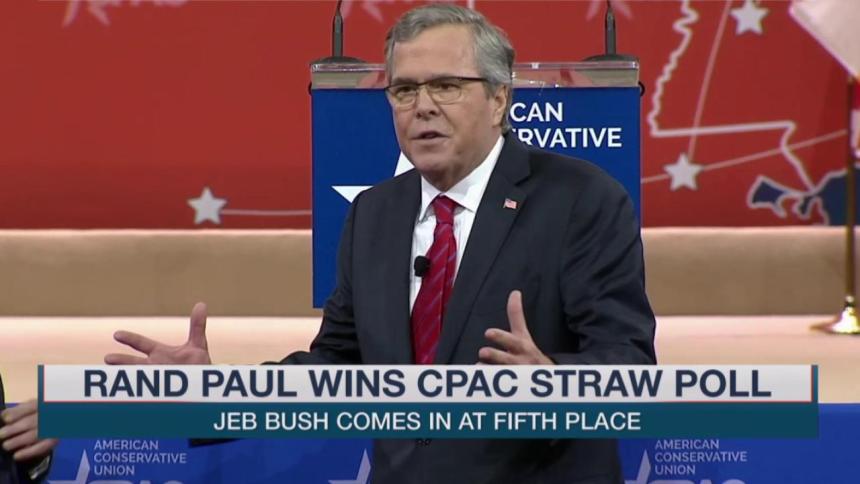
Still, the fundraiser represented Jeb Bush’s first foray into the gauntlet of Iowa retail politicking on his own behalf. He spoke for about 10 minutes, giving the crowd a version of the speech he delivered at the Conservative Political Action Conference in Washington last month — and what seems to be the outlines of what is likely to become his standard campaign speech. Then he took questions, fielding queries from voters on Common Core, foreign policy, health care and the national debt.
It was clear he’s thought about how to refine some of the positions he’s taken that could cause trouble with the conservative base of his party — often the most vocal and influential group of voters in the Iowa caucuses.

His first questioner declared her support for the Common Core standards that have become anathema among many Republican voters. Bush didn’t take the opportunity to agree with her, declining to use the words “Common Core” and emphasizing that education policy shouldn’t be tied to the federal government. “So what I’m for are higher standards, assessed faithfully so that we know where kids stand,” he said. “The fact that they’re common to 45 states is a good thing not a bad thing. States that don’t want to participate — that’s fine — no big deal.”
He staked out a muscular foreign policy — though short on specifics — that was especially critical of President Barack Obama. “This president is the first president in the World War II era who does not believe that American power is a force for good in the world,” he said. And in his speech, he framed his tenure as Florida governor as aggressively conservative. “We were goin’ and blowin’, let me tell you — and this was in a state that had more Democrats than Republicans,” he said. “We took on the trial bar and the teachers’ unions across the board.” The fundraiser was the first in a series of events Bush has planned this weekend in Iowa. On Saturday, he’ll appear at the Ag Summit, organized by Iowa megadonor Bruce Rastetter, in Des Moines. Bush will take questions on the stage and later from the press. Then he has a private meeting with donors and activists in Waukee and a campaign-style event at a Pizza Ranch restaurant in Cedar Rapids. There will be plenty of chances for him to try out his retail campaign skills; Bush recently described himself as an introvert. Asked about that remark by a Politico reporter Friday, Bush stopped, looked straight at her and said he would engage one-on-one with people he might meet on the trail. “I wanted to be better at this,” he said. “I intend to hang out with people, if I’m a candidate, and engage with them, and learn from them, and answer their questions, it’s not going to be a bubble campaign.”
Kasie Hunt Recommended