








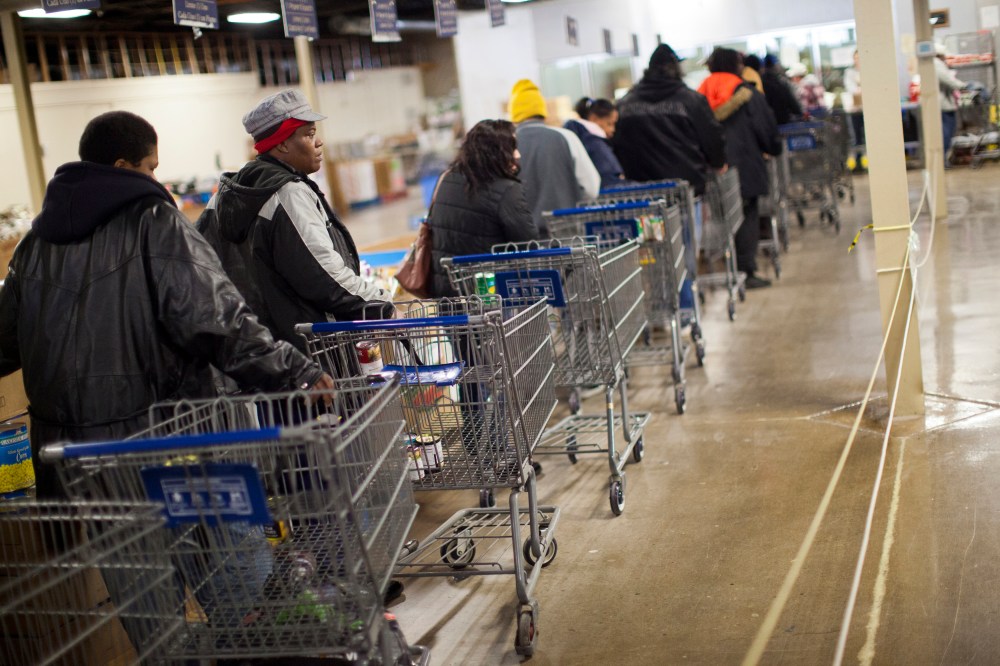
By this time next year, some 65,000 Indiana residents may have found that tighter restrictions apply to their food stamp benefits. That’s because the state, along with seven others, has decided to start ensuring work requirements are enforced for non-disabled adults without dependents. The move will make it more difficult for those who are not either employed or in job training to access benefits.
Indiana was one of 37 states to receive a waiver on food stamp work requirements in the aftermath of the 2008 financial collapse. Typically, so-called ABAWDs — Able Bodied Adults Without Disabilities — can only receive full benefits year-round if they can prove they’re either working or participating in a government-approved job training program. Otherwise, the USDA limits benefits access to three months out of every three years.
RELATED: The hunger crisis in America’s universities
On August 18, Indiana took the first steps to put those limits back in place. That’s when Lance V. Rhodes, director of the Division of Family Resources in Indiana’s Family and Social Services Administration, wrote to the USDA saying the state would not accept another federal waiver. The change in policy, he wrote, “will reinforce the State of Indiana’s well-established tradition of being a State that Works by increasing our self sufficiency among our clients.”
He went on, adding that “Indiana has always intended to fully reestablish work requirements for its SNAP able-bodied adults. In 2015, Indiana will implement ABAWD time limits and provide access to employment and training services to these Hoosiers, initially through pilot projects in at least two Indiana counties in the first quarter of 2015, with the ultimate goal of statewide implementation beginning October 2015.”
Indiana originally accepted a waiver in 2011 due to high unemployment, and the possibility that some hungry Indiana residents would slip through the cracks because they weren’t able to find a job or work training program that met USDA guidelines. Unemployment has since declined — from 9% in December 2011 to 6.9% in December 2013 — but not everyone is feeling reassured.
Emily Weikert Bryant, executive director of the emergency food assistance group Feeding Indiana’s Hungry Inc. — said many of the state’s hungry citizens have medical issues that make it difficult to find work, despite being classified as ABAWD. RELATED: How one student is fighting the college hunger crisis “Typically if you’re looking at lower-end jobs here in Indiana, you’re looking at in the retail sector, and those often come with physical requirements,” she said. A recent survey [PDF] from the national organization Feeding America found that nearly 60% of its 15.5 million client households included at least one member diagnosed with high blood pressure. About one-third of households had a member with diabetes. About 15.7% of Indiana’s population is estimated to be food insecure, which in USDA terminology means they lack ”access … to enough food for an active, healthy life.” That puts Indiana slightly above the national average of 14.3%, or one out of every seven households.
Ned Resnikoff is an urban policy analyst, researcher, writer, and editor. His byline has appeared in a variety of publications, including the New York Times, San Francisco Chronicle, Dissent, and The Nation. He writes the newsletter Public Comment, which can be found at publiccomment.blog. Recommended


