








The Affordable Care Act was designed to make health care more … affordable. By expanding Medicaid, subsidizing private coverage, and barring discrimination by insurers, the law will extend health coverage to an estimated 25 million previously uninsured people by 2017 — an epochal achievement in its own right.
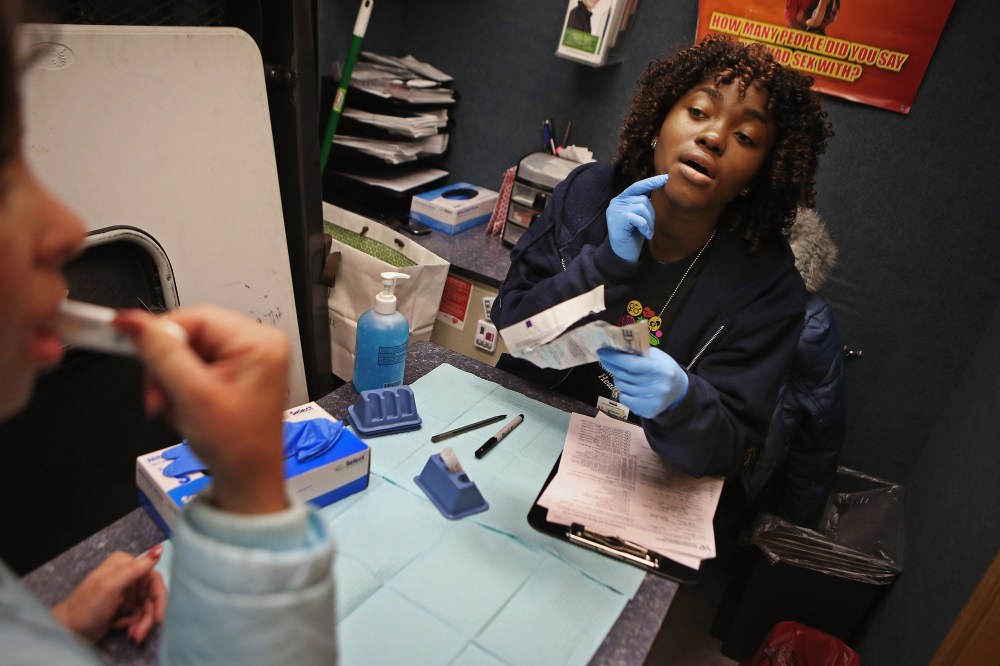
But while preventing countless bankruptcies, Obamacare may also help contain the AIDS epidemic. Writing in the journal Health Affairs this week, researchers from the University of Southern California project that a half-million people will find out their HIV status between 2013 and 2017, as they gain access to regular health care. More than 2,600 of them will learn that they’re HIV-positive — a revelation that will improve their survival prospects and slow the spread of HIV through communities.
Voluntary testing is a powerful antidote to HIV transmission, but nearly a fifth of this country’s 1.1 million infected people are still unaware of their status. As a result, many spend years unwittingly spreading the virus before they get sick and get diagnosed. Of the 50,000 new infections that occur each year, roughly half come from people who are “HIV unaware.”
Past research has shown that people are far more likely to get tested when they have health insurance. Unfortunately, people at high risk of HIV are disproportionately poor and uninsured. Since people with insurance have consistently higher testing rates than people who lack it, the USC researchers applied those higher rates to the population expected to gain coverage by 2017.
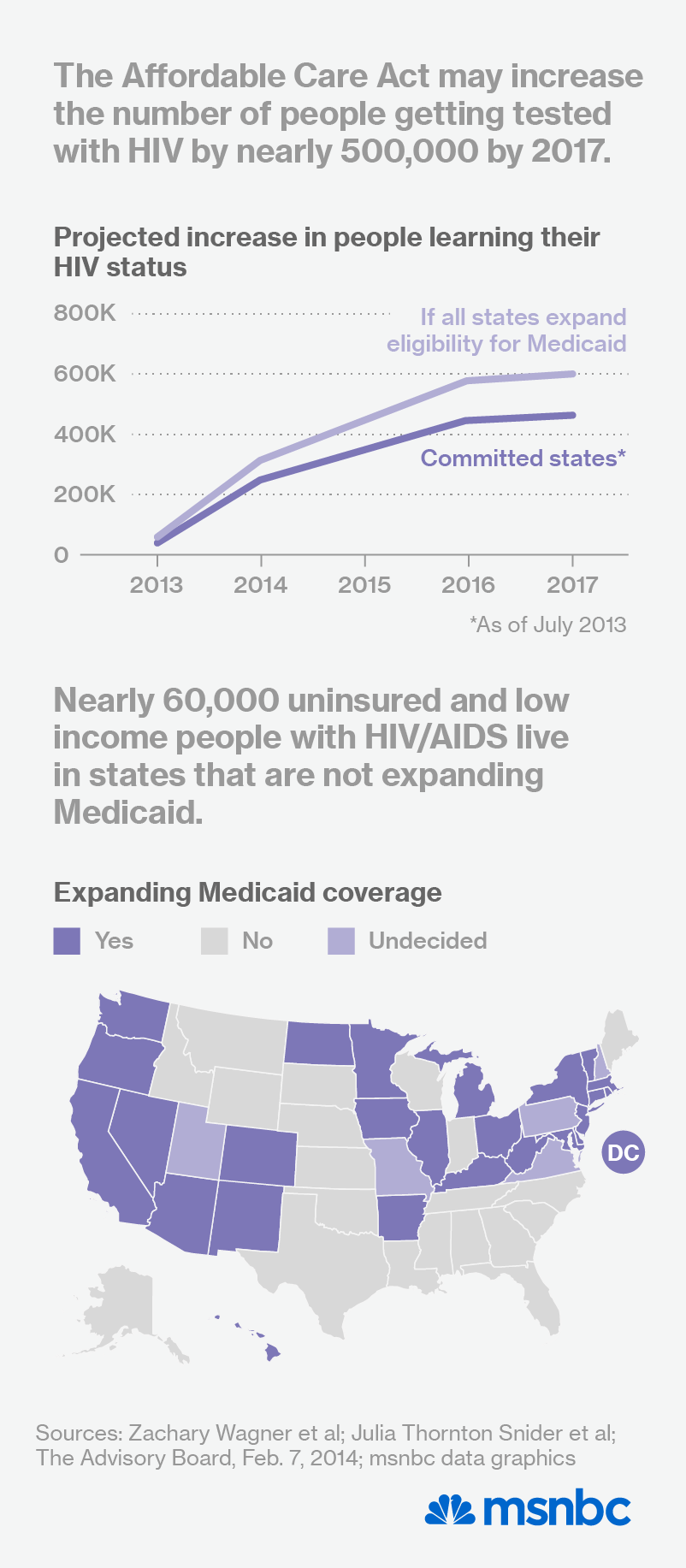
The impact was impressive. Only 18 states had agreed to expand their Medicaid programs when the researchers ran their projections last summer. Twenty-seven are now on boad. But even at that earlier level of buy-in, 466,000 people would be newly tested by 2017, and 2,600 of them would learn they have HIV. As the researchers conclude, that would mark a 22% reduction “HIV unawareness” among the infected people gaining coverage through the Affordable Care Act. If all 50 states expanded Medicaid, the number of new tests and diagnoses would be 30% higher (about 606,000 and 3,400, respectively).
How, exactly, would all of this this help slow the spread of HIV? Studies show that people who know they’re infected have less unprotected sex. But behavior is just part of the equation. When people with HIV get consistent antiretroviral treatment, it doesn’t just preserve their health and extend their lives. By reducing the amount of virus in their body fluids, it also lowers — by 92% to 96% — their chances of infecting others during unprotected sex. In light of those findings, U.S. health authorities now recommend that infected people start treatment as soon as they’re diagnosed and stay on it indefinitely. In another new study, also appearing in Health Affairs this week, researchers surmise that early treatment for HIV prevented 13,500 infections every year between 1996 and 2009 in the U.S., saving $128 billion worth of lost life expectancy — this despite the fact that two-thirds of the nation’s HIV-positive people receive inconsistent care and only one in four has the virus fully in check. Besides helping millions of high-risk people learn their status, the Affordable Care Act will improve access to care, counseling and treatment for many of those who test positive. Unfortunately, some of the states with the greatest need are still resisting federal help. In yet another Health Affairs study published this week, researchers estimate that just over half of nation’s low-income, uninsured, HIV-positive people (58,000 out of 115,000) live in the 23 states that are boycotting the Medicaid expansion. Most of them (33,600) live in Texas, Florida and Georgia. The rest of the country is moving forward without those states. But the new findings should give their leaders pause. The research shows yet again that expanding health care can save both lives and money. When policymakers refuse on political grounds, they harm the people they’re sworn to serve.
Geoffrey Cowley Recommended


