








Nearly 20 years ago, Hillary Clinton stood before the United Nations Fourth Conference on Women in Beijing and announced, amid a thicket of controversy, “Human rights are women’s rights and women’s rights are human rights once and for all.” It was regarded, including by Clinton’s closest friends, as “her most historic moment to date.”
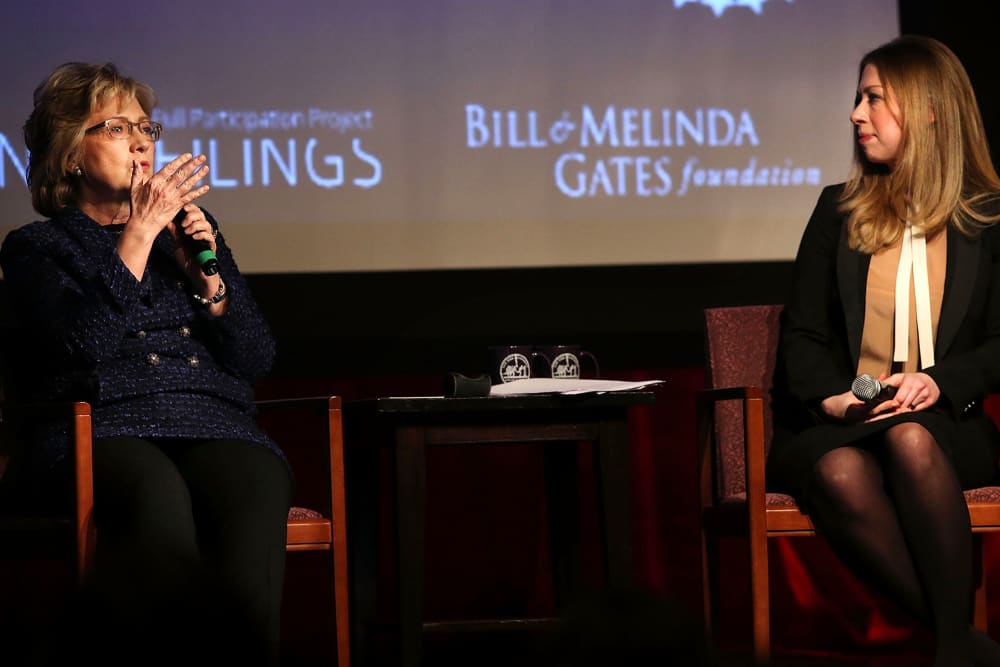
This morning in New York, flanked by her daughter Chelsea and Melinda Gates, Clinton revisited that speech. Instead of stirring rhetoric, there was a new, au courant focus: Data.
Since Beijing, said Clinton, “We have seen progress but we have also seen there is not an adequate base of data…on how much progress has been made.” The Clinton and Gates Foundations will be collaborating to fill that vacuum, aggregating data from traditional sources like the World Bank and the International Monetary Fund, as well as digital sources, to chart the progress of women since that Beijing conference.
That shift reflects a broader technocratic one in the world of philanthropy and non-governmental organizations, one in which the mega-foundations represented onstage have been instrumental. Hillary Clinton said such data could provide a prod for world leaders who were inclined to make big promises without much follow up: “To be able to say, ‘Okay country X, you have a law against women being cut out of or prohibited from inheriting their husband’s property, but in reality based on the information we have you don’t enforce it.”
And Gates said, “Data makes a huge difference in terms of where you make investments, where you can see you’re making progress and where you’re not.”
Chelsea Clinton asked her co-panelists whether the new focus on data meant abdicating a human rights or moral approach. Her mother said in her experience, “I needed to be making arguments that were rooted in what skeptics…would respond to.” In meeting with high-level officials, she said, “There’d be a little bit of, okay, there she goes again.” And Gates said that when she met with leaders around the world, “They don’t want to hear the moral argument or the rights argument. They want to hear the economic one.” Women, of course, are less-counted by any measure, including in measures of economic productivity. Clinton pointed out that women make up much of what is called “the informal economy,” which encompasses paid and unpaid labor. “Pick a given country — If the women in the informal economy stopped working tomorrow, your economy would collapse,” she said. Hillary Clinton also nodded toward her critics across the political spectrum, suggesting women in public life needed to “grow a skin like a rhinoceros.” But she also encouraged them not to dismiss all criticism. “You have to be able to hear what others, your critics, are saying,” she said. “Some you will dismiss because there’s an agenda that has nothing to do with you or your goals. Some will be giving you good advice…. listen to them or learn from them but try not get dragged down by them.”
Irin Carmon Recommended


