








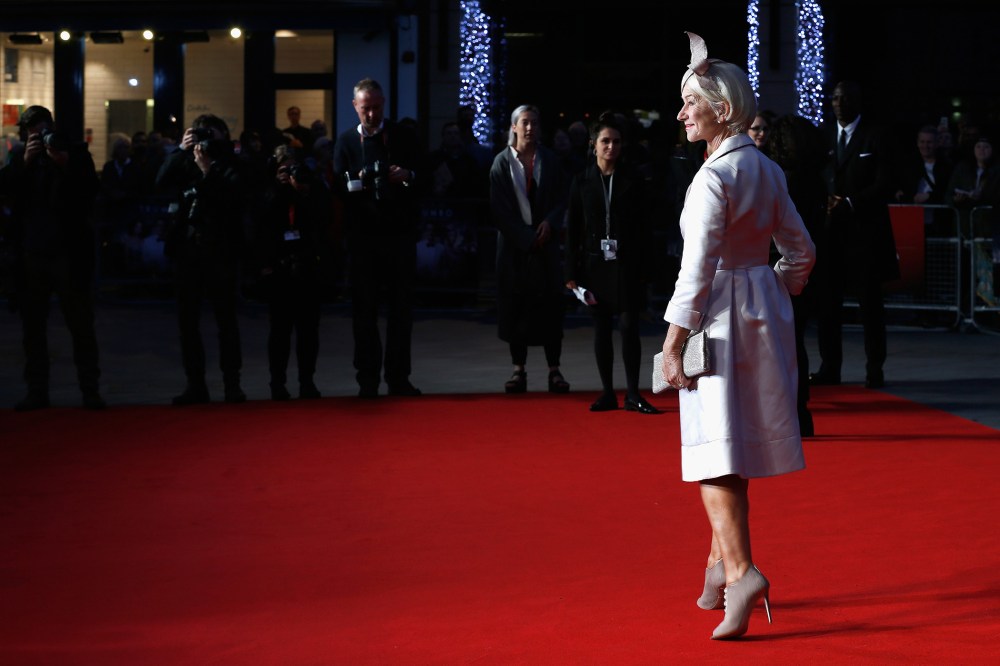
Veteran actress Helen Mirren may have inadvertently made the case for #OscarsSoWhite protests while criticizing them.
The 70-year-old actress, who won a best actress Oscar in 2007 for her performance in “The Queen,” recently argued that the backlash against the second straight year of all-white acting nominees is “unfair” to the academy.
“It just so happened it went that way,” Mirren said about this year’s nominations during an interview with the U.K.’s Channel 4 News. She went on to say that “Idris Elba absolutely would have been nominated for an Oscar” for his role as an African warlord in the acclaimed drama “Beasts of No Nation,” but that “he wasn’t because not enough people saw, or wanted to see a film about child soldiers.”
RELATED: #OscarsSoWhite boycott earns support on Capitol Hill
Critics of Mirren’s remarks would likely argue that viewer prejudices regarding stories with a focus on minority characters and subject matters is precisely part of the problem. In contrast, for instance, Mirren won her Academy Award for a film portraying the very white world of the British royals, and there was no buzz about Oscar voters being turned off by the narrow appeal of that film’s premise.
Notably, the other most widely shared critical remarks regarding calls for an Oscar boycott also came from elderly, white members of the academy. Eighty-five-year-old two-time Oscar winner Michael Caine, who also has publicly praised Elba’s snubbed performance, was quoted as saying: “You can’t vote for an actor because he’s black” — somewhat missing the point of critics who aren’t calling for tokenism but just the equal representation of excellence.
Caine went on to argue that black actors should “be patient” when it comes to receiving more recognition from the movie industry’s most prestigious awards. “Of course it will come. It took me years to get an Oscar,” he said.
And current nominee Charlotte Rampling, age 69, caused the biggest uproar when she reportedly called the idea of an Oscars boycott “racist against whites” during a French radio interview in January. Rampling has since clarified her comments, saying in a statement released afterwords, “I simply meant to say that in an ideal world, every performance will be given equal opportunities for consideration.”
For decades, the academy has been infamously male (76 percent), white (94 percent), and dominated by senior citizens (the average age of Oscar voters is 63). Recent studies have suggested that less than 3 percent of the Oscar voting pool is black. And the representation of Latinos, Asians and Native Americans doesn’t fare any better. And as frustrating as recent years have been for performers of color, it should be noted that not a single minority actor won an Academy Award during the 1970s.
In the aftermath of widespread criticism by everyone from A-list stars like George Clooney to President Barack Obama, the academy has instituted new rules to increase female and minority membership and to place term limits on longtime members who are no longer active within the industry.
“We could not be silent,” academy president Cheryl Boone Isaacs told The Hollywood Reporter last month. “And we had no reason to be silent. It isn’t a smart thing just to sit back and just sort of let the conversation get out of hand when it’s about you. At some point, you need to speak up.”
For her part, Mirren, who missed the supporting actress cut this year for her performance in the biopic “Trumbo,” joked that like director Spike Lee she won’t be attending the Oscars this year — but only because she wasn’t invited. On a more serious note she said: “The issue we need to be looking at is what happens before the film gets to the Oscars, what kinds of films are made and the way in which they’re cast, and the scripts. It’s those things that are much more influential, ultimately, than who stands there with an Oscar.” RELATED: Idris Elba makes pitch for diversity, amid #OscarsSoWhite uproar Recent studies have shown that more than 90 percent of Hollywood executives and senior management figures are white and that two-thirds of speaking roles in most of the popular films of the last several years were filled by white performers. Meanwhile, presidential candidate Sen. Marco Rubio appears to be clueless when it comes to what the fuss is all about. During an appearance on CNN earlier this week, the Florida Republican was asked about the #OscarsSoWhite controversy and he said, “I don’t know, what does that mean?” The 44-year-old lawmaker, who has expressed an affinity for black culture in the past, particularly hip-hop music, argued that Hollywood has “bigger problems” than a lack of diversity. “I think the bigger problem with Hollywood is the values they are trying to ram down our kids’ throats and how hard it’s made it on parents,” Rubio said, without elaborating on what those values are.
Adam Howard Recommended


