








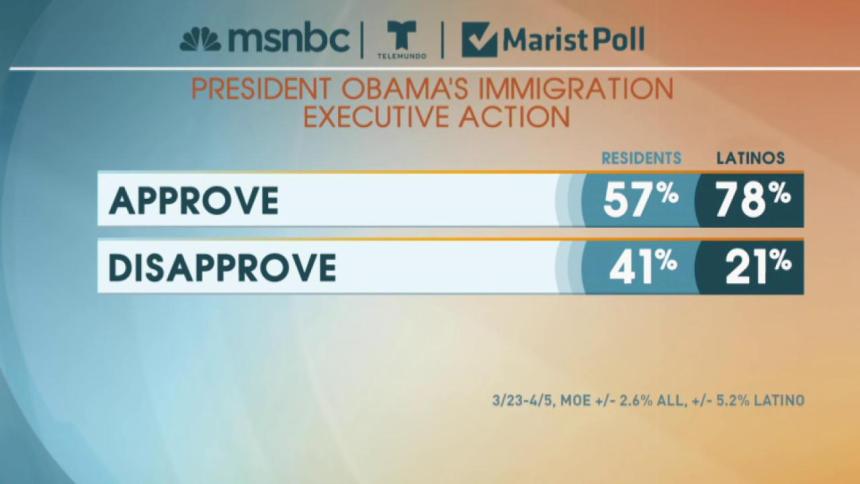
The Obama administration is taking a mix of the good with the bad this week in a tangle of court cases that could determine the fate of the president’s series of sweeping executive actions on immigration.
In a disappointing, but not entirely unexpected, blow to the administration’s efforts to jump-start President Obama’s latest rounds of executive actions, a Texas judge on Tuesday rejected requests to allow the immigration measures to move forward.
RELATED: Texas considers rolling back landmark DREAM Act
District Judge Andrew Hanen in Texas stood by his previous decision to place a temporary freeze on the immigration executive actions, which were announced this past November and would provide temporary legal status and a shield from deportation to as many as 4 million undocumented immigrants. The case now heads to the 5th Circuit Court of Appeals, which will take it up next week.

But that same court on Tuesday issued a ruling on yet another immigration case — and that decision could signal that the Obama administration may get a break.
The 5th Circuit’s ruling this week applied to Obama’s first major executive action on immigration, made back in 2012 and known as the Deferred Action for Childhood Arrivals (DACA). The conservative-leaning bench threw out a challenge to DACA because it found that federal immigration agents and the state of Mississippi, which brought the lawsuit, did not have the legal standing to sue the federal government.
In a 17-page opinion, Judge W. Eugene Davis wrote that neither the agents nor Mississippi “demonstrated the concrete and particularized injury required to give them standing to maintain this suit.”
The case is significant for a number of reasons. The latest round of executive actions that are currently under fire in the courts were modeled off of the 2012 DACA program. DACA has survived other legal challenges in the courts, and the administration is hoping for the same with the latest round of actions. Meanwhile legal experts are pointing to the substance of the case thrown out Tuesday as a good sign for the president’s immigration measures. In that case, Mississippi argued that the state would incur significant costs directly linked to implementing DACA. The courts did not agree.
“The district court held that Mississippi’s alleged fiscal injury was purely speculative because there was no concrete evidence that Mississippi’s costs had increased or will increase as a result of DACA,” Davis wrote in an opinion joined by Judges Carolyn King and Priscilla Owen.
RELATED: Hunger-striking immigrant moms and kids allege retaliation Texas and 25 other states have made a similar claims in their lawsuit challenging Obama’s November 2014 executive actions, which builds on DACA and extends benefits to the undocumented parents of U.S. citizens and legal residents (DAPA). In his February ruling, Judge Hanen agreed, siding with Texas that the state would face high costs in providing driver’s licenses to thousands more people. But now the same court of appeals that rejected similar claims will be taking up the matter. “I think that this is a good sign,” said David Leopold, former president of the American Immigration Lawyers Association. “The 5th Circuit has a reputation for being very conservative, but this isn’t about whether they like DACA or DAPA — it’s about whether Texas has the right to sue.” The Obama administration is not entirely in the clear. Hanen admonished the administration after it was revealed that the U.S. Citizen and Immigration Services granted about 100,000 application requests for the expanded executive action benefits before enrollment was set to begin on Feb. 18. Though it was a step short of Hanen’s previous threats to sanction the federal government, the judge issued a second order calling out the Justice Department’s for “misconduct” in not informing the court in a timely manner. “The court finds that the government’s multiple statements on this subject were indeed misleading,” he wrote.
Amanda Sakuma Recommended


