The smallest country on mainland Africa could soon enact one of the world’s broadest anti-gay laws.
Late last month, the National Assembly in Gambia passed a bill imposing life imprisonment for so-called “aggravated homosexuality.” If the head-scratching term sounds familiar, that’s because it was the centerpiece of a nearly identical piece of legislation signed into law earlier this year by Ugandan President Yoweri Museveni in a measure known as the Anti-Homosexuality Act.
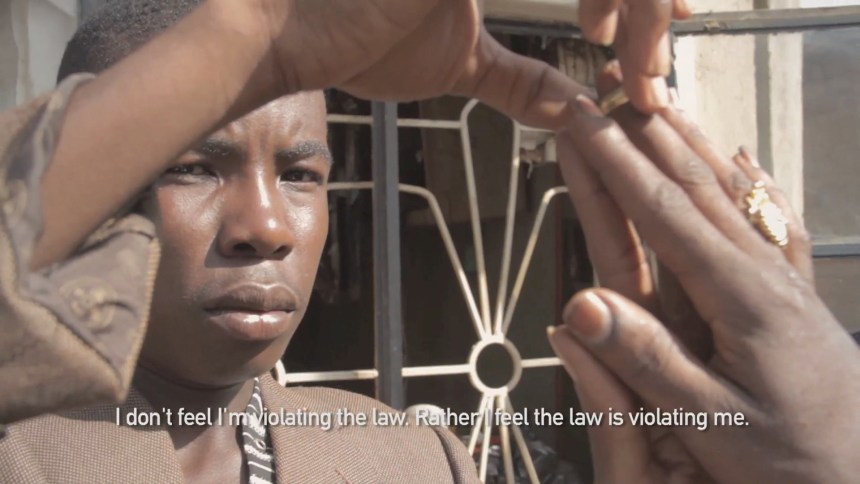
That law was recently nullified by Uganda’s Constitutional Court on procedural grounds. But both members of the Ugandan parliament, and now, other African nations, seem intent on keeping its message alive.
“Gambia’s bill is a copycat of the Ugandan legislation,” said Adotei Akwei, Amnesty International’s managing director of government relations, to msnbc. “We expect [Gambian President Jammeh] to sign it into law. He’s never held back on a threat he’s made.”
Like the Ugandan measure, Gambia’s bill builds off an existing penal code that already criminalizes homosexuality. Under current law in the tiny West African country, gay people charged with having sex can go to jail for up to 14 years. The newer legislation would extend that sentence to life imprisonment. “Repeat offenders,” HIV-positive individuals, and those who have homosexual relations with a minor could also end up living out their days behind bars.
According to the BBC, President Jammeh has until September 24 to sign the bill into law. Based on his track record — which includes a vow to “fight these vermins called homosexuals or gays the same way we are fighting malaria-causing mosquitoes” — Jammeh is all but certain to give his stamp of approval.
As news spread of the impending legislation, human rights groups called on the United States to reaffirm its commitment to LGBT people around the world.
“These draconian laws have no place in the 21st century, and the United States must send a clear message — privately or publicly — to the Gambian leadership that a government must not trample on the rights of its LGBT citizens,” said Ty Cobb, Human Rights Campaign’s director of global engagement, in a statement. “When a bill advances that deprives LGBT people of their basic human rights, whether it be in The Gambia, Nigeria, or Brunei, the Obama Administration should conduct a full diplomatic review of the United States’ relationship with those countries. The U.S. government cannot move forward with business as usual when LGBT people are threatened with harassment, imprisonment, or even death because of who they are or whom they love.”
%22Gambia%E2%80%99s%20bill%20is%20a%20copycat%20of%20the%20Ugandan%20legislation.%22′
In a separate statement, Human Rights First’s Shawn Gaylord called the bill “part of the rising tide of homophobia in many African nations,” and urged members of the international community to continue working with human rights activists and civil society leaders on the 54-state continent.
Educating people in the region, however, will be “a long uphill battle,” said Akwei, one that requires looking at the situation in a broader context.
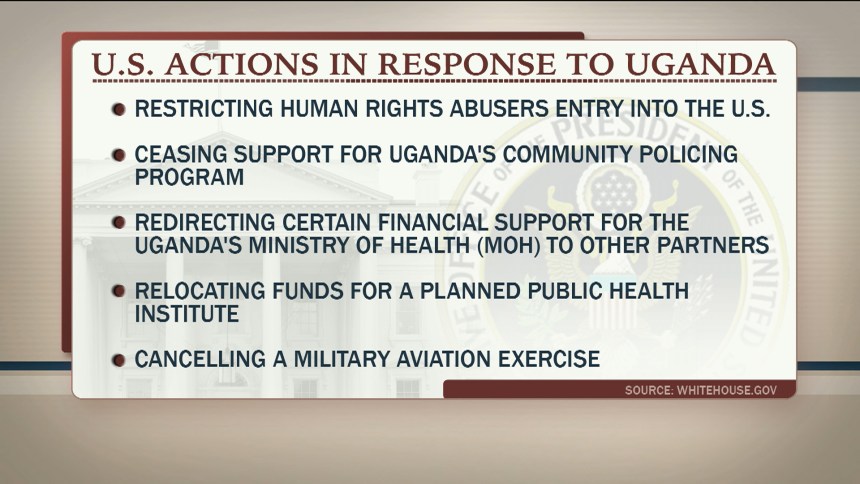
“We have to understand is that these pieces of legislation are parts of larger systemic human rights issues that plague the governments passing them,” he said. “These are the same governments that harass human rights defenders, cut freedom of expression … While the LGBT issue is a powerful focal point, we shouldn’t lose sight of the fact that the issue of governance is really at the heart of this.” Gambia’s bill comes on the heels of a U.S.-African leaders summit, where nearly 50 heads of state and government traveled to Washington D.C. for three days of talks and events. Both Presidents Museveni and Jammeh were in attendance, as was Nigerian President Goodluck Jonathan, who signed a similar anti-gay measure in January. Human rights advocates were pushing for Obama to use the opportunity to address LGBT discrimination, but the issue was not specifically mentioned during the end-of-summit press conference. Following the passage of Uganda’s Anti-Homosexuality Act, the U.S. and European allies imposed sanctions against the East African nation in the form of funding cuts and travel restrictions on state officials linked to human rights abuses. No such action has yet been taken against Gambia. Neither President Obama, nor Secretary of State John Kerry have directly addressed the bill. In response to a request for comment from the White House, Ned Price, assistant press secretary and director for strategic communications at the National Security Council, said the following via email: “While this bill has not passed into law, as a general matter, we have made clear our commitment to promoting and protecting the human rights of LGBT persons around the world, and our opposition to discriminatory legislation that threatens these rights. We reiterate our calls on the Government of The Gambia to protect the human rights of all Gambians.”
Emma Margolin
Emma Margolin is a reporter at MSNBC.com. Recommended