








In the months since a Florida jury acquitted former neighborhood watch volunteer George Zimmerman in the killing of Trayvon Martin, activists and protestors have set their sights on repealing the state’s controversial Stand Your Ground Law, which initially gave Zimmerman legal cover from prosecution.
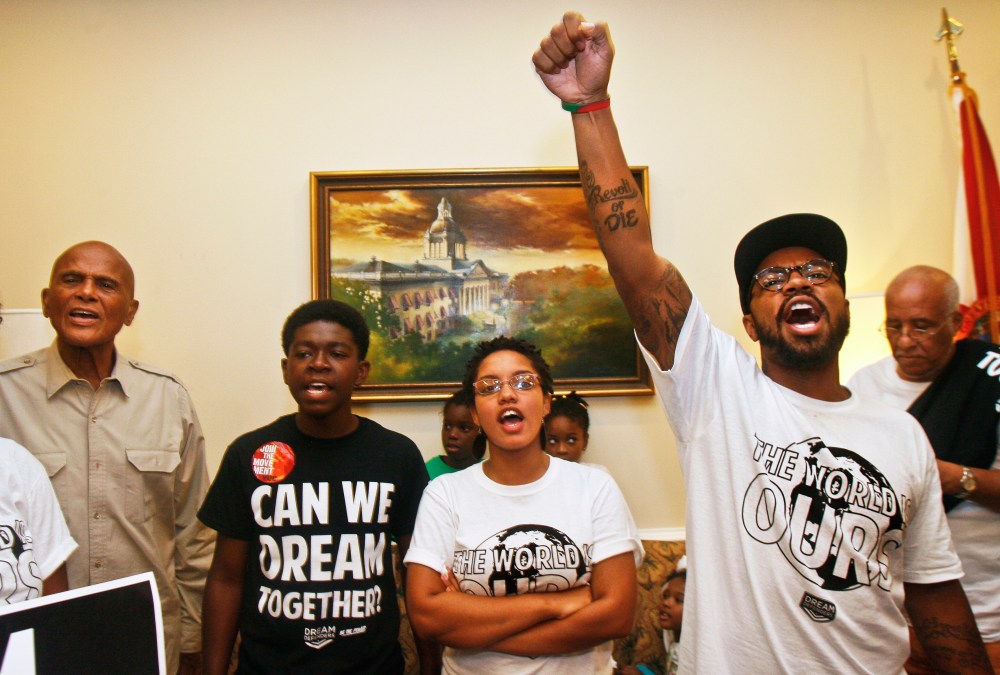
In the wake of the verdict, hundreds of thousands of people have marched and signed petitions. For 31 days, dozens of young activists staged a sit-in at the governor’s office demanding that he call a special hearing. The law, which offers wide discretion in the use of deadly force by civilians, has drawn criticism from President Obama and Attorney General Eric Holder.
Yet Florida’s Republican-controlled legislature has been staunch in its opposition to any changes to the law. One Republican state representative called the idea of changing the law “reactionary and dangerous,” and said he doesn’t support changing “one damn comma of the Stand Your Ground law.”
But on Tuesday, state lawmakers began considering modifications to the law.
The Florida Senate Judiciary committee voted 7 -2 to pass a measure that would better define neighborhood watch operations, the immunity available to those who provoke deadly confrontations, and the authority of law enforcement to investigate self-defense claims.
“It is a major step that it’s even being discussed and voted on,” Sen. Chris Smith, a Democrat from Ft. Lauderdale who co-sponsored the bill, told MSNBC. “With bipartisan support, this is the first acknowledgement that there are problems with the law and that there are things that can be fixed.”
Tuesday’s committee hearing was just one of many hurdles ahead of any changes becoming law. The bill, which merged two different bills, one sponsored by Smith and the other sponsored by Republican Sen. David Simmons, still must pass through three more committees before making its way to the House floor for debate.
“There are a lot of changes that as a whole would make the law better,” Smith said. “If we’re going to keep it, we have to make it better.”
Smith said, for example, that the law needs to be more explicit in defining what an “aggressor” is and what “unlawful activity” is.
Opposition to any changes remains stiff in the Republican-controlled House and Senate. And there remain a number of sticking points for those activists who want, if not a full repeal of the law, at least drastic changes.
One of those key points is that the proposed amendments still would not require someone to attempt to retreat before resorting to deadly force.
Ky’Eisha Penn, a student organizer and member of the Dream Defenders, the group that staged the sit-in at the governor’s office, said the group firmly believes that “when an opportunity to retreat is present, the law should recognize the duty to retreat.”
“Stand Your Ground and Simmons’ bill encourage reckless and violent behavior by Florida citizens,” Penn said. “In addition, the proposed changes to the immunity clause do nothing to ensure that impartial review and investigation takes place after the law is invoked.” The law came under scrutiny last year after Zimmerman shot and killed Trayvon Martin, 17, in a gated, suburban Orlando neighborhood. Zimmerman said he shot the unarmed teen in self-defense after Martin attacked him. Local police initially declined to arrest Zimmerman, citing his right to self-defense. Zimmerman was arrested after Gov. Rick Scott appointed a special prosecutor to the case amid nationwide protests and public pressure. (Zimmerman did not use a Stand Your Ground defense at trial, and was acquitted of second-degree murder and manslaughter.) Another case, that of Marissa Alexander, an African-American mother of three who was sentenced to 20 years in prison for firing a warning shot at her abusive husband, also drew attention to the law. A judge denied Alexander’s rights under Stand Your Ground. Opponents of the law point to Alexander’s case as an example of how the law has been applied in a biased manner. Alexander was recently granted a new trial after a judge determined that the jury in her case had been given erroneous instructions on self-defense. Steven Pargett, a spokesman for the Dream Defenders, called the tweaks passed on Tuesday a small step. “I wouldn’t at all consider this a success,” Pargett said. “Today was just the beginning, the beginning of the whole process of reform. One thing that we know is that the only real way to get change is if you have built a lot of power in the community. We are at the point now where, based on Republican domination of the House and Senate, it’s not realistic that any of the changes that we’d like to see will happen any time soon.” Pargett said the Dream Defenders will keep putting pressure on lawmakers. “We are going to continue to be at every committee hearing, every discussion and we are going to continue to lobby through this legislative session,” Pargett said. “We are looking at stats that show our community is very harshly affected by this law. And our people are dying because of it.”
Trymaine Lee
Trymaine Lee is an NBC News correspondent. Recommended


