








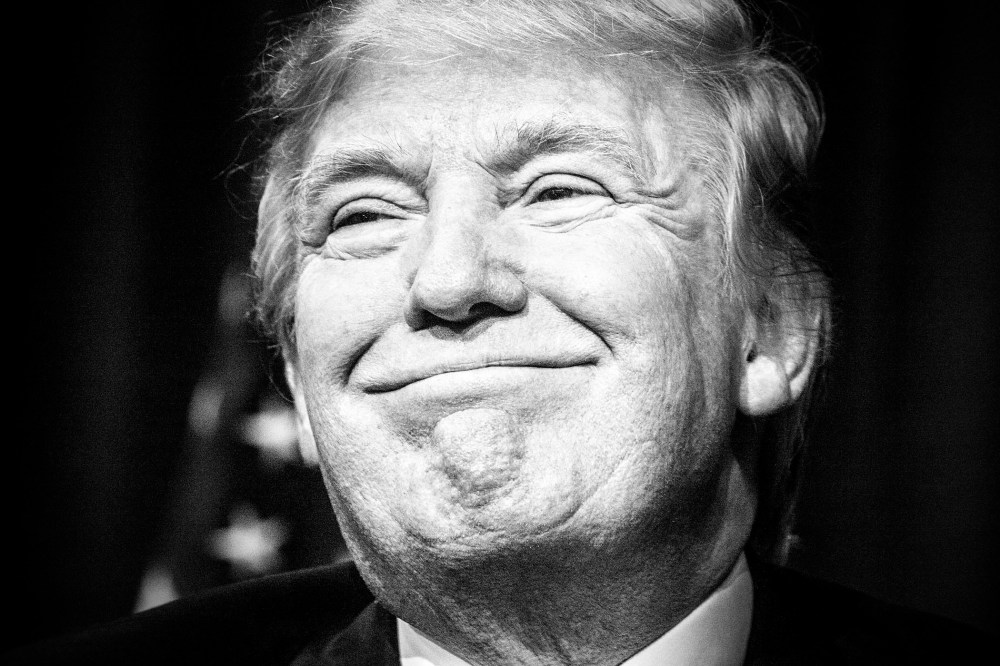
Don’t underestimate Trump in New Hampshire
After his second-place finish in Iowa, Donald Trump has taken a beating from the political chattering class. He’s a loser (which always was the downside for a man whose brand is about winning). His organization in Iowa was subpar (which is true). And his clear path to the GOP nomination is now gone (it’s more difficult with Ted Cruz standing in his way in South Carolina and the March 1 states). But a word of caution: Don’t underestimate Trump in New Hampshire. If Iowa was a road game that never was going to be easy to win, New Hampshire is a home game for the real-estate mogul. One, Trump starts with a MUCH larger lead in the state than he ever enjoyed in Iowa. The first post-Iowa tracking poll — via UMass Lowell/News7 — has him up over Cruz, 38%-14%, with Marco Rubio at 12%, Jeb Bush at 9%, John Kasich at 7%, and Chris Christie at 6%. (Note: That poll was conducted Jan. 31 to Feb. 2, so both before and after the Iowa results). Two, while the entrance poll shows that evangelicals made up 64% of Iowa caucus-goers (who broke 34%-22% for Cruz over Trump), that situation will be FAR different in New Hampshire, where evangelicals made up just 22% of the GOP electorate in 2012. And three, the establishment traffic jam is helping Trump in New Hampshire, with that same UMass Lowell/News7 tracking poll finding the combined Rubio/Bush/Kasich/Christie percentage at 34%. Now it’s possible that someone (Rubio?) can consolidate that establishment lane. But until then, Trump has a big advantage in New Hampshire.
Don’t assume the Democratic delegate race will be neck-and-neck after March 1
Also keep this in mind about the Democratic contest: There’s a good chance that the delegate race won’t be neck-and-neck after March 1, especially since Clinton’s apparent win in Iowa seems a *bit* more baked in than it did at this same time yesterday morning. Yes, Bernie Sanders has a substantial lead over Hillary Clinton in New Hampshire (61%-32% per that same tracking poll). And, yes, Sanders has TONS of money at his disposal (NBC’s Kasie Hunt reports that the campaign announced raising $3 million in the 24 hours after Sanders’ Iowa speech). But the post-New Hampshire primary calendar is much more challenging for Sanders, demographically speaking: Nevada (Feb. 20), South Carolina (Feb. 27), Alabama/Arkansas/Colorado/Georgia/Massachusetts/Minnesota/Oklahoma/Tennessee/Texas/Vermont/Virginia (March 1). And remember, once a candidate opens up a delegate lead under the Democrats’ proportional system, it’s hard to catch up. And we haven’t even mentioned the superdelegate factor, where Clinton holds a significant advantage. Don’t get us wrong: Sanders will be in this race for a long time. But the question is how competitive the race will truly be after March 1. How Nevada and South Carolina play out will be telling.
Ad spending in New Hampshire tops $100 million mark
A whopping $101.2 million has been spent on 2016 advertisements in New Hampshire, and a third of the amount has come from Team Bush, according to the ad-spending data from SMG Delta. The Granite State spending alone:
Team Bush: $33.9 million ($4.5M from campaign, $29.5M from Super PAC)
Team Rubio: $16.5 million ($5.2M from campaign, $11.5M from outside groups)
Team Christie: $14.6 million ($462K from campaign, $14.1M from Super PAC)
Team Kasich: 12.3 million ($474K from PAC, $11.8M from Super PAC)
Team Sanders: $9.1 million (all from campaign)
Team Clinton: $5 million (4.9M from campaign, $45K from Super PAC)
Team Trump: $3.1 million (all from campaign)
Team Fiorina: $1.8 million (all from Super PAC)
Team Paul: $914K ($54K from campaign, $862K from Super PACs)
Team Carson: $593K (all from campaign) Team Cruz: $363K ($20K from campaign, $343 from outside groups) The winning continues? Already after Iowa, we’ve seen two presidential candidates drop out of the presidential contest — Martin O’Malley and Mike Huckabee — and we could possibly see a third one today. Late last night, Rick Santorum’s campaign released a press advisory announcing that Santorum was delaying his South Carolina kickoff events and is participating in “media activities” in DC. Having both Huckabee and Santorum out of the GOP race benefits Ted Cruz, big time. The winning continues, Part 2 Paul announces he’s suspending his campaign: As of publication time, Rand Paul issued a statement announcing that he’s suspending his campaign. “It’s been an incredible honor to run a principled campaign for the White House. Today, I will end where I began, ready and willing to fight for the cause of Liberty,” Paul said in his statement. “Across the country thousands upon thousands of young people flocked to our message of limited government, privacy, criminal justice reform and a reasonable foreign policy. Brushfires of Liberty were ignited, and those will carry on, as will I. Although, today I will suspend my campaign for President, the fight is far from over. I will continue to carry the torch for Liberty in the United States Senate and I look forward to earning the privilege to represent the people of Kentucky for another term.” Paul was sitting at 2% in that same New Hampshire tracking poll. On the trail Donald Trump holds a rally in Little Rock, AR… Hillary Clinton has three events in New Hampshire, hitting Derry, Dover, and Manchester, while Bill Clinton heads to South Carolina…. Ted Cruz makes five stops in the Granite State… Marco Rubio makes three… And Jeb Bush, John Kasich, Chris Christie, and Carly Fiorina all campaign in New Hampshire as well. Countdown to NBC/MSNBC debate in New Hampshire: 1 day Countdown to New Hampshire: 6 days
Chuck Todd
Chuck Todd is NBC News' chief political analyst and the former moderator of "Meet The Press."
Carrie Dann
Mark Murray Recommended


