CIVIL LIBERTIES: Obama promised to work with Congress to “reform our surveillance programs,” a decidedly ambiguous statement about what reform means or which faction in Congress he intends to support. Those details matter because lawmakers are divided over what to do about surveillance policy, and even those who support legislation that would largely codify existing surveillance authorities have framed their efforts as “reform.” Obama said that the vital work of our intelligence community depends on public confidence, here and abroad, and that the privacy of ordinary people is not being violated. That statement is strangely worded, suggesting that people’s belief that their privacy isn’t violated matters more than whether it is actually being violated. Adam Serwer
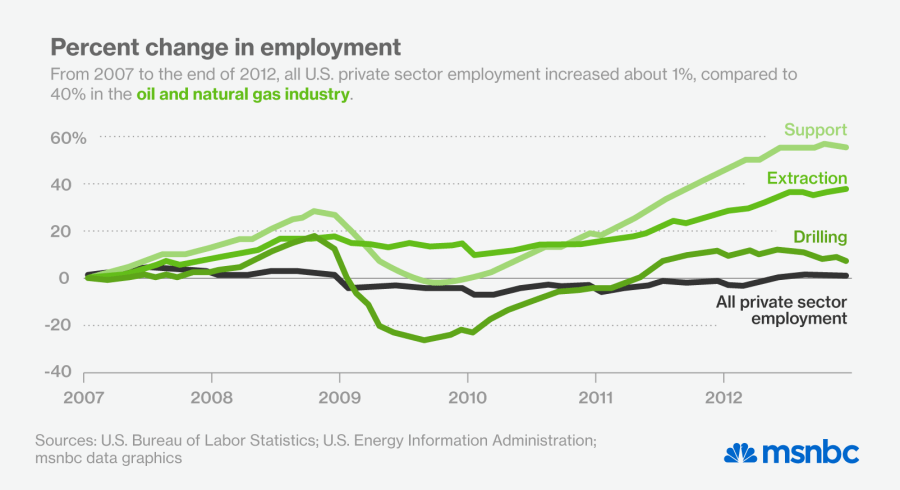
CLIMATE CHANGE: Obama shot down skeptics with a bold statement: “Climate change is a fact.” And while he urged lawmakers to work towards reducing emissions, his speech offered little comfort to those urging more decisive action. He even lauded the nation’s booming oil and natural gas industry as an engine for job creation and economic growth. While he praised the growing use of solar energy, his emphasis on the productive powers of natural gas suggest that fossil fuels will continue to be a growth industry in this country for many years to come. Ned Resnikoff
EDUCATION: Obama praised teachers who helped “lift America’s graduation rate to its highest level in more than three decades.” But the speech proved light on new education policy, mainly reiterating promises to make college more affordable and expand access to high-quality pre-K to every child – a pledge that has been stymied by Republicans. And perhaps more striking was what Obama didn’t say. There was only a glancing reference to his signature education effort Race to the Top, and the controversial new Common Core effort to raise academic standards that has been adopted by nearly every state. While there was no mention of the Core specifically, Obama said, “more challenging curriculums and more demanding parents to better support for teachers and new ways to measure how well our kids think, not how well they can fill in a bubble on a test.” But that’s precisely what opponents of the Common Core say is wrong with the implementation of the standards, that it hoists yet more testing on students grappling with the tough new curriculums. Trymaine Lee
GAY RIGHTS: Obama disappointed LGBT advocates by not making a reference to a long-standing casualty of Congressional gridlock: the Employment Non-Discrimination Act (ENDA) which bars employers discriminating against any person based on sexual orientation or gender identity. The Senate passed a bill in November but the measure has little chance of passing the Republican-controlled House, or even being brought to a vote. “The President’s message tonight failed to address the need of LGBT workers looking for a fair shake in this economy,’ said Human Rights Campaign president Chad Griffin in a statement. Obama did, however, pledge his commitment to promoting “the inherent dignity and equality of every human being, regardless of race or religion, creed or sexual orientation,” and made a veiled reference to his disdain for Russia’s controversial anti-gay laws. He also made the first-ever explicit mention of “marriage equality” in a State of the Union address. Emma Margolin
GUNS: Obama mentioned the word “gun” just once in an address spanning nearly 7,000 words. Last year he spoke the word seven times and focused much of his State of the Union on passing gun-control laws, concluding with an emotional plea for action in front of an audience that included victims’ relatives from Newtown, Aurora, and Chicago. He vowed on Tuesday to pass gun reform “with or without Congress,” almost a year after his related efforts died in the Senate. At the end of two gun-related sentences, Obama pledged to help stop reoccurrences of the recent Columbia, Md. mall shooting, the massacre at Sandy Hook Elementary School, and the Aurora, Colo. movie-theater shooting. Michele Richinick
GUANTANAMO: The president had one brief reference in his speech to one of his first promises as president — closing the detention center at the U.S. naval base in Guantanamo Bay, Cuba. Obama said that “this needs to be the year Congress lifts the remaining restrictions on detainee transfers and we close the prison at Guantanamo Bay.” But human rights organizations are waiting for the administration to take advantage of the restrictions on transfers that Congress already lifted. Shortly after the speech, Zeke Johnson, president of Amnesty International USA, sent out a statement urging Obama to “transfer the 77 people his administration has cleared to leave. He doesn’t need Congress to do that.” That’s around half of the remaining population of the facility. Adam Serwer
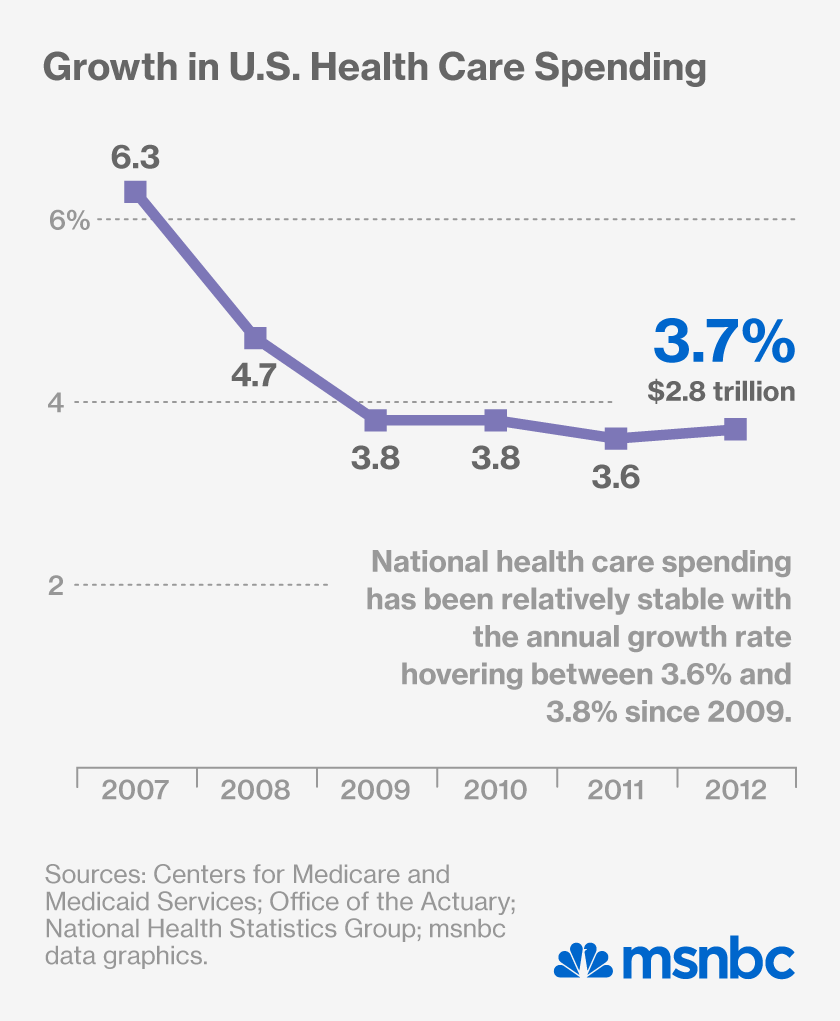
HEALTH CARE REFORM: For all the drama it has caused in recent months, the Affordable Care Act got only a 460-word nod during the 6,800-word speech. But the president embraced it with an air of triumph rather than defensiveness, focusing on the difference the law is making in people’s lives. While recounting the law’s many benefits— equitable insurance rates for women and men, no more discrimination against people with pre-existing health conditions, family coverage that lasts until kids turn 26—he stretched one fact. Obamacare is not “keeping Medicare premiums flat,” as he claimed. Premiums for Medicare Part B, which covers outpatient care, will jump by about $20 a month in 2014 (from $105 to $123 for a person making less than $85,000). But the larger point stands. Overall health care spending is rising at the slowest rate in decades.
The president didn’t bother trying to win over Obamacare’s sworn enemies. Instead, he urged them to get real and move on. The GOP is starting to get that too, and the reasons are no secret. People who achieve health security don’t give it up gladly. Thanks to the Affordable Care Act, hundreds of thousands are now gaining it every month. Geoff Cowley
IMMIGRATION: It is by far the biggest legislative item on Obama’s agenda and maybe the only one that has a realistic chance of passing in his second term. Yet the topic got only a brief paragraph in his address. What gives? In this case, there was a lot to read between the lines. House Republicans are on the verge of announcing their own framework for immigration reform and the early word is that it includes a rough plan to legalize many of the 11.7 million undocumented immigrants living in the U.S. But given Republicans’ hostility toward Obama — the White House knows that the more his fingerprints are on the House plan the less likely it is to pass — the president did his best to avoid provocation and said “members of both parties in the House” are working on a solution. “He didn’t spend a tremendous amount of time dwelling on it, but I think that’s probably wise given that there’s still a debate going on about how to address it,” Senator Marco Rubio, who co-sponsored the bipartisan Senate bill that passed in June, told msnbc. Benjy Sarlin
INCOME INEQUALITY: Obama devoted most of his speech to the economic themes that the Democratic Party is hoping to focus on in 2014: The recovery’s gains haven’t been felt by all, and the minimum wage and unemployment insurance are a good way to help those left out. At the same time, he only made a fleeting mention of the fiscal gridlock that has consumed Washington for the last three years, bypassing a mention of October’s government shutdown and debt limit fights entirely. He praised Congress for agreeing to undo some budget cuts, but only gently suggested that further changes need to be made. He addressed tax changes in the broadest strokes, repeating the mantras that comprehensive reform is needed to fix an inefficient tax code. But he moved away from the message that the government should play a leading role in income redistribution by taxing the wealthiest individuals and corporations. Suzy Khimm
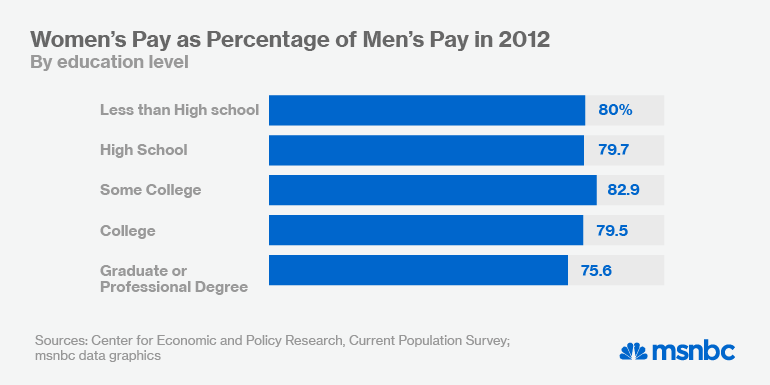
IRAN: Obama put pressure on lawmakers, including Democrats, who are seeking additional sanctions against Iran as negotiations continue over its uranium enrichment program. The president promised to veto such a measure if it lands on his desk, arguing, “For the sake of our national security, we must give diplomacy a chance to succeed.” Recently, the White House has been criticized for saying a proposal for new sanctions could lead the U.S. on a “march to war.” So Obama took a softer approach, even acknowledging talks “may not succeed” and that he’ll be the first to call for more sanctions if Iran’s leaders “do not seize this opportunity.” Notably, unlike most of the Chamber, House Speaker John Boehner did not applaud during Obama’s remarks about Iran. Aliyah Frumin MILITARY SEXUAL ASSAULT: The story of Cory Remsburg, the Army Ranger who was grievously injured by a roadside bomb in Afghanistan and who attended last night’s speech, was inspiring. But it’s just one example of myriad struggles confronting men and women in the military that Obama did not address. Thousands of soldiers each year are sexually assaulted and do not report the attacks. Obama promised repeatedly last year to make changes in the armed forces to stamp out military sexual assault, but even in a speech that explicitly mentioned the need for greater gender equality, sexual assault did not earn a place in the State of the Union next to the VA backlog, job training, and mental health care. The Senate may vote on more proposals to reform how the military deals with sexual assault cases next month, so legislators are not waiting for the President to lead on this issue. Meredith Clark MINIMUM WAGE: One of Obama’s boldest policy announcements was his vow to sign an executive order mandating all federally contracted employees be paid at least $10.10 per hour. The mandate means potentially hundreds of thousands of workers could see a wage increase. That, in turn, could put greater pressure on Congress to hike the minimum wage for other workers. House progressives could soon demand a minimum wage hike even higher than $10.10, and the president’s executive order represents a crucial victory for that camp which could embolden them further. Ned Resnikoff TERRORISM: Despite claiming to have set “prudent limits” on the use of drones and insisting the U.S. must “move off a permanent war footing,” the president indicated that reliance on drones to target suspected terrorists will continue. Obama has presided over more drone strikes than any other president (more than 350) and more casualties. While U.S. officials argue that civilian casualties from such strikes are minimal, human rights organizations have argued otherwise. Obama’s pledge “not send our troops into harm’s way unless it’s truly necessary,” combined with his promise to keep working with partners in Yemen, Somalia, Iraq, and Mali to attack groups associated with Al Qaeda suggests that the administration will continue to rely heavily on the use of drones, whatever “prudent limits” Obama claims to have set. Adam Serwer WOMEN: “Today, women make up about half our workforce. But they still make 77 cents for every dollar a man earns,” Obama said, referring to the median annual earnings for men and women who work full-time and year-round. The gap is more pronounced for women of color, particularly as compared to white men’s year round earnings — for example, Latina women made 53 cents to a white men’s dollar in 2012. Those figures aren’t all about straightforward discrimination; they don’t, for example, reflect choice of occupation, like investment banking over teaching. But that doesn’t explain the whole pay gap away: An analysis by the American Association of University Women found that a year after graduating from college, a woman made only 82 cents for every dollar a man with the same qualifications did. As more women become the primary breadwinners for families, the wage penalty women pay for childbearing will be ever harder to dismiss. Obama also mentioned the end of “gender rating,” the practice of charging women more for health insurance that has been eliminated under the Affordable Care Act. But he didn’t mention the more controversial women’s provisions of the law: the designation of contraception as preventative care that must be covered without a co-pay. That provision, which a few dozen private companies and nonprofits claim violates their religious liberty, will be examined by the Supreme Court later this year. He also didn’t mention abortion rights, which were center stage in the House of Representatives just hours earlier. Though the Affordable Care Act doesn’t expand access to abortion, the House nonetheless passed a ban that includes refusing federal tax credits to exchange insurance plans that cover abortion. Obama has separately vowed to veto it. Irin Carmon
The place for in-depth analysis, commentary and informed perspectives. Recommended