








 by Ezra Klein |
COMMENTARY
Less than four years ago, at Barack Obama’s inauguration, it seemed for a moment, like America had opened a new chapter in its difficult and often shameful history with race.
But it wasn’t true. Even as Obama took that oath, researchers were going picking through the 2008 election and finding that, far from being a post-racial election, it was actually an unusually racialized election.
Seth Stephens-Davidowitz, an economics researcher at Harvard, tested this in a really interesting way. First, he ranked areas of the country based on how often they entered racist search terms into Google. Then he compared Obama’s share of the vote in those areas with John Kerry’s share of the vote in those areas from the 2004 election.
The result? Stephens-Davidowitz found that Obama had lost 3-5 percent of the popular vote compared to what you would’ve expected. Or, as he put it, Obama’s race, gave “his opponent the equivalent of a home-state advantage country-wide.”
The racialization of politics continued after the election, too. Political scientists Michael Tesler and David Sears looked at how racial attitudes affected Obama’s approval ratings. They found that, to a degree unprecedented among recent presidents, approval of Obama was driven by the individual’s attitudes on race.
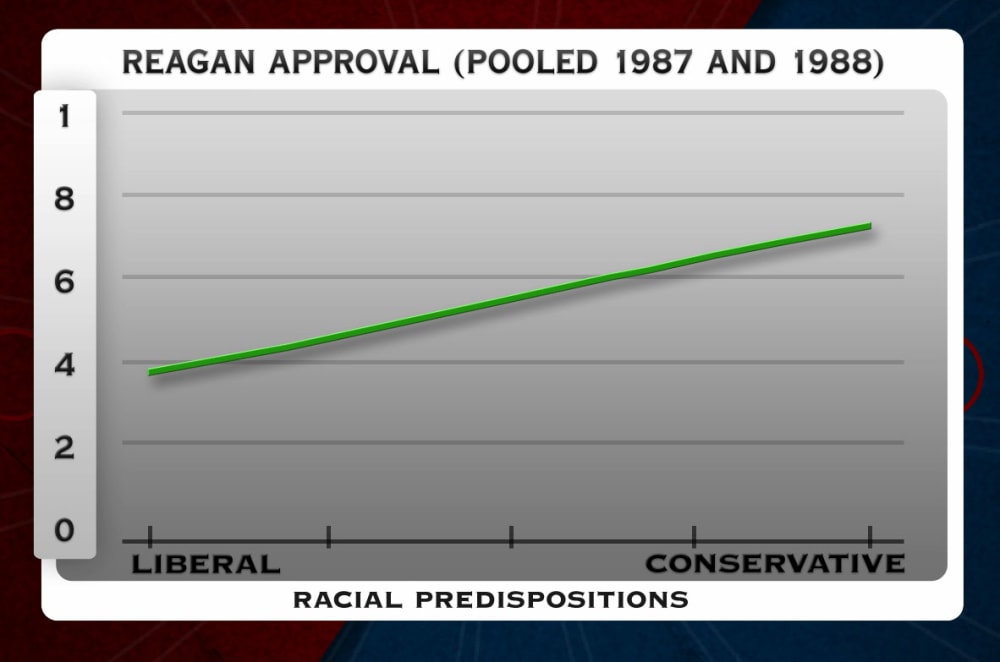
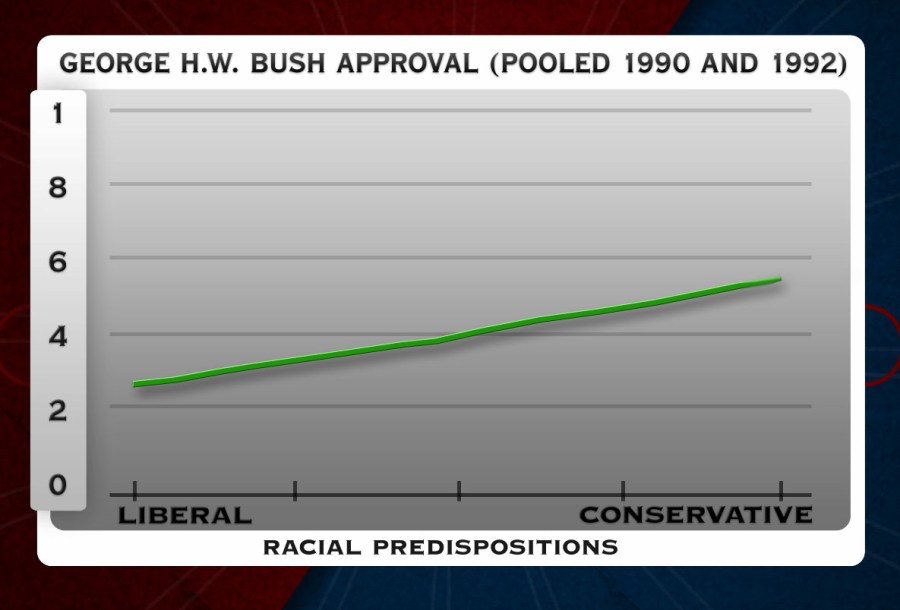
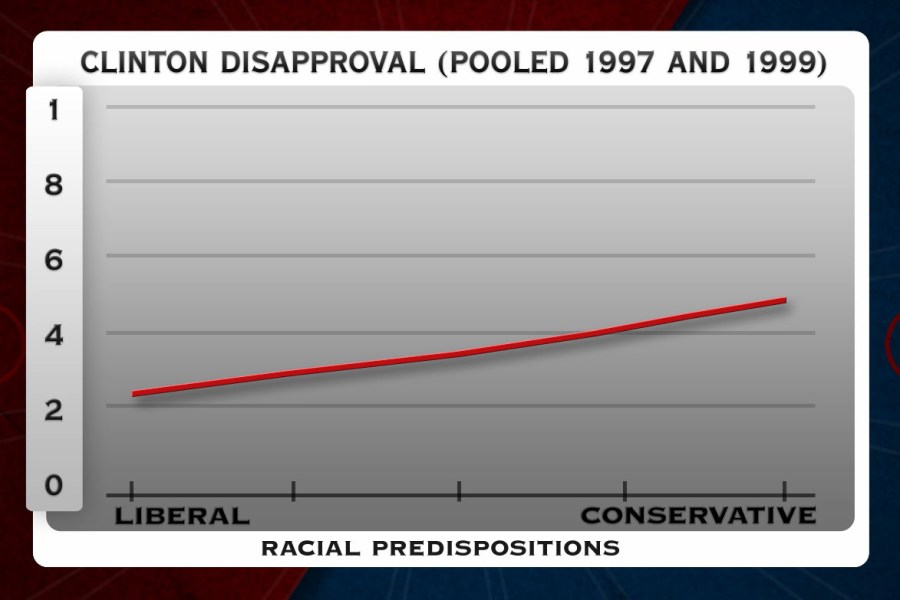
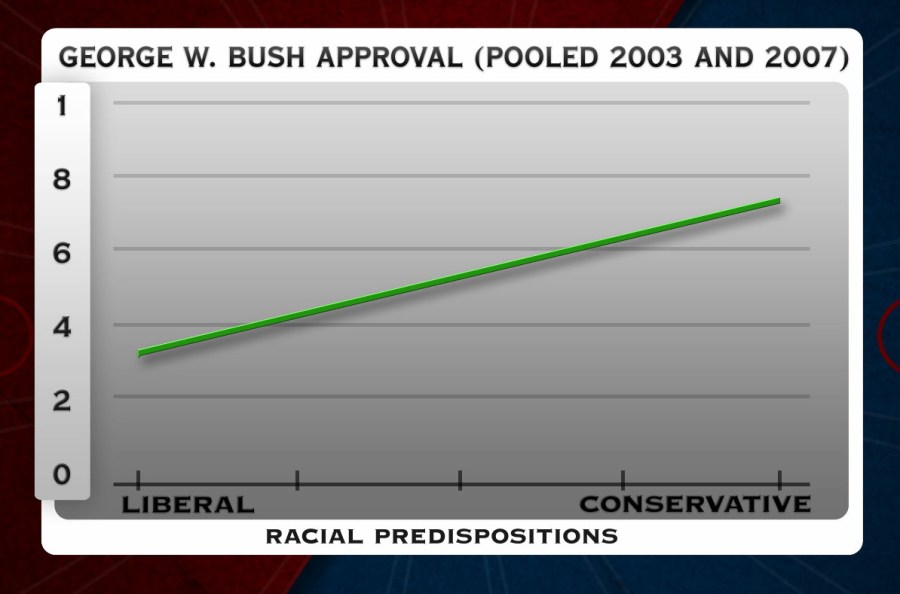
This is a set of graphs they published in their book “Obamas Race: The 2008 Election and the Dream of a Post-Racial America.” What you’re seeing here is presidential approval broken down by racial attitudes. So here’s approval for Reagan. Not a straight line, but not much difference:
Here’s approval for George H. W. Bush:
Here’s disapproval for Bill Clinton:
Here’s approval for George W. Bush. Again, no straight lines. There’s some evidence that more conservative opinions on race line up with support for Republican presidents and disapproval of Democratic presidents. But it’s not huge:
Here’s Obama. And that is huge. It doesn’t look like any other graph for any other president:
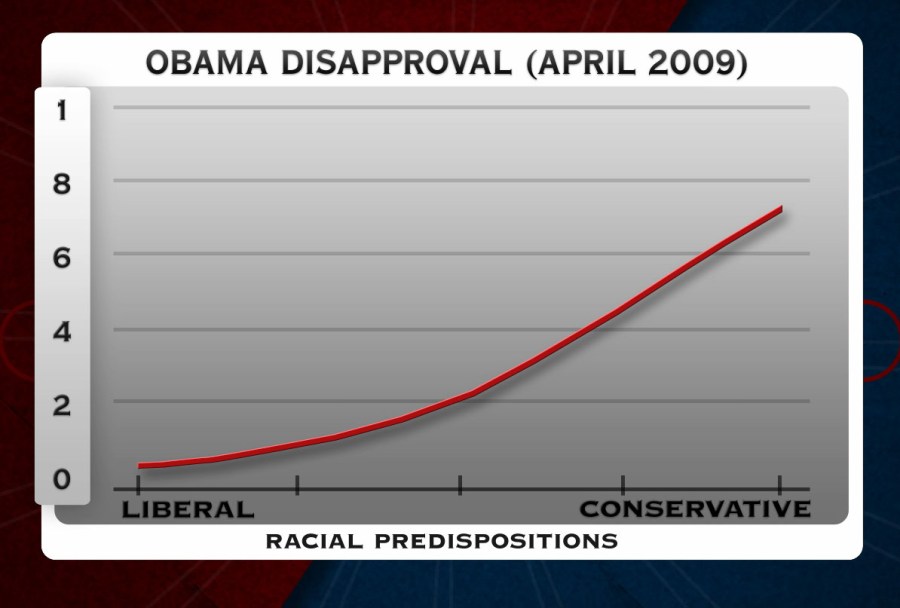
Tesler and Sears found something else worth remarking on. “President Obama continued to be evaluated not just as an African American but as someone who was distinctly “other.”
Which brings us to today.
Now I want to stop here for a moment. This is tough to talk about. This is dangerous to talk about. Frankly, I’m a little nervous to be on national television talking about it at all. Race is a hard subject. That’s why it needs to be handled with some care. So I want to say this as clearly as I can. I don’t think Mitt Romney is racist and I’m not accusing him of being racist. Not even a little bit. Romney has said he believes Obama was born in the United States. So he’s not a birther, either. But Romney has indulged these sentiments throughout the campaign. For instance: “Now I love being home in this place where Ann and I were raised. Where both of us were born. Ann was born at Henry Ford Hospital, I was born at Harper Hospital. No one has ever asked to see my birth certificate. They know that this was the place that we were born and raised.” He’s embraced Donald Trump even as Trump has become the nation’s most prominent birther. And then there’s this joke that he told today. The point isn’t that Obama was really born somewhere else. It’s that Mitt Romney wasn’t. It’s that Romney gets to go through this campaign and go through public life without anyone raising questions as to whether he’s really American. That’s not racism on his part. But it is privilege. And it is not a privilege Romney has used very responsible. In 2008, John McCain stepped on a stage and specifically attacked those who wanted to paint Obama as something “Other”: Older Woman: “I have read about him. He’s an Arab.” McCain: “No, ma’am. No, ma’am. He’s a decent, family man, citizen that I just happen to have disagreements with on fundamental issues and that’s what this campaign is all about.” This was an option open to Romney, too. He could have come back out today and said, ‘Look, I was making a joke. I think the birther controversy is so ridiculous that it deserves to be joked about. But if there’s any doubt at all, let me dispel it. I believe President Obama was born in this country. I believe he’s a loyal and good and decent American who loves his country. We have deep and real policy disagreements. But that’s it.’ But that’s not what Romney has done. Romney has often fed this kind of thing, even as he himself has said he doesn’t personally believe it. That’s not racist. But it’s not admirable. But this isn’t about Romney. This would all be happening no matter who the Republican nominee for president was. Beyond Romney, the fact is that while there’s nothing about birtherism that is necessarily about race, there is, at this point, an enormous amount of evidence that some of what’s going on in the reaction — both positive and negative — to Obama’s presidency is about race. And yet, this is the one topic that Obama frankly can’t talk about. He talked about race in the 2008 campaign. When he had to. When he was forced to. But since then, not so much. Daniel Gillion, a political scientist at the University of Pennsylvania who looked at nearly all public presidential remarks and found that in his first two years as president, Obama talked less about race than any other Democratic president since 1961. In this month’s issue of The Atlantic, Ta-Nehisi Coates has a really remarkable and brave piece on race in the age of Obama. It’s a big piece, and it was written long before Romney’s comments. In fact, it’s not about Romney or the Republicans and how they talk about race. It’s about President Obama, and how he doesn’t.
The Cycle Staff Recommended


