








It was day 25 for me at the Palais Coburg—July 12, 2015. Since the middle of June, inside the white, neoclassical wedding cake of a hotel on Theodor Herzl Platz in Vienna, two exhausted sets of negotiators—one, my team of Americans; the other, from the Islamic Republic of Iran—had been hashing over the last contested passages of the Joint Comprehensive Plan of Action (JCPOA)—more commonly known as the Iran nuclear deal. Its 110 pages, including five complex technical annexes, laid out a path to peaceful resolution of Iran’s ambition to have a nuclear weapon.
My team had arrived in Vienna in June to get our feet on the ground before the talks engaged ministers, thinking we’d be home by the Fourth of July. We were now nearly two weeks past our deadline.
The Coburg isn’t a bad place for a diplomat to spend a few weeks, it must be said. It lies in the heart of Vienna, where in 1815 the Congress of Vienna—the first real instance of multilateral diplomacy— codified the formal ranks of ambassadors, envoys, and ministers that we still use today. Built in the 1840s as a residence for an Austrian prince, the Coburg has a seemingly endless supply of high-ceilinged meeting rooms adorned with massive portraits of royalty and isolated nooks where, during a break in talks, two adversaries hell-bent on convincing the other can duck in for an impromptu sidebar. The Coburg staff is impeccably discreet (though in a town known as much for its spies as for its diplomats, one never wants to put that discretion to the test). We had plenty of company; the Coburg is popular with Russian oligarchs and their white fur–clad companions as well as with diplomats from around the world coming and going from UN Office Vienna, the sprawling United Nations campus a few miles away across the Danube. The curving, concrete towers of the complex, though taller, are reminiscent of the Watergate, the famous apartments near my office at the State Department, back home in Washington.
The Coburg’s staff, its colorful guests, and its proximity to the UN campus weren’t the only reasons it was chosen as the meeting place for the final weeks of the Iran nuclear talks. The surrounding roofs overlooking Theodor Herzl Platz provide plenty of vantages for government sharpshooters, making the Coburg a very secure location.
For all its charm and perfectly pitched roofs, the Coburg by day 25 had become a prison. Never mind that I had eaten precisely one meal outside of the hotel in nearly a month, or that I was two weeks past the stay I had packed for. Every available rod and rack in my hotel suite’s bathroom was hung with hand-washed laundry.
Out on the square, press from all over the world were huddled at the hotel’s entrance, the forest of antennas on the television crews’ vans imposing a jarring bit of the modern age on Vienna’s old city. Most of the reporters had been there as long as we had, and they could sense in the past few days that the two sides’ intensity had picked up, our updates having become vaguer as we edged closer to our final positions. They were counting down to a historic deal to “keep the mullahs from getting the bomb,” according to the New York Times.
They weren’t the only ones waiting. On June 27, US Secretary of State John Kerry, still on crutches from falling off his bicycle in Geneva a month before, had flown in to meet his Iranian counter- part, Foreign Minister Javad Zarif—who himself had just arrived from a quick visit to Tehran, where, it was believed, he’d gotten clearance from the Supreme Leader to finalize the deal.
On their heels came the foreign ministers of the other world powers (known as the P5+1) who would be involved in the deal— Wang Yi of China, Laurent Fabius of France, Frank-Walter Steinmeier of Germany, Sergey Lavrov of Russia, Philip Hammond of the United Kingdom, and Federica Mogherini of the European Union— all wanting to be on hand in case the end was as close as it looked.
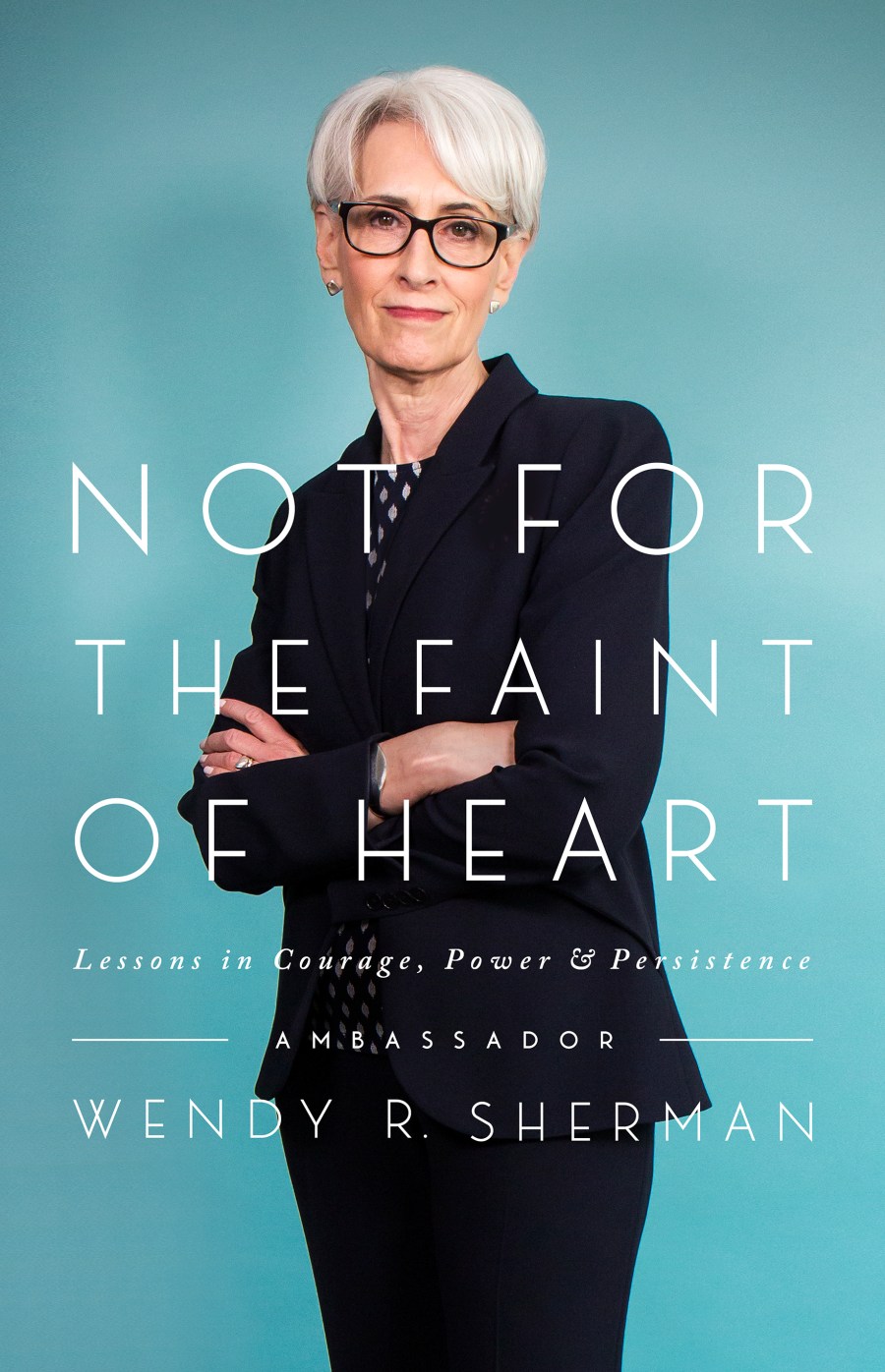
For all the excitement, the agreement was still a tangle of interlocking issues: how to verify Iran’s compliance, how to best limit numbers and types of centrifuges, how to “snap back” economic sanctions should Iran fail to live up to the agreement. None of these issues could be solved independently of the others. When one element of the deal was changed, everything else had to be recalculated, and everyone had to be consulted. Then the new information had to be brought to our P5+1 partners and often renegotiated, then back to the Iranians to hash over the same points again. Besides diplomats and technical experts, we had legal opinions from batteries of government lawyers. One session in the final month-long gauntlet at the Coburg went from early evening until 3:00 a.m. as two sets of lawyers clashed over every word of a single passage. The best way to describe the negotiation was as the world’s most complex and consequential Rubik’s Cube. The more you twisted one side to line it up, the more the other sides needed fixing. “No single part of the deal is done until it’s all done,” I’d tell the press when they asked about what issues were still outstanding. I used the Rubik’s Cube comparison so many times, in fact, that one of the technical experts on our team designed his own version, with key phrases from the talks on each colored square. It was such a hit that I had several of them made as keepsakes for members of the team, one of which now sits as an artifact of the negotiation in the Diplomacy Center at the State Department. When the June 30 deadline passed without a deal, we had extended it. A few more days turned into a week. Then, as one week turned into two, the pressure inside the Coburg cranked higher and higher. The ministers milled around the halls and conference rooms with their squads of aides, unhappy to be stalled here in Vienna, quietly resenting the fact that nothing would be final until Kerry— and President Obama back in DC—said it was, and not quite understanding why we still hadn’t reached a deal. Excerpted from Not for the Faint of Heart: Lessons in Courage, Power, and Persistence by Ambassador Wendy R. Sherman. Copyright © 2018. Available from PublicAffairs Books, an imprint of Perseus Books, LLC, a subsidiary of Hachette Book Group, Inc.
Morning staff Recommended


