Monday, Dec. 1 was World AIDS Day, a time when the global community paused to pay tribute to the 39 million men and women who have lost their lives to AIDS-related illnesses. An additional 78 million people have become infected with HIV since the onset of the epidemic, according to UNAIDS. World AIDS day was also an opportunity to look forward to the future. Over the next week, msnbc.com will profile leading voices in the HIV/AIDS movement whose work is helping realize a world with of zero new HIV infections, zero discrimination, and zero AIDS-related deaths.
Name: Lawrence Mass, M.D.
Location: New York, NY
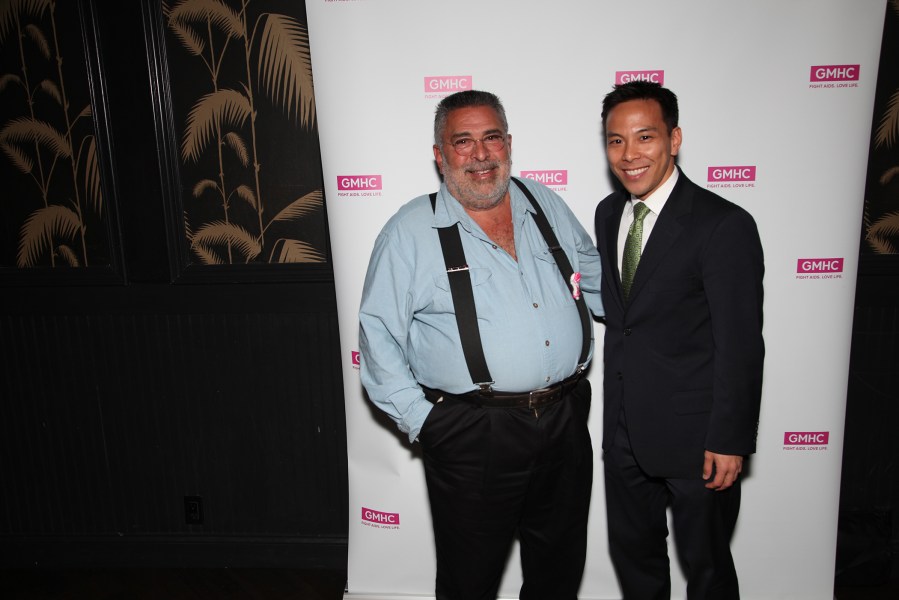
“When I became the CEO of GMHC, I heard from several staff members about how loving, kind and supportive Larry [Mass] had been for many years. Then I had the honor of meeting him. Talking to him reinforced for me the impact of his incredible source of generosity toward GMHC. He continues to be an inspiration and reminds us all of the rich history of GMHC,” said Kelsey Louie, CEO of GMHC.
You wrote the first article about HIV/AIDS in “The Native.” What do you remember about this accomplishment?
I wrote the first news report in May of ’81, and the first feature article in July ’81. At the time, we had no idea of the scope of what we were dealing with. Nor did we know what it was. It wasn’t clearly infectious. It was an epidemic by definition because it was an outbreak of new disease cases and associated deaths. The epdimiology was inadequate to identify it as an STD. At that time, there were no civil liberties protections for LGBT people. And public tensions around gay issues and gay rights struggles were explosive.
RELATED: Alicia Keys: To end HIV/AIDS, we must empower our youth
Dan White’s acquittal of the murder of Harvey Milk and George Moscone the year before ignited Ferguson-levels of gay outrage and rioting. A new epidemic among gays that threatened the public was just what anti-gay forces, including the American Psychiatric Association, which was still hoping to reclassify homosexuality as a mental disorder, were looking for. It was a very dangerous and vulnerable moment for the gay community.
The main thing I remember from those earliest articles is that the challenge with them is the same challenge that endured: to get the most accurate information out as clearly and professionally as possible, to do so without bias ,and avoiding panic. The dilemma with this reporting to the gay community was the same dilemma that continued: to tell people that we were experiencing an epidemic that demanded vigilance and prudence about sexual behavior, even in the absence of certainty that it was an STD. At the same time, this did not mean that we had to return to older gay-as-sickness, gay-as-criminal, gay-as-evil values of stigmatizing gay sex and sexuality. Whatever the new and present constraints, we could still find ways to celebrate our community and sexuality. Though these messages could seem contradictory when expressed simultaneously, I was never willing to relinquish either position.
%22My%20message%20for%20young%20gay%20men%20is%20the%20same%20as%20that%20attributed%20to%20Thomas%20Jefferson%3A%20%27The%20price%20of%20liberty%20is%20eternal%20vigilance.%27%22′
What are your most vivid memories of the outbreak at the time you started GMHC in the 1980s?
The most vivid memories are of this double-think and double-speak I alluded to: the need for us to deal with this unprecedented, ever-worsening, and catastrophic (rapidly escalating death tolls) crisis, while at the same time avoiding panic and remaining affirmative about gay life, community and sexuality.
Gay sexual liberty advocates accused Larry Kramer, known for his criticism of the gay community, and me, a doctor, of trying to re-medicalize homosexuality, to re-stigmatize homosexuality as “sick,” as the psychiatrists had done in previous generations. At the same time, Larry Kramer was angry with me and others who seemed to be too accommodating of these concerns. There was constant tension between sounding the alarm too loud and not sounding it loud enough.
Kweku Mandela: How he continues Madiba’s legacy on HIV/AIDS
What is the defining moment in the HIV/AIDS moment?
That’s very easy. It was when Larry Kramer told me on the telephone that an effective treatment regimen of antiviral medication, thanks overwhelmingly to the activisim of AIDS Coalition to Unleash Power (ACT UP) that he founded and led, had been identified.
At first, I didn’t believe him. It flashed through my mind that maybe wishful thinking had distorted what he told me. I remember asking him to repeat it. I was speechless. There was a very spotty history of prior treatment of other viral diseases. But to my knowledge, prior to that time, there had never been an effective antiviral treatment for a major virus, and certainly not for one that was nearly always fatal within a period of months. (There had been preventive vaccines for viruses, but never effective medications).
I realized at that moment that what Larry Kramer was saying was not only epochal for the gay community and for AIDS, it was epochal for medical history.
%22Larry%20Kramer%20is%20one%20of%20the%20greatest%20leaders%20in%20the%20history%20of%20the%20gay%20community%20and%20gay%20liberation%20struggles.%20His%20leadership%20is%20distinguished%20by%20the%20extent%20to%20which%20he%20insisted%20that%20we%20first%20look%20at%20ourselves%20and%20to%20ourselves%20if%20we%20really%20want%20to%20help%20ourselves.%22′
You wrote a book about Larry Kramer. What is his legacy?
Larry Kramer is one of the greatest leaders in the history of the gay community and gay liberation struggles. His leadership is distinguished by the extent to which he insisted that we first look at ourselves and to ourselves if we really want to help ourselves. He is also one of our greatest writers. There are many fine writers in the gay community, writers of taste, intelligence, and insight. But no one has come close to articulating a viewpoint, a theme, that has the searing clarity and power of Larry Kramer’s vision. From his earliest public days in the late 1970’s during the period of his novel “Faggots,” Larry articulated that vision, which, despite enormous progress on many fronts, remains as true today as it was then: that gay life is troubled at the level of its prioritization of gay sexual freedom and pleasure at the expense of love, commitment, and responsibility. It’s a simple, clear theme that has never wavered or been hobbled over 40 years of tumultuous developments and progress. Finally, there is Larry Kramer’s contribution as the founder and leader of the greatest grass-roots health care movement in American and global history. ACT UP was an earthquake in this history. Its aftershocks will be felt for generations to come. Why is “The Normal Heart” so important? “The Normal Heart” was the great rallying cry of the AIDS epidemic. It brought the epidemic to public attention and galvanized the public in ways and to an extent that no other play or film has. It had Larry Kramer’s distinctive voice which, however controversial, challenged and led us all to care more and do more and be more. RELATED: Jean Carlomusto: The woman who documented the HIV/AIDS movement What is the biggest difference between HIV/AIDS now than in 1982? That’s also easy. In 1982, everyone who had HIV/AIDS, which still hadn’t been identified as such, was dying or would die within months. Now, we not only know what causes AIDS, we can prevent it and treat it. Do you think you will see an end to the HIV/AIDS epidemic in your lifetime? Why? Yes. I believe we will see a cure for AIDS in our lifetime. In the last two years, we’ve developed antivirals that can effectively cure Hepatitis C, a viral scourge like HIV for which there had previously been no treatment. A preventive vaccine remains extremely elusive for HIV because of the wiliness of the virus. This is likewise true of Hepatitis C. Both of these viruses, which often coexist in the same host, have so far eluded every strategy for vaccine development. But combinations and timings of antiviral medications and new antiviral medications that can effectively cure HIV are evermore likely, especially in light of the new treatment successes of such medications with Hepatitis C. What is your message to young gay men? My message for young gay men is the same as that attributed to Thomas Jefferson: “The price of liberty is eternal vigilance.”
Joseph Neese Recommended