








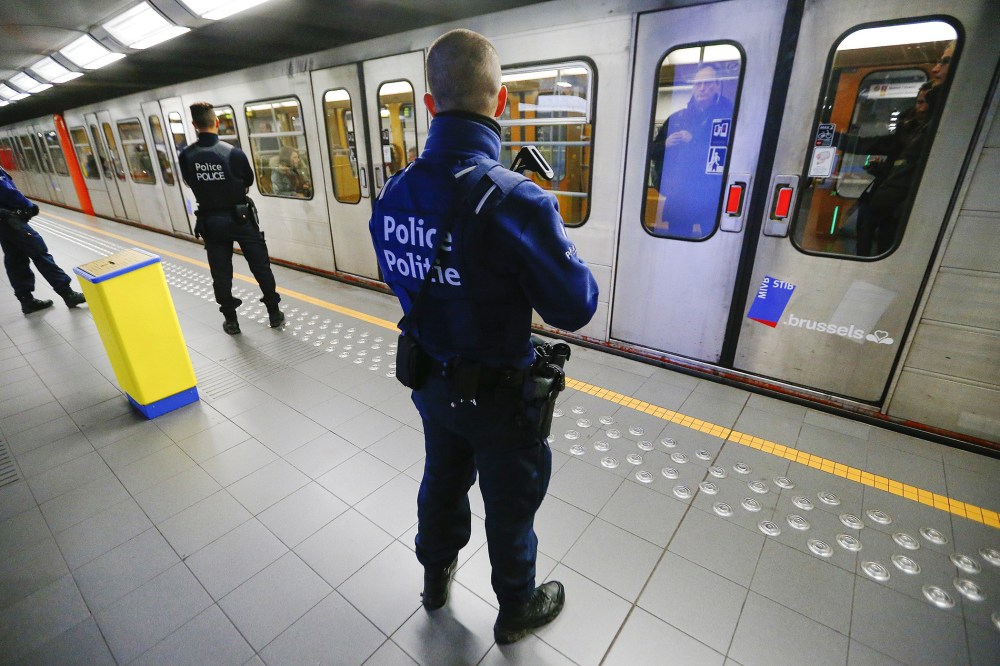
Belgian Justice Minister Koen Geens took particular issue with criticism that the small European nation remains a soft target and its security services are ill-equipped to deal with extremist networks. An ISIS-linked terror cell is being blamed for both the attacks on Brussels’ airport and subway as well as the siege on Paris last November that claimed 130 lives.
“After the attacks in Paris, we adopted 12 measures, and 11 of those were put into action,” Geens said. “One measure that we didn’t make work is connecting the different criminal databases.”
“We can be critical about our work (in the past), with respect for all the victims, but we cannot say that enormous and systematic mistakes were made,” he added.
Investigators are still looking for at least one suspect — identified as a “man in white” seen in airport surveillance — in the March 22 attacks.
Meanwhile, a day after reports that said the death toll was up to 35 people killed, Belgium’s crisis center said on Tuesday that the number is back down to 32 after it was discovered some victims were counted more than once. The figure does not include three suicide bombers identified by prosecutors.
Seventeen Belgians were killed, while 15 foreigners, including four Americans, died.
Much of the atrocity was at least prepared and coordinated in and around Brussels, and several of the attackers were Belgian or had lived in Brussels for a long time — prompting criticism against government officials.
RELATED: NYT: Officials missed signs of ISIS activity in Europe
“Now is not the time to fight one another,” Geens said. “As far as I know, the enemy is in Syria.” In recent days, there have been accusations that investigators should have picked up the scent of the attackers well before last week. One of the suicide bombers, Ibrahim El Bakraoui, had been caught near Turkey’s border with Syria in 2015 and Ankara says it had warned Belgium and the Netherlands that he was “a foreign terrorist fighter.” Authorities in Brussels said they did not know he was suspected of terror-related activities until after he was deported to the Netherlands. Brussels mayor Yvan Mayeur, who is facing criticism for his own actions before and after the suicide bombings, said in Paris on Tuesday, that “there are certainly some analyses to be done on the investigation. Were there mistakes? Did we miss anything? Certainly. Otherwise these attacks would not have happened.” He said his city, which is headquarters to European Union institutions, could never go back to “normal” again. “There’s no such thing as ‘normal’ anymore. That’s a concept we have to revisit.” This story originally appeared on NBCNews.com.Recommended



Erik Ortiz