








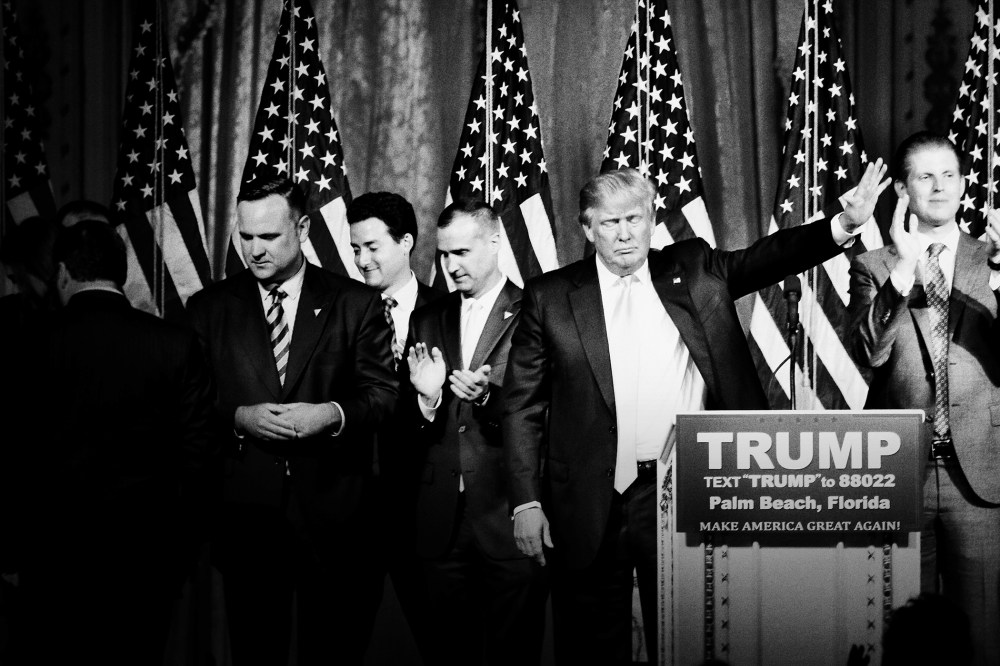
Marco Rubio’s withdrawal from the presidential primary, after he was blown out in his home state by Donald Trump, was a resounding rejection by voters of a candidate embraced by influential Republicans. It suggests the power of party elites is overstated in the GOP, and perhaps in politics overall.
In some previous cycles, endorsements from key party figures had been a predictor of the eventual winner. In 2011 and 2012, even as his poll numbers were lackluster, Mitt Romney was the overwhelming leader in terms of endorsements from fellow Republicans, and he eventually won the nomination. It was not entirely clear if the endorsements directly pushed voters toward the establishment candidate or that endorsements were the most visible signal that a candidate was supported by major donors, operatives in key states and others who would help him win.
RELATED: No unified GOP strategy to stop Trump
Many political scientists and prominent writers, most notably the data journalist Nate Silver, spent much of 2015 and early 2016 closely tracking endorsements, particularly from former and current elected officials and other power-brokers, as a clue to which candidate each “party” was behind. (I used this approach myself.)
Just as significantly, Ted Cruz and Trump, who had actually already won primaries and caucuses, were endorsed by almost no one.
The result: There have been 30 caucuses and primaries in March. Rubio won just three (Minnesota, Puerto Rico, Washington, D.C.).
The Florida senator kept losing the “very conservative” part of the GOP electorate to Cruz, which was not surprising. But more moderate and “somewhat conservative” Republicans in state after state, instead of supporting Rubio, kept voting for a man — Trump — who has proposed banning Muslims from entering the country and deporting all undocumented immigrants.
And it’s not just that Rubio lost, but that all of the elite-backed candidates failed. Last spring, many party donors and officials backed Jeb Bush. A more conservative bloc of the establishment was behind Wisconsin Gov. Scott Walker, while another wing viewed Rubio as a more electable, charismatic alternative to those two men.
Instead, three “outsider” candidates are in the final round of the nomination contest. Cruz and Trump are both hated by many Republicans in Washington. Ohio Gov. John Kasich was not encouraged to run by party elites, in part because Bush, Rubio and Walker were already in the race.
Kasich is an anti-establishment figure too, although in a different way than Cruz and Trump. The Ohio governor is more moderate on some policy issues (he accepted federal funding to expand Medicaid under Obamacare) and more irreverent in personality than Washington Republicans.
RELATED: RNC rules: Insiders speak out on contested convention
Many analysts have explained this complete failure of the GOP establishment to get any of its candidates near the nomination by citing three changes in the Republican Party from previous cycles.
First, Trump is a highly unusual candidate, both appealing to an untapped but large segment of GOP voters (those without college degrees and in rural areas in particular) and able to command media attention like no one else.
Second, the Republican Party was deeply fractured even before Trump’s campaign started, as its struggles to govern on Capitol Hill and failure to unite behind any policy vision beyond opposing Obama had already shown. In this view, the rise of the Tea Party, the struggles of John Boehner to unify House Republicans and the 2013 government shutdown were foreshadowing of what would happen in this presidential campaign.
Third, decades of wage stagnation and the growing diversity of the country had created a weary, frustrated GOP electorate that establishment candidates were ill-equipped to appeal to. (Looking back, perhaps the Cuban-American candidate who wrote a bill to create a pathway to citizenship for undocumented immigrants [Rubio] and the man who bragged of speaking Spanish more than English at home [Bush] were very imperfect fits for the Republican voters of 2016.) In the Democratic Party, party elites seem to have more influence. Clinton amassed a huge advantage early in the race among insiders, getting endorsements from sitting governors and senators, having senior aides from the Obama White House leave to join her campaign, and receiving support from most of the party’s big donors. Those advantages appeared to push Vice President Biden from attempting to challenge Clinton, as he saw her organizational advantage. After Sanders resoundingly won the New Hampshire primary, key figures in the Democratic Party, such as civil rights leader and Georgia congressman John Lewis, publicly criticized the Vermont senator in clear attempts to halt his momentum. The anti-Sanders effort seems to have worked. The 2016 results leave a lot of confusion about the power of party elites in politics. Was the value of money, endorsements and top staffers always overstated, as Trump’s success suggests? Could Clinton have lost too, if she faced a Trump-like figure on the left? Or is the Republican Party of today uniquely divided and its elite class particularly ineffectual? Is having the most elite person in the country and his team behind one candidate (Obama and the aides who helped him win in 2008 and 2012 have both formally and informally backed Clinton over Sanders) a kind of “party” support that no GOP candidate could have, since there is no sitting Republican president? Put another way, was Marco Rubio a disappointing candidate, losing despite so much party support, or were the party insiders so weak their backing didn’t matter? This article originally appeared on NBCNews.com.
Perry Bacon Recommended


