








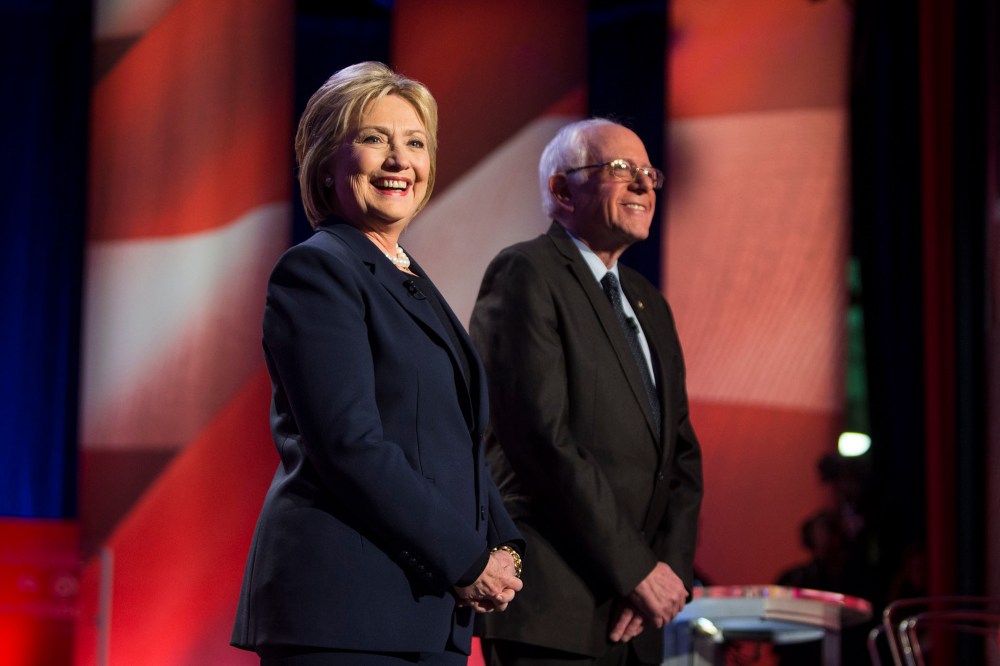
WASHINGTON, D.C. – Voting in the Democratic primary may be coming to an end — and Hillary Clinton has already been declared the presumptive nominee — but the aftermath has resulted in a fragile party in need of healing at a time when the stakes have never been higher.
As the frontline between the Clinton and Bernie Sanders camps moved to a hotel ballroom here Wednesday, party officials began the process of drafting their platform for the general election.
“It may get loud at times, but that’s OK. It’s a noisy country,” former Attorney General Eric Holder told MSNBC after testifying before the committee. “But at the end of the day, I think the Democratic Party can be in the place it needs to be.”
Sanders has so far refused to concede the race and will now put his weight behind shaping the party’s rules and platform, its foundational statement of beliefs and priorities.
However, Sanders not yet concluded which issues he wants to prioritize, according to sources familiar with his thinking. Aides have presented him with a menu of possibilities, but the senator wanted to focus on the race in California before making a decision about issues that come after.
RELATED: Clinton takes California. Now what?
Wednesday’s meeting was the first gathering of the party’s Platform Drafting Subcommittee, which is responsible for creating the first draft of the document before the full committee meets just ahead of the Democratic National Convention in July.
Sanders successfully fought to include more of his supporters on the 15-member subcommittee, including some firebrand allies like Dr. Cornel West and environmentalist Bill McKibben, who joked that he gets arrested for civil disobedience most times he visits Washington.
But everyone was on their best behavior Wednesday, emphasizing the need for civility and the relatively minimal differences between them when compared to GOP presumptive nominee Donald Trump. Neither side dwelt much on the gaps between them, nor were Sanders’ or Clinton’s names hardly mentioned.
“We need to keep in mind the differences we have may be relatively small,” said Rep. Elijah Cummings, who chairs the subcommittee.
The first meeting was dedicated to testimony from experts on what should be included, while much of the real work will happen behind closed doors.
Adam Green, the co-founder of the liberal Progressive Change Campaign Coalition, said Clinton’s best hope to bring Sanders supporters into the fold is to codify in the platform the progressive ideas she embraced during the primary.
“The biggest skepticism we hear from Sanders supporters and even lukewarm Clinton supporters is whether she’ll continue to sound big bold populist ideals after the primary is over,” Green told MSNBC, urging Clinton to continue emphasizing those issues. “Telling Sanders people to get in line to defeat is a really bad move. Saying we’ll unify around a big bold progressive agenda is a really good move.”
Sanders aides say the candidate needs time to plot his next moves, and that pressure from party leaders to get out will only backfire. He has committed to, at the very least, campaigning through the District of Columbia, which votes Tuesday.
So far, Democrats have been happy to give Sanders space and let the senator make his own decision. But even many of his top supporters acknowledge his window to nomination is likely closed. “It looks like my dear brother Bernie Sanders has an up, up, uphill struggle,” said Dr. Cornel West, the black activist whom Sanders named to the DNC Platform Drafting committee. Rep. Raul Grijalva, Sanders’ first congressional backer, called Clinton the “presumptive nominee” and said Sanders “is going to do the right thing.” RELATED: Sanders vows to continue the fight Clinton on Tuesday secured a majority of pledged delegates, meaning she would win even if super delegates did not exist. On Wednesday, two of the largest groups backing Sanders – MoveOn.org and Democracy for American – reiterated their long-held belief that the candidate with the most pledged delegates should win. That suggests they would not support Sanders in his stated goal to get super delegates to flip to his side. “MoveOn members believe, as we have long advocated, that the nomination should go to the winner of the majority of pledged delegates, and that undemocratic superdelegates should not overturn the will of the voters. The Drafting Committee will meet again Thursday, and later hold hearings in Arizona and Missouri. The document they produce will be edited by the much larger full Platform Committee, and then face approval in a vote on the floor of the Democratic Convention.
Alex Seitz-Wald Recommended


