








“If men menstruated, the world would be very different.”
In one sentence, Michael Sheldrick, head of policy and advocacy at Global Citizen, summed up the frustrations of women the world over.
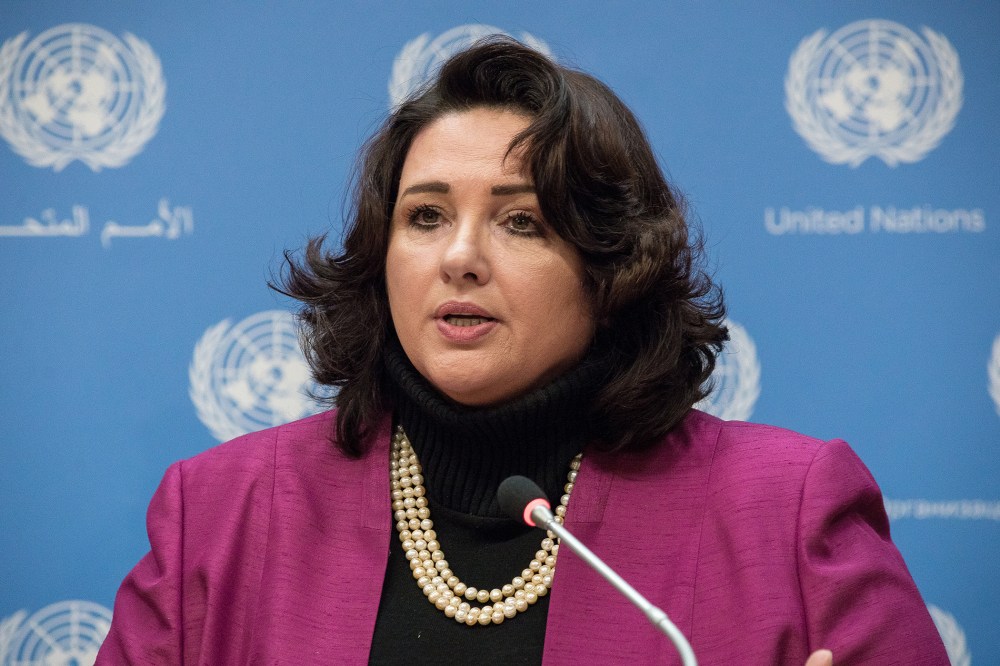
During the 10 days of the United Nations Commission on the Status of Women, thousands of people from dozens of countries had the opportunity to listen to women and men recount sobering facts, acts of heroism, and stories of hope to promote gender equality and women’s empowerment. I was honored to share my voice by participating in the launch of a new Global Citizen and CHIME FOR CHANGE campaign that aims to tackle all laws that discriminate against women and reduce their freedoms and opportunities, #LeveltheLaw.
In%20over%2090%20percent%20of%20countries%20worldwide%2C%20women%E2%80%99s%20opportunities%20are%20explicitly%20limited%20by%20gender-based%20differences%20in%20the%20legal%20code.’
At the launch event in New York City, the Maltese government announced that it will repeal a long-standing law that discriminates against and undermines women in our country. Outdated and unused for years, but still a symbol of government-sanctioned inequality, the Criminal Code exempts from prosecution a person committing a violent abduction as long as the abductor marries the victim.
“We are all from different backgrounds, but the one thing that we have in common is that as women … the strongest emotion we’ve had to experience or deal with is fear and shame. And when the law endorses fear and shame, that is something that women at different levels will relate to,” said Faith Wafula, 2015 Laureate Global Fellow member of the Commonwealth at the event.
Faith is right, and Malta is far from the only country with such laws on their books. In over 90 percent of countries worldwide, women’s opportunities are explicitly limited by gender-based differences in the legal code. This can range from laws that dictate personal and marital status — including forced child marriage, the inability to travel freely outside the home, and lack of protection from rape and violence — to laws on economic recognition — those that bar women from owning or inheriting property, opening a bank account, or managing their own assets.
These laws are the institutionalized structures that form a grim reality: Fewer girls attending school, fewer women pursuing skilled work, and greater incidences of violence and exploitation. Fundamentally, these laws serve as the framework for a cycle of poverty that keep women trapped based solely on their gender.
As a member of the Parliament of Malta and the Minister for Social Dialogue, Consumer Affairs and Civil Liberties, I have long been a champion for human rights and equality, piloting the Domestic Violence Bill that became law in 2005. The victory is a bittersweet one, as it succeeding in establishing an official dialogue on domestic violence and the rights of victims — particularly women. However, the bill faced years of intense opposition and in the end, fell short of its original intention: To protect all people from all forms of physical and emotional abuse while putting the burden of proof on the perpetrator instead of the victim. I cannot say this process was without frustration. But despite the obstacles and resistance, it is always a battle worth fighting.
Fundamentally%2C%20these%20laws%20serve%20as%20the%20framework%20for%20a%20cycle%20of%20poverty%20that%20keep%20women%20trapped%20based%20solely%20on%20their%20gender.’ Laws that discriminate against women, or the absence of laws to protect them, can be maddeningly difficult to change, as they may be tied to long-held cultural beliefs and face enduring legislative processes. Government bodies with low female participation rates do not make the operation any easier, which is why the voices of global citizens are so valuable and necessary. The international community can leverage its influence by supporting local movements and applying public pressure in order to overcome paralyzing cultural stigma and political inertia. International forums like the U.N., G20, and Commonwealth of Nations also offer opportunities to shine the spotlight on issues and force decision-makers to pay attention and take action. At the 2015 Commonwealth Heads of Government Meeting, Malta committed itself to promoting the rights of all individuals. Prime Minister Joseph Muscat publicly championed equality as “an absolute [that] cannot be rendered relative to our liking.” Commonwealth countries are ripe for an in-depth self-assessment of the gender inequalities we still face and a plan for addressing them. It starts by leveling the playing field in the eyes of the law. As current Chair of the Commonwealth, Malta plays a vital role in not just setting the example, but driving this issue onto the political and public agenda and raising it in our discussions with other member states. To this end, I am proud to endorse Global Citizen and CHIME FOR CHANGE’s campaign to end gender discrimination in the law. I encourage all countries to recognize the distinctive role that girls and women play as drivers for development, and commit to tackle laws that reduce their social and economic freedoms and opportunities. It is up to global citizens to lead these demands and to hold them to it. Dr. Helena Dalli serves as Malta’s Minister for Social Dialogue, Consumer Affairs and Civil Liberties.
Dr. Helena Dalli Recommended


