








Allowing income tax rates to rise for wealthy Americans, and not for the less affluent, would not hurt U.S. economic growth much in 2013, the Congressional Budget Office said on Thursday.
The report by the authoritative non-partisan arm of Congress is expected to fuel President Barack Obama’s demand for higher taxes on the rich, part of his way of avoiding the full impact of the so-called “fiscal cliff” of expiring tax cuts and across-the board spending reductions set to start at the end of the year unless Congress acts.
Republicans argue that any tax increases would harm the economy, and have held firm to their position that none of the cuts, which originated during the administration of President George W. Bush, should be allowed to expire.
With global markets falling, and five days remaining before the U.S. Congress begins its post-election lame-duck session, top political leaders in Washington provided no new assurances Thursday that they can address the nation’s fiscal problems.
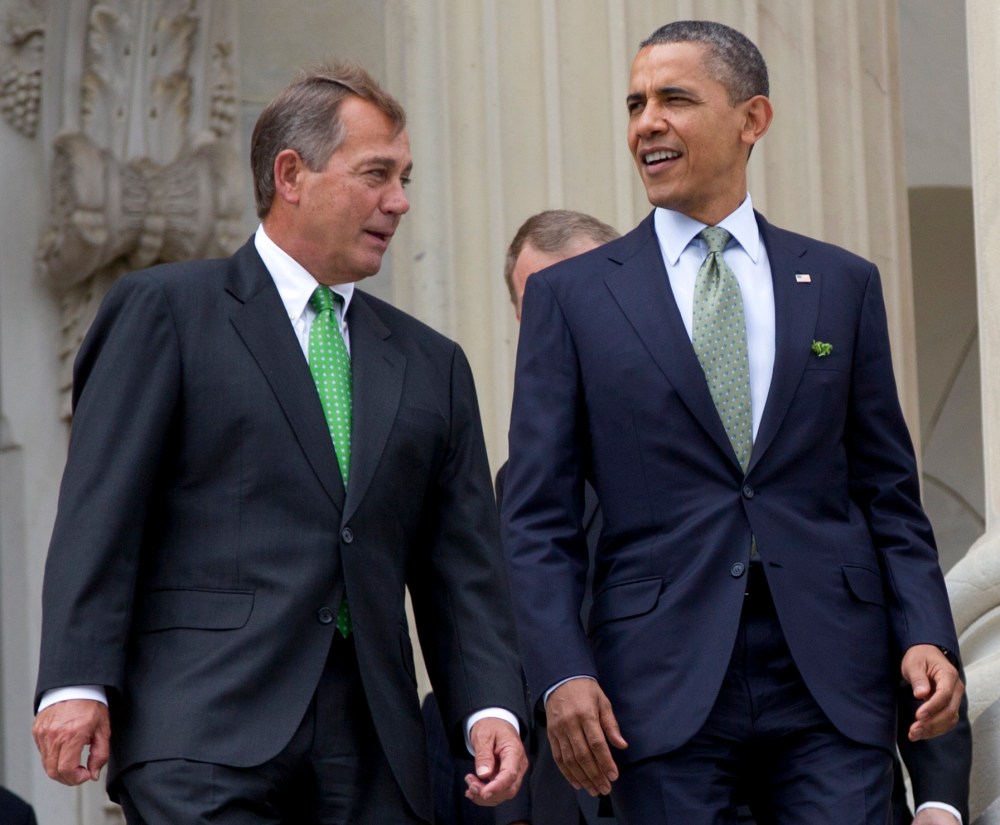
The Democratic White House did not respond publicly to an imitative launched Wednesday by the Republican Speaker of the House of Representatives, John A. Boehner, to get talks going to avoid the cliff.
The CBO said extending all of the tax cuts would boost U.S. gross domestic product growth next year by a little less than 1.5 percentage points. If the tax rates were extended only for individuals earning less than $200,000 and couples earnings less than $250,000, CBO said, growth would rise by 1.25 percent.
President Barack Obama had made his plans to reduce deficits by asking the wealthy to pay more in taxes a central theme of his re-election campaign.
The report from CBO laid out the economic effects of a number of options that lawmakers will consider as they deal with the fiscal cliff events.
Should the fiscal deadlines pass with no action by Congress, CBO repeated its earlier forecast that they would deal a crushing blow to the U.S. economy, pushing it into a recession next year, with GDP shrinking by 0.5 percent and the unemployment rate spiking back to 9.1 percent.
Wall Street estimates show third-quarter GDP growth was 2.8 percent. Unemployment is currently at 7.9 percent. Eliminating the automatic spending cuts to military and domestic programs would add back 0.75 percentage points of growth, as would extending an expiring payroll tax cut and long- term unemployment benefits that are expected to end next year, the CBO said. But the office also warned of consequences to taking such actions without reducing deficits that have run at $1 trillion in each of the past four years. “CBO expects that even if all of the fiscal tightening was eliminated, the economy would remain below its potential and the unemployment rate would remain higher than usual for some time,” the office said in its report. Additional reporting by Richard Cowan
David Lawder
Kim Dixon Recommended


