








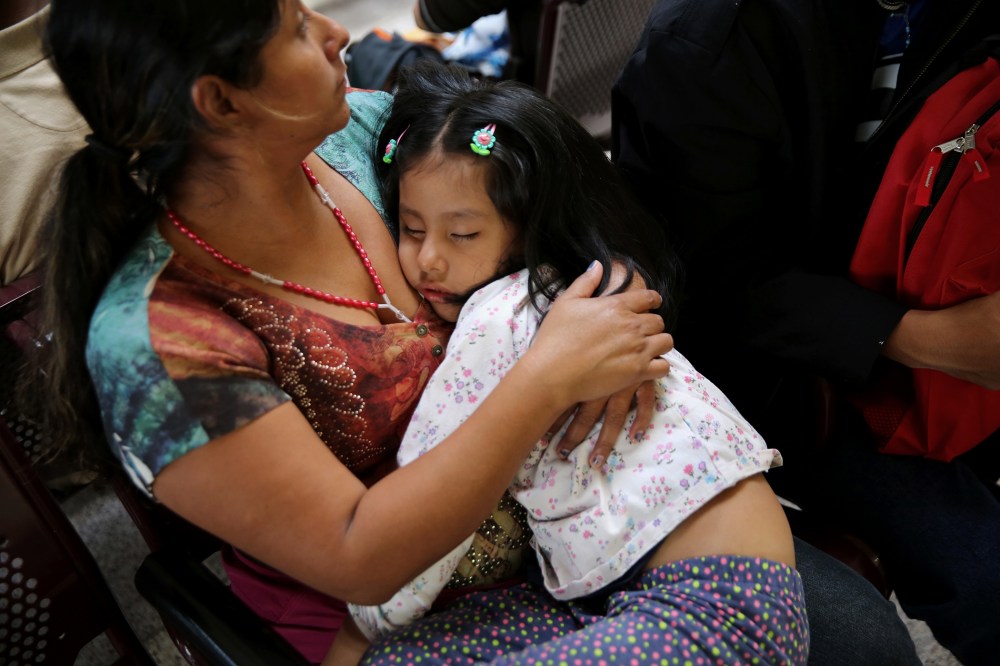
Far less flashy than the images of mobs ascending on busloads of immigrant children, communities across the country continue to react to the thousands of unaccompanied minors entering the U.S. — by lending a helping hand.
Pro-bono attorney organizations are maxing out caseloads taking on the thousands of children so they won’t have to face immigration judges alone and without representation, as many often do. Religious charities taking in donations are handing out heaps of food and clothes. Immigrant rights groups are aiding federal agencies in reuniting children with their families and sponsors settled in the U.S.
While politically, the influx of Central American children caught along the southwestern border in the last few years has been a lightning rod over how the government should respond to the crisis, community groups and organizations have stepped in to fill the void. States and municipalities meanwhile have become liaisons in the process, linking children and their families with the organizations clamoring to offer help and reshuffling existing resources as Congress dithers on federal funding.
The scorched public backlash associated with housing the children, many of whom were fleeing extreme violence in Central America, raised the concern with officials in some areas that sheltering the children would drain local resources.
But Maryland Gov. Martin O’Malley, a potential presidential contender for Democrats, has made embracing the unaccompanied minors a focus of his administration. When graffiti scrawled on the side of a facility proposed to be converted into a temporary shelter for the migrant kids warned “No illeagles here. No undocumented Democrats,” the governor was forced to very publicly walk back and re-calibrate how far Maryland was able to go in helping the kids.
Since the summer, O’Malley has instead solicited volunteers from the community and legal organizations to step in. After hearing residents and community members wanted to help but didn’t know how to connect with the nearly 3,000 migrant kids who have settled in Maryland since the start of the year, tech groups volunteered to build the state a website matching up more than 1,300 local organizations that provide anything from social services to medical care for the unaccompanied minors. The state on Wednesday unveiled the new website and additional resources in response to what officials called an outpouring of support from residents and organizations eager to assist the children.
“There were a lot of people who wanted to help, but there wasn’t a simple way for people to meet,” said Secretary Ted Dallas of Maryland Department of Human Resources. “In Maryland, it’s been very much about people volunteering and wanting to help. It’s been very heartening.”
Officials in San Francisco are taking it a step further after the city’s Board of Supervisors this week passed an ordinance to allocate more than $2.1 million over the next two years in legal services for the children as they make their way through the immigration courts. Advocate groups have raised concerns that many of the migrant kids coming from Central America potentially qualify for humanitarian aid, even asylum in the United States, claims that could be boosted with greater access to legal aid.
Though the Department of Health and Human Services provides shelters and tends to the children’s basic needs after they are apprehended along the border, once migrant kids become reunited with their families, those resources stop abruptly. Service providers have found it difficult to reach the children once they’re released into their communities, where some families may not know that every child is allowed enroll in public schools and have access to greater resources. Over in New York City, officials announced Tuesday that agency representatives are taking posts outside of courtrooms where children are required to appear before an immigration judge. While traditionally schools have been an opportune place to reach kids and gauge the services they need, city officials say the daily juvenile dockets in New York courts allow representatives from city agencies a chance to catch up with kids and do anything from help enroll them in school, sign up for health insurance or find counseling. Those resources are there and available — providers just need to find the kids who need them. “Our sense was that it’s not like we need to do anything new here,” said Nisha Agarwal, commissioner of Immigrant Affairs. “What’s critical … is to connect them to the services that already exist.”
Amanda Sakuma Recommended


