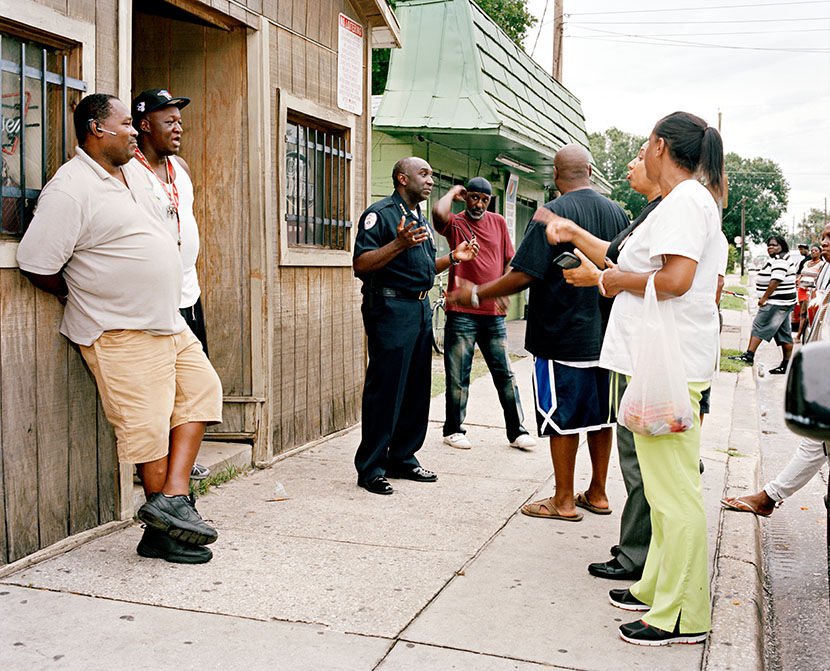
SANFORD, Fla. — Police Chief Cecil Smith drew a mix of high-fives and heckles as he walked down the main thoroughfare of Goldsboro, a historic black neighborhood at the heart of this Florida town.
Passersby honked as he strode passed shuttered storefronts and dive bars. Eyes rolled as he made his way by a barbecue joint and a tattered old pool hall. Older women offered smiles while much younger ones turned away.
“I’m praying for you!” one woman yelled out.
Smith took the job as top cop just over two months ago after the previous chief was ousted in the fallout over the killing of Trayvon Martin. Smith, who is black, has made a habit of patronizing 13th Street, which runs through Goldsboro’s core.
“If you have an issue,” he urged residents and shopkeepers, “pick up the phone and call me.”
Smith’s good-will tour down one of the toughest streets in town is meant to allay long-simmering tensions felt between the black community and the police department, whose gleaming $20 million headquarters built in 2010, is located at the top of largely impoverished 13th Street.
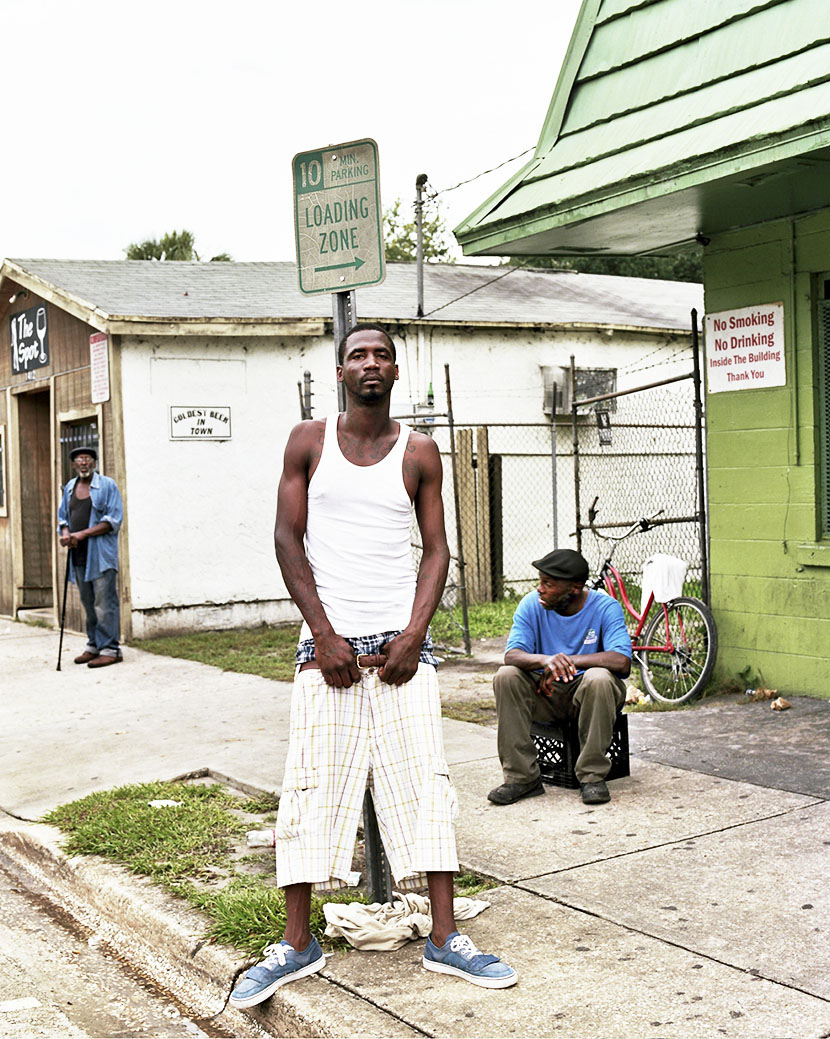
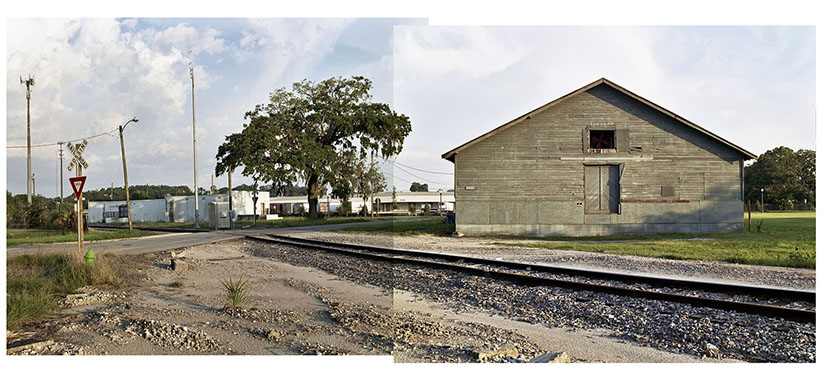
The boulevard is a crumbling shell lined with shuttered storefronts and dimly lit mom-and-pop shops with sparsely stocked shelves. At night, gunfire is common, neighbors say. And the police routinely sweep through to disperse the crowds of young people that pool on street corners and in vacant lots.
It is along this road, the once bustling main drag of what a century ago had been one of the first African -American incorporated towns in Florida, where tensions brewed and then spilled over after Martin’s killing.
And it is here where Sanford’s black community will wait together for the verdict.
Police initially declined to arrest George Zimmerman who claimed he shot the teen in self-defense. Zimmerman is on trial in Sanford for second degree murder and has pleaded not guilty.
Prosecutors say that Zimmerman profiled, followed and then killed Martin on Feb. 26, 2012, as Martin made his way through the neighborhood where his father’s girlfriend lived.
The shooting did not take place in Goldsboro but in a gated community a few miles away. Still, it highlighted a broad gulf between law enforcement and black residents that has widened through the years.
Martin’s killing and the lack of an immediate arrest conjured up memories for Goldsboro of a shooting that took place two years earlier.
In that case, police shot and killed Eugene Scott, a black resident who had been jailed for armed robbery and was a fugitive on other charges. The shooting took place in a grocery store parking lot while police were attempting to arrest him. Scott was shot in the back. The officer who opened fire said he did so after Scott tried to run over his partner. The officer was cleared by law enforcement officials of wrong doing, but many in the black community remained unsatisfied with the findings.
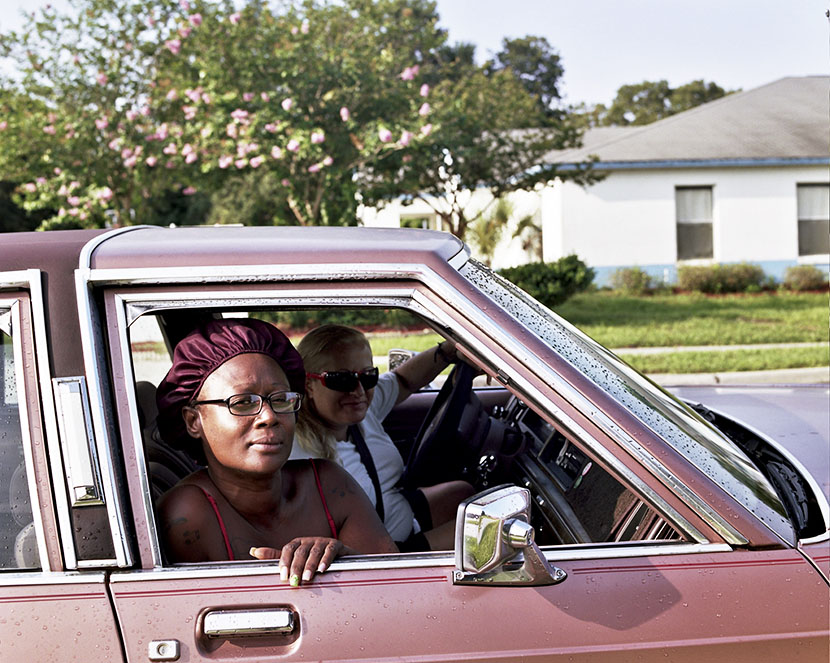
Along 13th Street, residents are following Zimmerman’s trial closely from local bars and over games of dominoes. Some say that what hinges on the outcome of the case is what blacks here have been owed far too long— justice.
“People are trying to use this case to move us forward,” said Pastor Valarie Houston, whose church is on the corner of Olive Avenue and 13th Street. “For this community,” she said, the trial brings “an opportunity for a spiritual awakening as well as a sense of hope and empowerment.”
A hard pill to swallow
On most afternoons, older men take refuge from the biting sun under the palm and willow trees where South Pomegranate Ave. meets W. 13th Street. Many of them spent years laboring in the region’s citrus groves and celery fields but now commune over cold beer and boisterous games of dominoes.
Their leisure time is equal parts fellowship and an informal people’s court where they pass judgment on everyone from local politicians to neighborhood ne’er-do-wells. They trade stories of run-ins with white supervisors and the police.
More recently the often raucous deliberations have been about Zimmerman’s trial.
“I’ll tell you this much. If he’s found innocent there’s going to be an uprising,” said Cecil Nelson. “There’s going to be trouble.”
The collective of men let out a chorus of mm-hmms above the clack-clack of dominoes hitting tabletops.
“I had a 17-year-old son when that boy was killed,” Horace Cain chimed in. “Suppose that was my son. It’s a hard pill to swallow. George Zimmerman is living. Trayvon is dead. That boy’s daddy can’t hug him or touch him.”
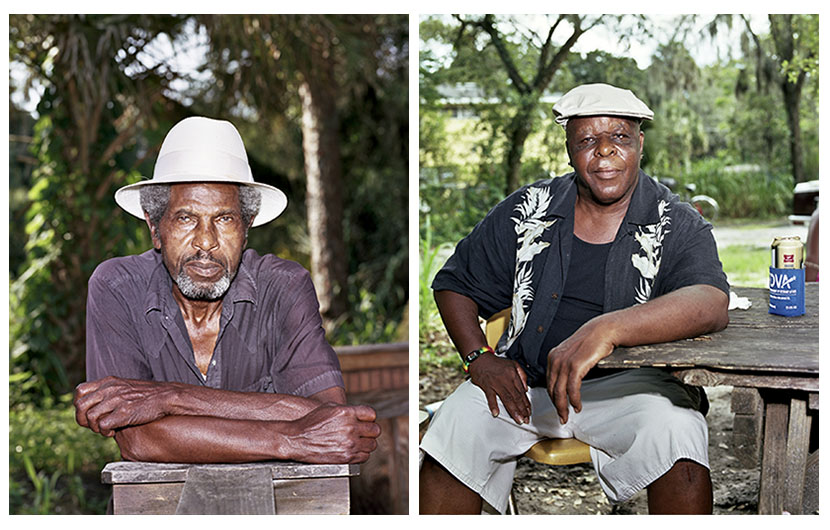
Nelson, Cain and most of the others here remember childhoods with segregated public spaces. Most said they still don’t feel comfortable going downtown, where nearly all of the businesses are white-owned and patronized by white residents.
The history of racial strife runs deep in Sanford, founded in 1870 by Henry Shelton Sanford, an American diplomat who served in the Congo. He later argued that the country would be better off if blacks were returned to Africa, according to historian Adam Hochschild in his seminal work, King Leopold’s Ghost.
In 1946 Sanford’s police chief famously forced Jackie Robinson out of a minor-league baseball game, refusing to let him integrate the exhibition. “The Robinsons were run out of Sanford, Fla., with threats of violence,” Robinson’s daughter, Sharon Robinson, later wrote. In 1997 the city apologized for its treatment of Robinson.
During the Civil Rights era, city leaders cemented over Sanford’s lone public pool rather than allow black children to swim in it. While that time has long passed, the town remains largely segregated with the majority of blacks living in neighborhoods such as Goldsboro. About 30% of the city’s 54,000 residents are black and 57% are white, according to the latest Census.
Much of Sanford is the stuff of post cards, with red-bricked streets downtown and a picturesque waterfront. Crooked oak and willow trees hunch over lazy roads. Further away from downtown are the fruits of Sanford’s more recent sprawl, with newer developments similar to the gated community where Martin was killed.
While the city has pumped millions into new projects and redeveloping its waterfront, there’s been little investment in Goldsboro. Many of the streets don’t have sidewalks, the sewer system is in disrepair and the closure of several public housing complexes has left acres of land pocked with shuttered cinderblock apartments and many residents displaced.
“I don’t see how we as leaders could talk about developing Sanford to its fullest potential if you don’t address the needs in the depressed areas,” Velma Williams, the city’s lone black commissioner, told msnbc.
It’s rough out there
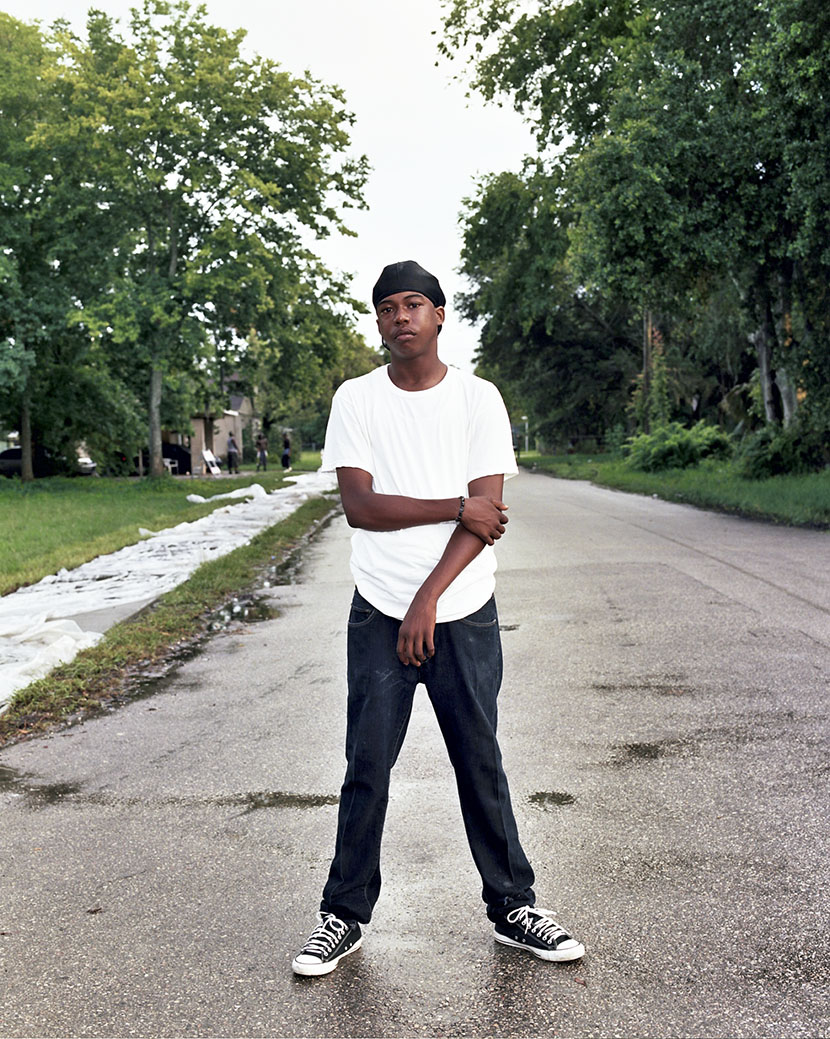
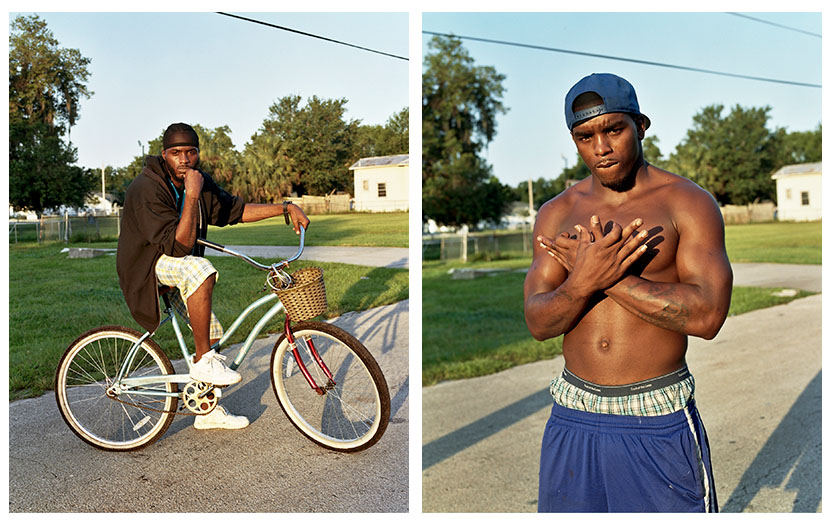
Further down on 13th Street, Juwann McCall, 16, stood on the corner of Oleander Avenue, leaning on a stop sign that marks his slice of the neighborhood.
“It’s rough out here,” said McCall, a slender, somewhat sullen-faced boy, looking anxiously over his shoulder. “You just hope, just hope that you be the one to make it out.”
For months leading up to Martin’s death, residents said there had been shootings between rival groups in the neighborhood. But Martin’s death seemed to affect them in a different way: Martin’s killer wasn’t black. Zimmerman is of white and Hispanic descent.
The deaths of other black men had not led to protests in Goldsboro but McCall joined the neighborhood rallies that followed Martin’s killing. He would stand along busy streets with a pack of Skittles, like the one’s Martin carried that night, holding a sign that read “Honk For Justice.”
A slow trickle of young men walked by and offered head-nods or shouts from across the street.
McCall threw up a hand or shouted back.
“Every day I worry,” he said. “So, just think like, just pray and everything should be okay but like it’s a lot of crazy stuff going on around here and stuff so, I just try to stay out the mix.”
From her little church on the corner of Olive Avenue and 13th Street, Houston says she has witnessed the best and worst of Goldsboro.
“Shootings, drugs, prostitution,” Houston, pastor of Allen Chapel A.M.E Church, lamented.
But she also watched the community galvanize in ways she had not expected during last year’s protests. Allen Chapel became ground zero for protesters, civil rights groups and organizers. Local community leaders and prominent national activists met in her sanctuary.
“African-Americans who had been crying silently in their spirits for change,” she said, finally found a voice. “If you’re going to bring about change you can’t be timid, you can’t be fearful, you’ve got to kind of put yourself out there.”
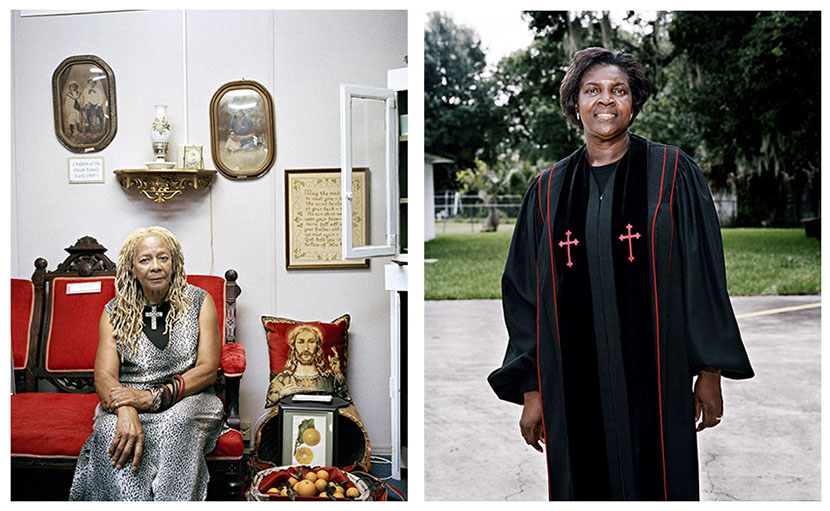
On Father’s Day, Houston wore a flowing black robe embossed with two red crosses. During Sunday services, she asked the men and the boys in the congregation to stand.
“As we pray for the city of Sanford, as we pray for the lawyers and the judge and the jurors, we pray today for the family of Trayvon Martin.” Houston then stepped from the pulpit to a candle holder placed off to the side.
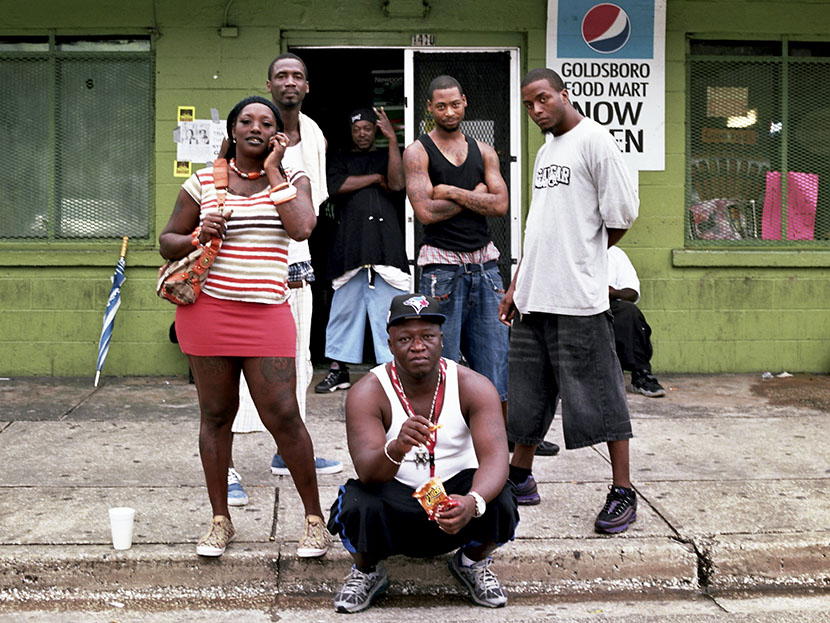
“We light this candle for Trayvon,” she said. Sanford’s stepchild Across the street and down the block, Francis Oliver, chairwoman of the Goldsboro Museum— a refurbished double-wide trailer that once served as a police post—mulled her community’s long struggles. “Seems like every so often, this race thing kicks its head up again,” said Oliver, whose golden dreadlocks flowed over her shoulders and halfway down her back. Indeed, the long running racial fissure in the city of Sanford goes back more than 100 years. Goldsboro was the second town in Florida to be incorporated by blacks after Eatonville, ushered into literary history by author Zora Neal Hurston’s “Their Eyes Were Watching God.” Hurston lived in Goldsboro for a time and her father, John Hurston, was pastor of a local Baptist church. In 1911 Sanford expanded and stripped Goldsboro of its charter, absorbing the city into Sanford proper. Goldsboro’s institutions were dismantled, including the post office, the jail and many of the black-owned businesses. Streets named for Goldsboro’s black founding fathers were changed to numbers instead. In more recent years there had been efforts to mend old wounds with proclamations. In 2012, a stretch of 13th Street was renamed Historic Goldsboro Blvd. in honor of the neighborhood’s rich history. “There were barber shops, beauty shops, restaurants, stores, even supermarkets,” Oliver said of 13th Street’s past. Most of those establishments have long since gone. But images of Goldsboro’s past live on within the museum’s walls. One photo captures William Clark, a town founder, atop his prized mule. A replica of an old barber shop that stood on 13th Street for generations is prominently on display. Century old court records document the debt Goldsboro was owed by Sanford when it was taken over in 1911. The total: $10,375.80 for property and other stipulations. “The Jim Crow part of Sanford is gone,” Francis Oliver said. “But you still gotta deal with part of segregation. As you can see, Goldsboro looks like the stepchild of Sanford.” Another 50 years Two blocks over on 13th Street near Mangoustine Ave., people gathered in front of the Goldsboro Food Mart, a teal, spare cinder block building. Some sat on milk crates, others gathered in an adjacent lot. Music from a car parked in front of the store spilled from an open window and out over the crowd. More than one young man was seen with a marijuana blunt behind his ear. Many here complained that police harassment has worsened since Martin’s killing. “It’s like they used that as an excuse to apply more pressure to the community, not help us, but to hurt us even more,” said Derwin Slayton. Brenda Hartsfield, a nurse at the county jail and owner of the Goldsboro Food Mart, said that she has filed numerous complaints about the treatment of her customers by the police. “I’m their voice. When things happen to them, the first thing they do is they come to me,” Hartsfield said. “The police basically done put like a chokehold on the neighborhood.” As Hartsfield and a small crowd ran down a laundry list of complaints against the police, including allegations of overzealous enforcement of loitering and open-container laws, the police chief strode down the block and into the gaggle. What ensued was part public debate, part peace summit. “We’re not here to harass anyone,” Smith said. He said police respond to calls of noise complaints and other problems. His officers, he said, are there “making sure that the streets are safe, making sure that people can get up and down the sidewalks, that people in the middle of the night at 2 o’clock in the morning can get up and down the street. We don’t want to keep people from having a good time. But there is a time and a place.” Smith believes that the anger and tensions that roiled after Martin’s death could have been avoided had police brass had better communication with the black community. In the wake of the shooting, then-Police Chief Bill Lee publicly defended the decision not to arrest Zimmerman. He cited the state’s controversial Stand Your Ground Laws and said he was legally barred from arresting Zimmerman given the lack of evidence to counter his self-defense claims. Zimmerman was arrested 44 days after the killing and only after a special prosecutor was assigned to the case. Chief Lee was later fired. “I’m black from Chicago, coming in to a highly inflamed community,” Smith said, standing outside the Food Mart. “It took 50 years for people to feel the way they do now. It’s going to take another 50 years to try to get people to change their mindset. It may not even happen in all of this generation. But for me, if I have the ability to change ten people’s attitudes, that’s a step.” Smith said part of bridging the gap between the police and the people are weeding out bad apples in the department. He has fired one officer for using a racial slur on Facebook, and said others are being investigated for similar racial incidents. The fired officer, Vanessa Knode, conceded to internal affairs investigators that she used the “n-word” in a Facebook post. But she told investigators that the epithet was aimed at her white husband and that she saw it as synonymous with “bro” or “these guys.” Standing back to survey the scene on 13th Street one recent evening, Smith seemed satisfied with the discourse his random appearance had sparked. “I could send the dogs in here and chase everybody away, or I can come in here and try to talk to people,” Smith said. Wayne Lawrence contributed reporting to this article.
Trymaine Lee
Trymaine Lee is an NBC News correspondent. Recommended