








Maria* has survived a lot of trauma in her life, and it’s difficult to know when exactly it’s going to end.
She doesn’t know whether the officer facing seven felony charges for sexually assaulting her at an immigrant family detention center will see time behind bars. Or whether she’ll be deported to Honduras, back to the home she fled from an abusive relationship.
She seldom leaves the house anymore, a suburban, sparsely furnished two-bedroom in Georgia that she shares with her mother and three-year-old son. Though no longer locked up in the detention center, she’s still not free.
“Detention turned into hell for me. Everyone looked at me as if I was the guilty one,” she says, sitting in her living room, her son Josh restless and hungry for attention. “Nobody approached me to help me or ask me how I was.”
Advocates warn that women held in immigrant detention centers across the U.S. make the perfect victims for a predator. Few detainees speak English and know little about their rights on U.S. soil. So desperate to avoid being deported and fearful of facing repercussion, women have few incentives to come forward with claims that authorities in power are to blame for sexual misconduct.
RELATED: The failed experiment of immigrant family detention
Meanwhile many come from countries where sexual violence against women occurs with near-impunity. Half of the 68,000 families caught at the U.S.-Mexico border last year came from Honduras alone, where the United Nations Special Rapporteur on Violence Against Women says sexual violence is both “widespread and systematic.” The number of savage deaths of women there has increased by 263% in the last decade. It’s a similar story in El Salvador and Guatemala, where rates of femicide are among the highest in the world.
The U.S. government calls family detention facilities a safe and secure environment for immigrant mothers and their children to remain while an immigration judge determines their legal cases for asylum — but the practice is now under threat. Federal courts have ruled that the government may no longer detain asylum-seekers indefinitely and have found that the unlicensed, secure facilities fail to meet decades-old standards in keeping young children in custody.
Last week, a federal judge ordered that women who do not pose a flight risk be released in the U.S. with their children as they pursue their asylum claim. Immigration advocates and detained mothers had long warned that children were losing weight in the facilities and incurring developmental problems, while the women have struggled to obtain adequate access to legal services.
If upheld, the court’s ruling could provide a shield to the hundreds of women currently held in the three family detention centers in the country, allowing them to live with sponsors across the country and escape the threat of sexual violence alleged against the guards who are supposed to be there to protect them.
In South Texas, the Karnes County Residential Center — one of the newest family detention centers in the U.S. — had been open to mothers and children for two months before the first allegations of sexual assault flooded in. Rumors swirled through the facility that a guard had taken a female detainee to the laundry room for sex on numerous occasions, and at one point got her pregnant.
A complaint filed last September by a coalition of legal and human rights groups raised “serious allegations of substantial, ongoing sexual abuse.” Female detainees said they were being removed from their cells and forced to engage in sexual acts. Other claims alleged that staff members kissed and groped women, referring to them as their girlfriends. Safeguards were supposed to be in place to prevent sexual assault in federal facilities, but advocates attest those policies were not adequately in practice on the ground.
“The [assault prevention] policy looks well and nice on a piece of paper, but when it’s not being implemented, it has no value to the women being detained,” said Marisa Bono of MALDEF, one of the groups behind the complaint.
Following a nine-week investigation into the allegations, the Office of the Inspector General in January cleared the Karnes County center, finding no evidence of sexual misconduct. According to the IG report, the woman reportedly impregnated by a detention officer volunteered for a pregnancy test — it came back negative. Investigators reviewed over 360 hours of surveillance video and interviewed each female detainee identified as a victim, but were unable to substantiate the allegations.
“This report is a testament to work and efforts by ICE employees who remain committed to providing a safe and secure environment to all individuals in custody,” Immigration and Customs Enforcement spokeswoman Adelina Pruneda said in a statement following the report’s release.
After the incident, women held in Karnes said the culture didn’t change.
“The officers are always chasing the girls,” one women held in Karnes recently told msnbc. “If you give them a chance, they talk dirty things.”
Congress has outlined a series of prison standards to prevent sexual assault in federal facilities. Adopted in 2003, the Prison and Rape Elimination Act, or PREA, brought a “zero-tolerance” prevention approach and established response protocols once complaints arise.
But for more than a decade, immigrant detention centers were notably excluded from complying with those regulations. Only after some public prodding from President Obama, did the Department of Homeland Security eventually unveil its own PREA standards in May 2014 — just one month before a dramatic spike in migration at the border.
Brenda Smith, a former PREA commissioner and now a law professor at American University, said the nature of the civil detention facilities and the fluid inmate rolls makes oversight of new standards in immigrant facilities particularly difficult to assess.
“Because there are so many people coming in and out of those facilities, they’ve become these islands to themselves,” she said. “Problems can fester and multiply.”
_________
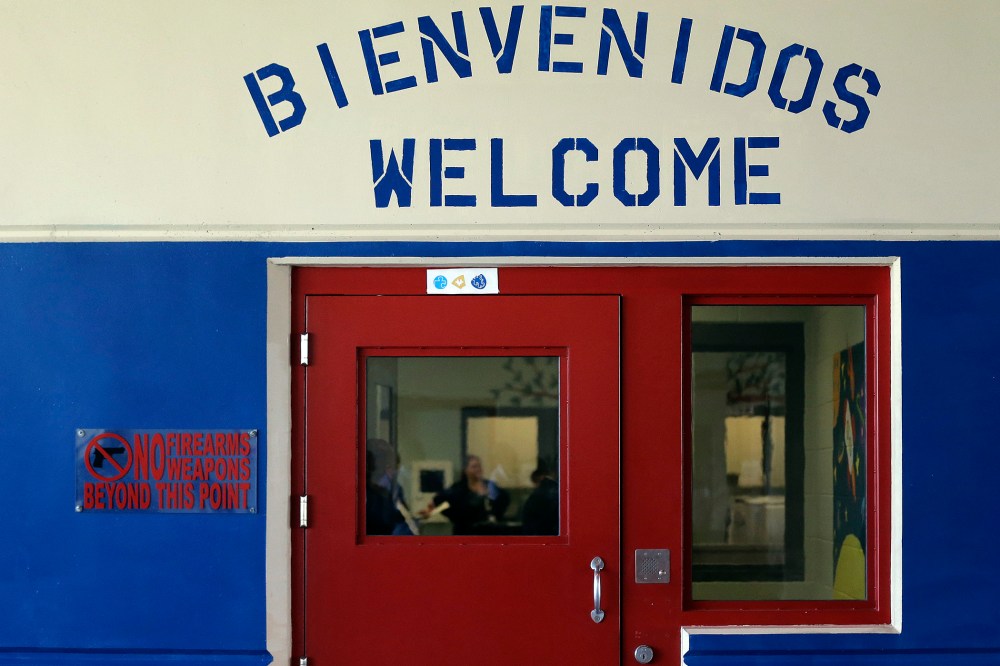
Leesport, Pennsylvania could not be more removed from the politics of the U.S.-Mexico border. But it’s home to the Berks Family Residential Center, an 95-bed facility converted out of a nursing home more than a decade ago, serves as a detention center holding immigrant mothers and their children.
Maria first arrived at Berks last June with her toddler in tow. They had tried to make a break to the U.S. months earlier to escape their violent family life, but were turned away at the border. When Maria tried again, it was just as the American public were being made aware of the thousands of migrants from Central America flooding the border. The mother and son were swiftly placed in detention.
At 19, Maria was barely of age herself, let alone ready for the demands of her three-year-old son. The everyday challenges of early motherhood were only confounded while they were confined behind the walls of Berks. She grew depressed, no longer having control of her own life, what her son ate, when he could sleep or where he could play.
RELATED: Detention center debate overshadowed by Trump
“You feel helpless as a mother because you want to do so many things for your children and you can’t,” she says. “They’re kids — they don’t know why all that is happening. Or why they are isolated from things that are normal to them.”
The first helping hand extended to her since she arrived in Berks came from Daniel Sharkey, a detention officer. Whenever she needed something, Sharkey was always nearby. It started as small favors for her son — a gift here and there, some candy out of the vending machine. She didn’t speak English and he didn’t speak Spanish, but they would communicate together through a Google Translate app on his phone.
One day, Sharkey told Maria he was very attracted to her, she says, catching her off-guard since he was more than twice her age. Soon, she says he became possessive, tracking her down during his shifts, even coming into her bedroom when he clearly was not allowed. Then came the sexual advances. First it was a hug. Then a kiss. And another. Then more. “I honestly didn’t want to, but I didn’t know what to do,” she says. “And he was always telling me that if I said anything, that they were going to deport me.” _____________ Allegations of sex abuse in federal immigration facilities are nothing new. In collecting documents from immigrant detention centers across the country, the ACLU uncovered nearly 200 complaints of abuse between 2007 and 2011 alone. A separate report from the Government Accountability Office found 215 allegations of sexual assault or abuse across immigrant detention facilities between 2009 and 2013. And those were just the cases that were actually reported to authorities. Most allegations came from Texas, where a series of complaints from at least five detained women took months to finally catch up to Donald Charles Dunn. Dunn worked as a resident supervisor at an immigrant detention center in central Texas where he was tasked with transporting men, women and children to the airport or bus station once they were released from the facility on bond. It was during those unsupervised trips to Austin, often under the cloak of night, that authorities found he would take advantage of detainees. Dunn would make frequent stops along the 40-mile stretch to the airport, pulling over at a gas station and asking the women to get out of the van. According to a press release at the time from the Williamson County Sheriff’s Office, Dunn admitted that he would “frisk” the women, groping their breasts, crotch and buttocks. Authorities were tipped off to Dunn’s actions after one of the women he allegedly assaulted ran to an airport official and asked if Dunn’s behavior was typical of all U.S. prison guards. An investigation found that he had assaulted as many as five women, and in 2010, he was convicted of three counts of official oppression and two counts of unlawful restraint, both misdemeanors. A year later, Dunn pleaded guilty to two additional federal charges of violating the detainees’ civil rights. He was sentenced to 10 months in federal prison. Lisa Graybill, an immigration law professor at the University of Denver and an advocate who for years fought for the justice for Dunn’s victims, is now seeking damages on her client’s behalf. “They are an incredibly vulnerable population, they are a perfect population for a predator,” Graybill said. “These women come to this country because they believe that they will finally be free of the assault and the rape and the violence that they experienced in their home countries … and to realize that they’re not safe, even in America, which to them was a beacon of security.” _______________ Sharkey’s interactions with Maria ended abruptly after a seven-year-old walked in on them during a sexual encounter in the ladies bathroom at Berks. It was August, two months into Maria’s detention, when authorities were notified. Guards are strictly forbidden from using their position of power to maintain relations with the women they are tasked with keeping watch over. Sharkey was swiftly placed on administrative leave and never returned to the facility. Detective Michael Hoffert of Bern Township Police was brought in to investigate the allegations in Maria’s case, along with officials from ICE’s Office of Responsibility. They conducted more than 25 interviews and combed through hours of surveillance video. In January, Sharkey was arrested and charged with seven counts of institutional sexual assault — all felonies. He declined through his attorney to be interviewed for this article pending his ongoing criminal trial. “We’re not going to try this matter in the polls of public opinion with the media,” attorney Allan Sodomsky said. But Maria and her toddler would remain detained in Berks for another four months, while the other women in the facility gossiped about the scandal and detention operators cracked down. Maria’s attorney, Matthew Archambeault, complained he was not told of the alleged sexual misconduct until two months into the investigation, after his client had been questioned and initially denied the allegations. “It was a hostile environment for her,” he said. “She was held at a place where she was victimized — she was shunned.” Archambeault said his other clients in the facility were not immediately educated about how to recognize sexual abuse or learn about their rights. Instead, a new page of rules was inserted in their inmate handbook, implicitly blaming the women for the guards’ actions by placing tighter restrictions on what clothes the women could and could not wear. “They just barreled into their dorm rooms and took out all of their clothes and decided this is appropriate, and this is not appropriate,” said Bridget Cambria, another attorney representing families in Berks. “They keep reacting and enforcing more rules and more rules.” Maria said she felt blamed by the other women in the facility. “I even thought of killing myself many times. I felt like I couldn’t take it anymore,” she says. “But I’m here because of my son.”
Amanda Sakuma Recommended


