








Hundreds of thousands of federal workers returned to work, national parks and memorials reopened, and the USDA began processing payments to send to food banks across the country on Thursday, hours after the government agreed to end the standoff that halted many of its operations during the first half of October.
About 800,000 “non-essential” federal employees went 16 days without paychecks while they waited for the country’s leaders to agree and vote on a plan. Chief of Staff Denis McDonough greeted some of those workers Thursday as they returned to work at the White House and executive offices.
Watch: Returning to work after the shutdown
Disappointed tourists hoping to climb to the top of the Statue of Liberty and children dressed in animal costumes standing outside the gates of the National Zoo became unofficial symbols of the closure.
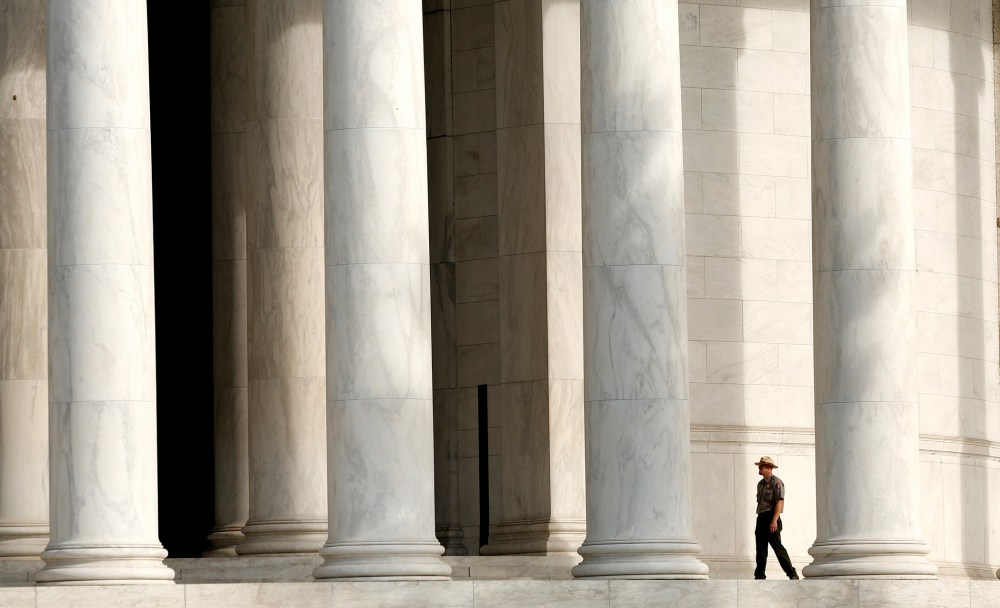
Now park rangers walk along the Vietnam Memorial and “Open for business” signs have replaced “Closed until further notice” warnings. The National Zoo said it would bring back its popular “panda cams” and Vice President Joe Biden presented returning EPA workers with muffins.
“We were worried sick,” Lisa Hamler-Fugitt, executive director for the Ohio Association of Food Banks, told MSNBC. The organization is owed $2 million by the government in reimbursements for the more than two-week shutdown, she said.
“This governing-by-crisis is not good for America,” she added. “It’s not good for their constituents, and our economy will never recover until there is a concerted effort to come together as Americans.”
Essential government services continued to function during the shutdown, but a variety of agencies and national landmarks closed, including veterans services call centers, museums, and even the NASA.
The government, however, continued to pay members of Congress, residents received mail through the U.S. Postal Service, and Social Security and Medicare funds were spent.
Businesses, communities, furloughed employees, and people who work in partnership with the government rely on federal spending. And about 47 million Americans depend on the Food Stamp program for survival, Hamler-Fugitt said.
“While members of Congress were living in this bubble fighting about some political brinksmanship, the world went on and things got worse,” she said. “There isn’t a magic bullet out there for us now to get back to where we were.”
The shutdown cost the U.S. economy $24 billion, according to an analysis by Standard & Poor’s. Wednesday night’s deal to end the shutdown resulted in a debt-ceiling increase through Feb. 7.
President Obama on Thursday insisted there “are no winners” in the shutdown that he called a “spectacle” that did “unnecessary damage” to our country. The past 16 days had a damaging effect on the public’s view of both political parties, President Obama, and Congress. For the first time since 2008, the economy wasn’t the main concern for American voters, a Gallup poll found. More than half of the country—53%—reported having a negative view of the Republican Party and criticized GOP leaders for the shutdown, according to a recent NBC News/Wall Street Journal poll. More Americans blamed Republicans this month than at any time during the last shutdown in 1995, MSNBC reported. And citizens’ approval of Congress dropped from 10% to 5 in just 16 days, reaching historic lows for the government body. The Democratic Party suffered a four-point loss in favorability from Americans since last month. In turn, 53% of people said they disapproved of Obama’s job dealing with the shutdown. Both the House and Senate will not be in session through the end of the week. The House also plans to be on recess Oct. 21 and 31, as well as more than half of the business days in November and December. “The game-playing has to stop,” Hamler-Fugitt said. “I think that by and large Americans are absolutely disgusted.”
Michele Richinick Recommended


