








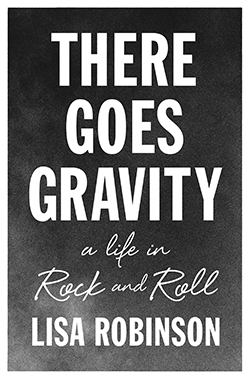
My first job in the music business, in 1969, was filing for a few hours every afternoon for Richard Robinson. At that time, Richard was a syndicated newspaper columnist, had a syndicated radio show, and was the assistant to Neil Bogart, the president of Buddah Records. He also hosted the all-night “graveyard” shift at WNEW-FM radio in New York City. I was, for a short time, a substitute teacher in Harlem, teaching first grade. I heard Richard on the radio late at night and thought he had a great voice and great taste in music. Despite the fact that this was the beginning of so-called “free-form” radio and the disc jockeys were supposed to be able to play whatever records they chose, the truth was, they could not. Richard was fired—and then brought back—on three separate occasions. The first time was for playing “unfamiliar” music, which, at that time, meant black music—like Otis Redding and Tina Turner. The second time he was asked to leave was when he played Jimi Hendrix’s “Star Spangled Banner”—deemed “unpatriotic” by the station’s executives. The final blow was when he used the words “rock and roll.” He was told in a letter he still has somewhere that “Surely your fertile mind can come up with a better phrase.” When I saw him introduce a Janis Joplin concert at Hunter College, I thought he was great looking, tracked him down, and interviewed for a part-time job. Each day after teaching school, I’d change into jeans, fake lizard boots, a raccoon fur jacket I bought at a thrift shop, and go downtown to his office in the Graybar Building next door to Grand Central Station. I earned $25 a week to do his filing. Three months after we met, I quit my $300 a week teaching job and, despite my mother’s warnings, went to work for Richard full time for $100 a week. Two months after that we were married, and remain so to this day.
At first, with all the free albums and concert tickets, it didn’t feel like a job. It was a time when things just sort of . . . happened. There was no agenda. Nothing was planned. I had not taken any journalism classes. I had no plans to write. There were about five people in New York City who were writing about rock music then, and Richard was one of them. In 1969, he got tired of writing a weekly column for the British music weekly Disc and Music Echo, so he turned the column over to me. I didn’t think I could do it, but he said if I could talk— which I certainly could—I could write. He opened the door, I walked right through it and never stopped.
For the first decade of my career, I certainly wouldn’t have described it as a career. It was, as Keith Richards has said about so many things, a “lucky accident.” In the 1970s, there were only a few rock publications aside from the fledgling Rolling Stone, and Richard and I wound up editing two of them: Hit Parader and, with Lenny Kaye, Rock Scene. Both Richard and I wrote for Creem magazine—he did an electronics column called “Rewire Yourself” and I wrote about the then unheard of topic of rock fashion and style. I called the column “Eleganza,” after a clothing catalogue that appeared to cater to the pimp trade. My column in Disc eventually led, two years later, to a job writing the New York column for the more prestigious British music weekly the New Musical Express. Things were just so different then. One thing after another just sort of fell into place. By 1972, there were maybe twenty-five people in New York, Los Angeles, San Francisco and London who were writing about rock and roll. Some people took it very seriously. Some of us—who thought it was supposed to be about fun and sex and the thing that got us out of our parents’ house and changed our lives—did not.
Being born and brought up in Manhattan automatically gave you the feeling that you were already at the center of the universe. I would never know how it felt to drive into Manhattan and see the skyline for the first time. I never felt that I had to get out of somewhere and come to New York City—I was already here. When I was a teenager, I listened to Symphony Sid’s jazz radio show on a transistor radio under the covers in bed at night. This was my introduction to Miles Davis, Horace Silver, Ahmad Jamal. It opened up a sexy, sophisticated world. I heard the hip, British monologist Lord Buckley and memorized the Lenny Bruce records that were on Phil Spector’s Philles Records label. I was way underage when I put on makeup and high heels and snuck out of my parents’ apartment on the Upper West Side to go see Thelonious Monk at the Five Spot in Greenwich Village and Anita O’Day and Stan Getz at the Village Vanguard (I probably looked ridiculous, but I was allowed in). I went to see rock and roll shows starring Little Richard and Chuck Berry and Screamin’ Jay Hawkins at the Brooklyn Fox. So, in 1973, by the time I met Led Zeppelin’s Robert Plant, adorable as he was, and despite his band’s superstar status, I thought he was a bit provincial. He was, after all, from some farm in the north of England. Even the Rolling Stones, with the worldly and urbane Mick Jagger, were from England, which is, let’s face it, the size of Rhode Island. All those English boys had really bad teeth, were slightly ingenue, and were enamored of American black music—a subject I knew well. And while it’s still hard to get people to believe this, not a one of them was as witty or smart as David Johansen of the New York Dolls, who came from Staten Island. When I was very young, I went to Loews 83rd Street movie theater every Saturday afternoon. I loved movie musicals, I loved movie magazines, and I loved anyone who was considered even slightly rebellious. I had a Marlon Brando scrapbook and one for the Brooklyn Dodgers pitcher Don Newcombe. When I first saw Elvis Presley’s black and white and pink and green self-titled album cover—the one the Clash would copy thirty years later—or saw those “Rock Around the Clock” movies at Loews—it was instant recognition. Either this hit you, or it didn’t. And, all over the world, it hit a lot of us at the same time. Hard.
Morning staff Recommended


